The Virtuous Cycle of Explanations: How Better Explanations Lead to Even Better Ones
================================================================================
In the realm of human knowledge, there are few pursuits more fundamental than the quest for understanding. From the scientific method to the Socratic dialogue, the history of ideas is riddled with examples of humanity's relentless pursuit of truth. In their respective works, *Skin in the Game* and *The Beginning of Infinity*, authors Nassim Nicholas Taleb and David Deutsch highlight the importance of explanations in the grand tapestry of human understanding. They argue that good explanations are not only the bedrock upon which progress is built; they are also the very root of human flourishing. This comprehensive guide explores the core concept of 'good explanations lead to infinity of better explanations' by delving deep into its constituent ideas, illustrating its practical relevance through real-life examples, and suggesting avenues for further exploration. Moreover, by elucidating the interplay between explanations and the evolution of ideas, this article aims to demonstrate that the pursuit of truth is, in fact, an inherently collective and never-ending endeavor.
### What Constitutes a Good Explanation?
To understand how better explanations lead to an infinity of even better ones, it is essential to first grapple with the concept of a 'good' explanation. Contrary to popular belief, the pursuit of a good explanation does not begin by merely amassing mountains of data or espousing grand theories; instead, it demands a keen eye for detail and the ability to weave seemingly disparate facts into a cohesive whole. As Taleb notes in *Skin in the Game*, 'a good explanation involves identifying the source of uncertainty and optionality, not the method of risk avoidance.' In a similar vein, David Deutsch argues in *The Beginning of Infinity* that a good explanation must be fundamentally testable, capable of generating novel predictions, and able to withstand the test of time.
These seemingly simple criteria, however, belie the depth of our ignorance, for it is only by challenging our cherished assumptions that we can forge a path towards greater understanding. It is in this context that Taleb's celebration of fragility in *Skin in the Game* should be viewed; for it is often through the crucible of challenge that the weakest elements of our explanations are exposed. By embracing the fragility inherent in human knowledge, we are compelled to confront our limitations and improve upon our explanations, thereby propelling ourselves further along the path of understanding.
### The Power of Better Explanations
Once equipped with a working definition of a 'good' explanation, the question remains: why do better explanations lead to an infinity of even better ones? The answer, as touched upon above, lies at the very heart of human knowledge and the pursuit of truth. To illustrate the virtuous cycle of explanations and its implications for our collective understanding, consider the following examples:
#### From Alchemy to Chemistry
One of the most striking examples of the power of better explanations can be observed in the evolution of human understanding of the natural world. At the dawn of recorded history, humanity's grasp of the elements that surround us was rudimentary at best; steeped in the myth and superstition of the ancient world, early humans could not discern the underlying laws that govern the behavior of matter. It was not until humanity's collective understanding surpassed these myths and arrived at the fringes of scientific reason that we began to uncover the extraordinary explanatory power of chemistry.
At the forefront of this revolution stood the likes of Antoine Lavoisier and Robert Boyle, who, through their tireless efforts and boundless curiosity, began to chip away at the seemingly impenetrable fortress of ignorance that shrouded the natural world. In their quest for understanding, these early pioneers of the scientific revolution sought to replace the opaque and untestable theories of alchemy with the rigorous, predictive power of chemistry. By identifying the fundamental laws that govern the interactions of matter, their work paved the way for generations of future scientists and engineers to build upon these foundations and expand the boundaries of human knowledge.
[](https://media.sciencephoto.com/image/c0135670/800wm)
*Alchemy to Chemistry transition illustration*
#### The Genesis of Genetics
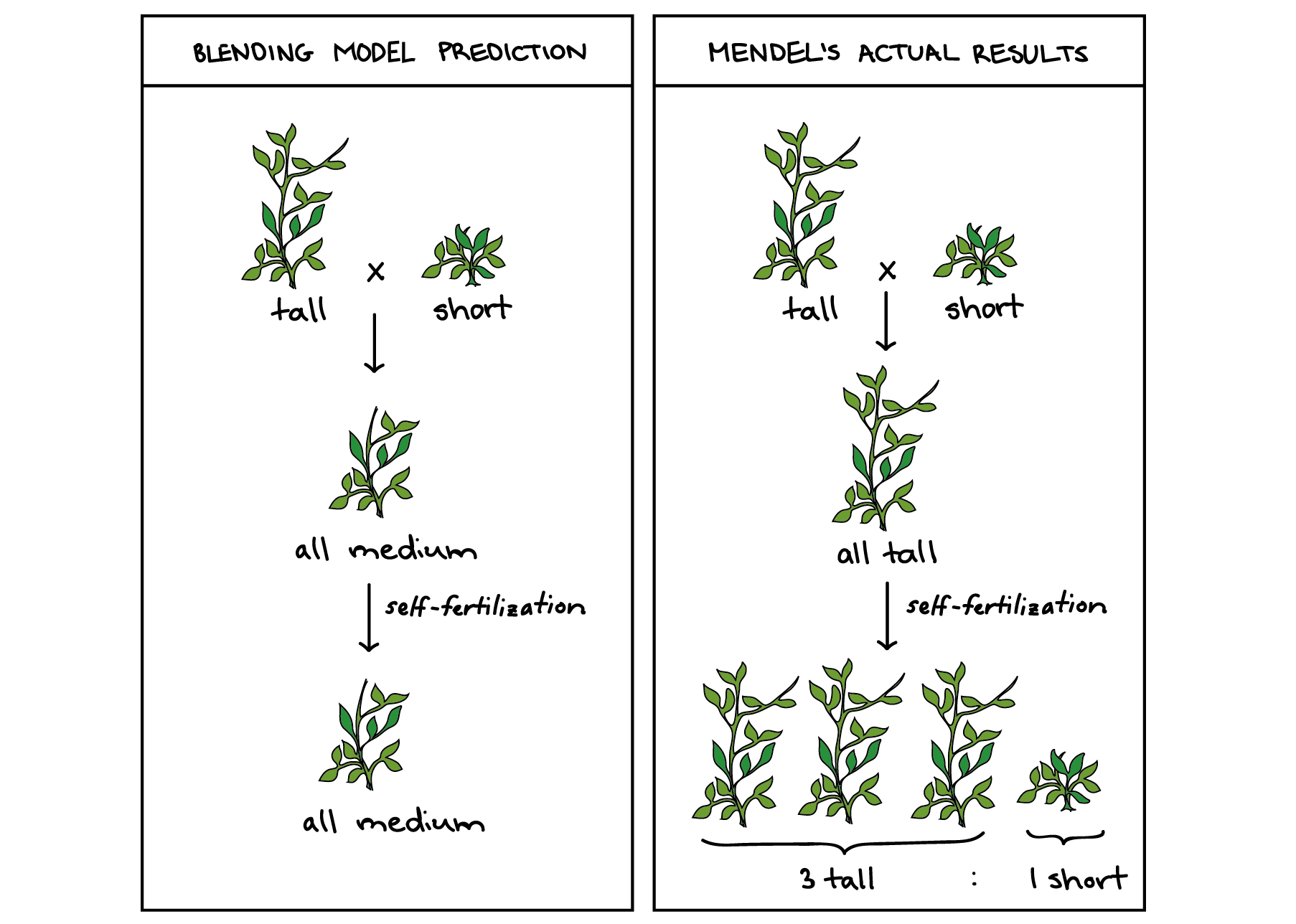
A similarly transformative revolution in human understanding can be observed in the realm of genetics. In a field predicated on the seemingly innocuous question of 'why do offspring resemble their parents?, the groundbreaking work of Gregor Mendel and James Watson and Francis Crick unleashed an avalanche of new insights and discoveries that would upend conventional wisdom and usher in a new era of understanding.
In the case of genetics, an intricate web of 'good' explanations coalesced to yield a breakthrough that would forever change our understanding of life itself. By forging connections between seemingly disparate fields - from mathematics and statistics to botany and biology - Mendel, Watson, and Crick were able to piece together the fundamental building blocks of heredity, thereby laying the groundwork for the modern field of genetics.
[](https://cdn.kastatic.org/ka-perseus-images/b966bcd0e55933e24836c4afe4a2a9889247579c.png)
*Mendel with pea plants - Genetics foundation*
These examples, while seemingly disparate in their subject matter, are united by their reliance on the power of better explanations. Be it in the realm of chemistry or genetics, the pursuit of truth is, at its core, a collective enterprise - a virtuous cycle in which our collective understanding of the world propels us along a perpetual trajectory towards greater understanding.
### Practical Implications for College Students
The ramifications of this symbiotic relationship between explanations and understanding are far-reaching and profound. Its relevance to the college experience is particularly noteworthy; by embracing and internalizing the power of better explanations, students can unlock their full potential and position themselves for success in their academic and professional pursuits. Consider the following practical implications:
#### Encourages Interdisciplinary Thinking
The pursuit of good explanations demands that we transcend the narrow confines of our chosen disciplines and embrace the boundless potential of interdisciplinary thinking. By recognizing the value of diversity in thought and perspective, students can break down the barriers that separate fields of study and weave together a cohesive narrative that transcends the sum of its parts.
[](https://images.routledge.com/common/jackets/crclarge/978103228/9781032283241.jpg)
*Interdisciplinary thinking in education*
#### Fosters Curiosity and Critical Thinking
In their quest for understanding, students are compelled to question their assumptions and interrogate their own prejudices. This process of introspection is essential for cultivating a healthy sense of intellectual humility, fostering a growth mindset and encouraging the exploration of new ideas.
#### Cultivates Resilience and Adaptability
By embracing the fragility inherent in our explanations, students develop the resilience and adaptability necessary to navigate the ever-changing landscape of human understanding. As our knowledge expands, so too must our willingness to confront the limitations of our own understanding and to adapt our explanations accordingly.
### Conclusion
In conclusion, the power of better explanations to engender an infinity of even better ones is the very lifeblood of human understanding. By embracing this virtuous cycle, we can transcend the limitations of our own ignorance and forge ahead along the path of enlightenment. Whether in the realms of chemistry, genetics, or the myriad other disciplines that constitute the tapestry of human knowledge, the pursuit of truth demands that we remain ever vigilant in our quest for understanding; for it is through the power of explanations that we may continue to build upon the collective edifice of human understanding.
For those seeking to further explore the topics discussed herein, the works of Nassim Nicholas Taleb and David Deutsch are an excellent starting point. Moreover, the fields of epistemology, philosophy of science, and the history of ideas offer ample fertile ground for the curious mind. Ultimately, it is through the pursuit of these ideas that we may continue to refine our understanding of the world, ensuring that our explanations remain forever tethered to the pursuit of truth.
Last updated: 2024-06-16
Related Books


Related Knowledges