### Probability as Universal Knowledge Representation: A Key to Infinity
Welcome, students! Today, we will embark on an exciting journey into the realm of probability, as a universal tool for knowledge representation. This concept, rooted in the principles of epistemology and the philosophy of science, enables us to quantify uncertainty, manage risk, and make better decisions. In this lesson, we will explore the core ideas of probability as a knowledge representation and delve into its various applications.
## Introduction: Probability and its Relevance
Probability, as a branch of mathematics, has traditionally been used for predicting outcomes of random phenomena. However, physicist and philosopher David Deutsch, in his groundbreaking work "The Beginning of Infinity," broadens the scope of probability by considering it as a tool for knowledge representation.
In this context, probability is used to express the extent of our confidence in a specific theory or concept when confronted with incomplete information. This allows scientists and other knowledge-seekers to evaluate and compare theories consistently, even when some aspects of the theories are uncertain or unknown.
## Probability Applications
To illustrate the practical applications of probability as a universal knowledge representation, let us explore some examples in different domains, including physics, finance, and artificial intelligence.
### Quantifying Uncertainty in Physics
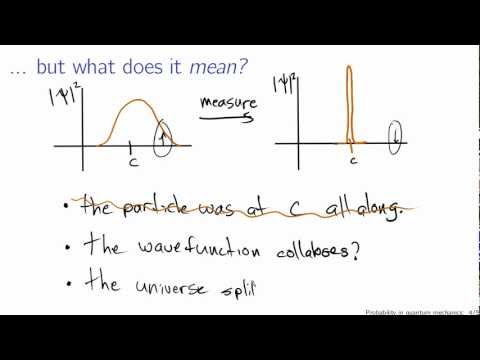
Since the dawn of modern science, physicists have been striving to develop comprehensive theories that can explain the workings of the universe. However, despite our best efforts, there are still several areas of physics where we can only formulate probabilistic theories. One such example is the behavior of electrons in atoms.
[](https://i.ytimg.com/vi/wWZyLGEqgio/hqdefault.jpg)
*Quantifying Uncertainty in Physics*
electron orbitals have a certain probability density where the electron is more likely to be. While physicists cannot predict the precise position or momentum of an electron at any given moment, they can calculate the probability of finding an electron within a given range of positions or momenta. By employing probability as a knowledge representation, physicists can even formulate precise theories that can make accurate predictions with a certain degree of confidence.
### Assessing Risks in Finance
Financial analysts and investors can also benefit from probability as a universal knowledge representation. By assessing the likelihood of different possible outcomes, financial professionals can make more informed investment decisions. Probability theory enables them to quantify and manage risks associated with their portfolios.
[](https://media.wiley.com/product_data/coverImage300/91/14051836/1405183691.jpg)
*Assessing Risks in Finance*
For example, imagine a financial analyst is constructing a portfolio consisting of two stocks, A and B. To make a well-informed decision, the analyst must consider the probability that each stock's value will go up or down, the potential gains or losses, and the associated uncertainties. Using probability, the analyst can quantify these uncertainties and create a portfolio that balances risk and return.
### Improving Decision-Making in Artificial Intelligence
When designing intelligent systems, artificial intelligence researchers need a way to manage uncertainty. Probability theory, as a universal knowledge representation, can help AI agents make decisions and learn from data more effectively, even when faced with incomplete or ambiguous information.
[](https://m.media-amazon.com/images/I/51ttdZvjHwL._AC_UF1000,1000_QL80_.jpg)
*Artificial Intelligence Decision-Making*
Consider, for instance, a self-driving car that needs to make a decision at an intersection with poor visibility. The car has sensors that continuously gather data about its surroundings, but the information is incomplete and uncertain. By using probability distributions, the car can estimate the likelihood of various possible scenarios and make informed decisions, minimizing the risks and maximizing the safety of passengers and other road users.
## Conclusion: Embracing the Infinite Power of Probability
In this lesson, we have explored the concept of probability as a universal knowledge representation and considered its numerous applications in various domains, from physics to finance and artificial intelligence. By applying probability theory, we can quantify and manage uncertainty, and make better decisions in the face of incomplete information. To further deepen your understanding of this topic, consider the following suggestions for further study:
- Read David Deutsch's "The Beginning of Infinity".
- Research the history of probability with works like "A History of Probability and Statistics and Their Applications before 1750" and "A History of Probability in the Seventeenth Century."
- Delve into the application of probability theory in quantum mechanics, such as "Quantum Theory for Mathematicians."
- Study the use of probability in machine learning, AI, and decision theory, including "Probabilistic Machine Learning" and "Decision Theory."
- Consider how the philosophy of probability and its different interpretations (e.g., frequentist, Bayesian) impact its practical applications.
By embracing the universal nature of probability and its power to represent knowledge, we can deepen our understanding of the world and make better decisions in various aspects of our professional and personal lives. Happy exploring, students!
Last updated: 2024-04-06
Related Books

Related Knowledges