# Prediction Requires Understanding: The Profound Implication of David Deutsch's Idea
[](https://m.media-amazon.com/images/I/818fIMXxgOL._UF1000,1000_QL80_.jpg)
*David Deutsch's groundbreaking book, \*The Beginning of Infinity\*.*
In his groundbreaking book *The Beginning of Infinity*, David Deutsch, a renowned physicist and pioneer of quantum computation, asserts that prediction is not merely a matter of empirical observation and pattern recognition. Instead, he argues that *prediction requires understanding* – that is, a deep and far-reaching explanation of the underlying mechanisms and processes.
This idea is not a mere semantic quibble or a minor adjustment to our understanding of the scientific endeavor. Instead, it reflects a profound shift in our conception of knowledge, learning, and the nature of reality itself.
## The Core Concept and Relevance
At the heart of Deutsch's thesis is the distinction between *knowledge* and *information*. Information, in this context, refers to any set of facts or data that can be encoded and transmitted, while knowledge denotes the capacity to *explain* and *predict* phenomena based on a deep understanding of their underlying principles.
[](https://knowmax-ai-website.s3.amazonaws.com/wp-content/uploads/2024/07/18161031/Data-vs-Information-vs-Knowledge.webp)
*The distinction between information and knowledge.*
In other words, knowing that a particular plant grows in a specific type of soil and climate (information) is qualitatively different from understanding the biochemical and ecological processes that enable the plant's growth (knowledge).
This distinction is crucial because, according to Deutsch, *only knowledge – not information – can generate reliable predictions*. Thus, if we want to predict the behavior of a system accurately, we need to delve beneath the surface of empirical patterns and develop a comprehensive, multi-level explanation of the underlying mechanisms.
## Practical Implications: Examples and Applications
### Case Study 1: The Failure of the Green Revolution in Africa
The so-called 'Green Revolution' in agriculture, which began in the mid-20th century, was premised on the idea that introducing high-yielding crop varieties, coupled with increased use of chemical fertilizers and irrigation, would significantly boost agricultural productivity.
Initially hailed as a resounding success in countries such as Mexico and India, the Green Revolution, however, faltered when it came to sub-Saharan Africa. Despite the adoption of the same technologies and farming practices that had proven so successful elsewhere, agricultural productivity in Africa stagnated, giving rise to the paradox of the 'technological leap' that never was.
Deutsch's idea sheds new light on this conundrum by highlighting the importance of understanding over mere information transfer. Specifically, the Green Revolution focused on transplanting a specific set of technologies and practices from one context to another, without paying sufficient attention to the underlying ecological, social, and economic conditions prevailing in Africa.
As a result, the Green Revolution failed to engender the same levels of productivity gains in Africa as it had in other parts of the world. This failure underscores the vital role of understanding in prediction and suggests that a 'one-size-fits-all' approach is unlikely to yield the desired results in vastly different contexts.
[](https://www.iatp.org/sites/default/files/styles/banner/public/2021-12/35708573672_b200d4e097_k.jpg?itok=R-syH8E7)
*The Green Revolution in Africa: A case study in understanding vs. information.*
### Case Study 2: Predicting Climate Change
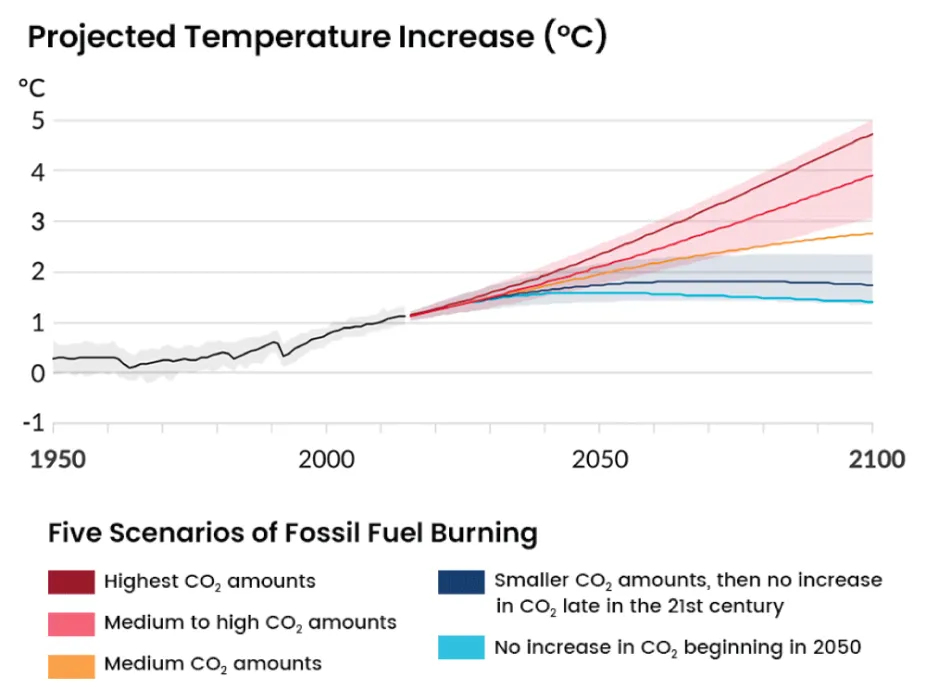
The challenge of predicting climate change provides another compelling illustration of the importance of understanding in generating reliable predictions. While it is relatively easy to compile data on greenhouse gas concentrations, temperatures, and other relevant variables, accurately predicting the *patterns and trajectories* of climate change requires a far-reaching explanation of the complex interplay of various factors.
For instance, the *feedback loops* and *tipping points* inherent in the Earth's climate system render traditional prediction methods inadequate. Consequently, climate scientists have turned to sophisticated computer models that simulate the behavior of the climate system, incorporating a wide range of factors and processes.
These models, however, are only as good as the underlying understanding of the climate system and its dynamics. Consequently, progress in climate prediction has been intimately tied to advances in our understanding of the Earth's climate system, from the behavior of individual molecules to the intricate interactions between the atmosphere, oceans, and land surfaces.
[](https://scied.ucar.edu/sites/default/files/styles/extra_large/public/images/Global-surface-temperature_6July2022.png.webp?itok=hcfkSyD9)
*Predicting climate change: The role of understanding in complex models.*
## Conclusion: Key Insights and Further Exploration
In conclusion, David Deutsch's idea that *prediction requires understanding* underscores the crucial role of explanation and comprehension in generating reliable predictions. By shifting our focus from accumulating information to developing understanding, we can better appreciate the complexity and subtlety of the world around us.
This idea has far-reaching implications for a wide range of domains, from science and technology to policy and education. Specifically, it invites us to move beyond shallow, superficial explanations in favor of deep, multi-layered accounts of the phenomena that we seek to predict and control.
Further exploration of this idea might include the following questions and issues:
* What are the philosophical and epistemological foundations of Deutsch's idea? How does it relate to the work of other thinkers and scholars?
* How can we cultivate and assess understanding in various domains, from science and mathematics to the humanities and the arts?
* What are the implications of Deutsch's idea for the design and implementation of educational systems and curricula?
By engaging with these and other related questions, we can deepen our appreciation of the profound insights contained in Deutsch's idea and harness its potential for transforming our understanding of the world and our place in it.
Last updated: 2025-08-28
Related Books

Related Knowledges