# Universal Truth Exists and Evolves: A Key Concept from David Deutsch's "The Beginning of Infinity"
[](https://m.media-amazon.com/images/I/61tbWr-U6VL._AC_UF1000,1000_QL80_DpWeblab_.jpg)
*Cover of 'The Beginning of Infinity' by David Deutsch*
## Introduction
In his critically acclaimed book "The Beginning of Infinity," physicist and philosopher David Deutsch posits that universal truth not only exists but continually evolves through human inquiry and discovery. This idea significantly diverges from the traditional view that truth is predetermined, unchanging, and independent of human understanding. By arguing that universal truth exists and evolves, Deutsch offers a more optimistic view of humanity's capacity for unlimited knowledge acquisition and problem-solving.
Deutsch's concept of evolving universal truth is founded on three key assumptions. First, he contends that there exists a single, objective reality. Second, human inquiry and discovery can reveal aspects of this reality over time, resulting in increasingly accurate theories and descriptions. Last, these theories, and descriptions can be falsified, necessitating revisions as humans deepen their understanding of reality. In this way, universal truth exists and is shaped by human knowledge acquisition and refutation processes.
This knowledge point is of particular relevance to college students as it offers a nuanced view of how knowledge develops. Moreover, having a profound understanding of the evolution of universal truth can help students better appreciate the role of scientific inquiry and contribute to the advancement of their academic fields.
## Examples and Applications
### Example 1: Evolution of the Heliocentric Model
[](https://assets.science.nasa.gov/content/dam/science/esd/eo/content-feature/orbitshistory/images/copernicus.png)
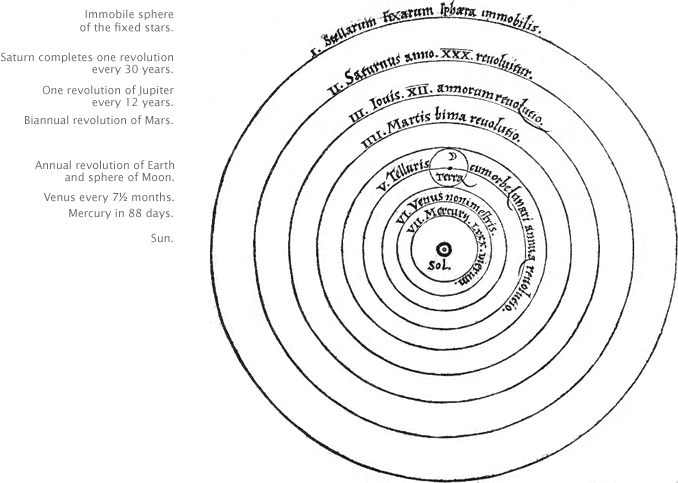
*Evolution from the Geocentric to the Heliocentric Model*
One of the most famous examples of the evolution of universal truth is the shift from the geocentric model to the heliocentric model of the solar system. Originally, the geocentric model, which placed the Earth at the center of the universe, was the widely accepted explanation for celestial body movements. However, challenges to the geocentric model emerged as early as the third century BCE with Aristarchus of Samos proposing the heliocentric model—a sun-centered system. Though not widely accepted at the time, the idea persisted, leading to numerous astronomical observations and refinements of the heliocentric model (Copernicus, Brahe, Kepler, and Galileo). Today, the heliocentric model is a robust, well-established pillar of astrophysics.
The evolution of the heliocentric model exemplifies the concept that universal truth exists and evolves because it demonstrates the way human research and inquiry iteratively reveal and refine aspects of reality.
### Example 2: Theories of Light and Matter
[](https://scx2.b-cdn.net/gfx/news/2023/physicist-develops-a-n.jpg)
*Illustration of the Quantum Theory of Light and Matter*
Throughout history, the relationship between light and matter has been the subject of much debate and critical revision. From the seventeenth through the nineteenth centuries, scientists waivered between the particle and wave theories of light. Initially, the particle theory was predominant, but the undulation of light could not be explained through particles alone. Subsequently, the wave theory was considered more comprehensive and accurate. However, experiments in the early twentieth century, including the photoelectric effect and the Compton effect, showed that the wave theory alone was insufficient. This led to the introduction of the quantum theory of light, positing that it exhibits properties of both waves and particles, leading to a still more nuanced understanding of this fundamental relationship.
The evolution of theories of light and matter supports the concept of evolving universal truth since it exhibits the continuous process of refutation and revision in scientific understanding.
## Conclusion
David Deutsch's idea that universal truth exists and evolves provides a profound foundation for college students to explore the advancement of knowledge and scientific inquiry. Through the illustrative examples of the heliocentric model and theories of light and matter, the iterative and ever-evolving nature of human understanding becomes apparent. Embracing the concept that truth is not fixed, but rather, it's a continuously evolving target, drives curiosity, and fosters an appreciation for human ingenuity.
## Further Exploration
1. Watch the TED Talk "David Deutsch: The beginning of infinity."
2. Read "The Fabric of Reality" by David Deutsch for further elaboration of the concept of evolving universal truth.
3. Investigate other salient examples in the history of science that support the concept of universal truth existing and evolving, such as the theories of electromagnetism and evolution.
By deeply investigating the idea that universal truth exists and evolves, you not only position yourself as an informed, critical thinker but also deepen your capacity to contribute to human progress and innovation.
Last updated: 2024-05-15
Related Books

Related Knowledges