### The Crucial Role of Error in Progress: An In-depth Examination
#### Introduction
[](https://upload.wikimedia.org/wikipedia/commons/thumb/0/04/David_Deutsch.jpg/640px-David_Deutsch.jpg)
*David Deutsch, author of \*The Beginning of Infinity\**
In his seminal work *The Beginning of Infinity*, physicist and philosopher David Deutsch underscores the importance of errors and how learning from them is central to our progress as a species. Deutsch's work emphasizes that error and its subsequent rectification through knowledge acquisition and refinement facilitate true understanding and foster continual advancement. In this comprehensive overview, we will delve into Deutsch's concept and its practical implications by providing examples and applications, ultimately guiding students to a deepened understanding and ability to extrapolate this idea to their pursuits.
#### Core Concept: Learning from Error
To make the most of this knowledge point, one must first understand that error is inherent in and essential to the entire process of learning and discovery. We're wrong more often than we may like to admit—and that's perfectly okay. According to Deutsch, error can be broken down into several distinct elements, including:
- *Observation*: Our perception of the discrepancy or contradiction in our knowledge or experience
- *Conjecture*: Formulating a hypothesis or possible explanation for the error
- *Criticism*: Testing the conjecture through experimentation and challenging its validity in the pursuit of better ideas and theories
- *Refinement*: Revising or discarding the original conjecture in light of the criticism, resulting in knowledge growth
In *The Beginning of Infinity*, Deutsch presents the *fallibilist* viewpoint, which emphasizes the fact that human knowledge is inherently flawed and incomplete. Still, it also acknowledges that humans possess the intellectual wherewithal and capacity to challenge their understanding and ultimately revise or enrich their knowledge.
[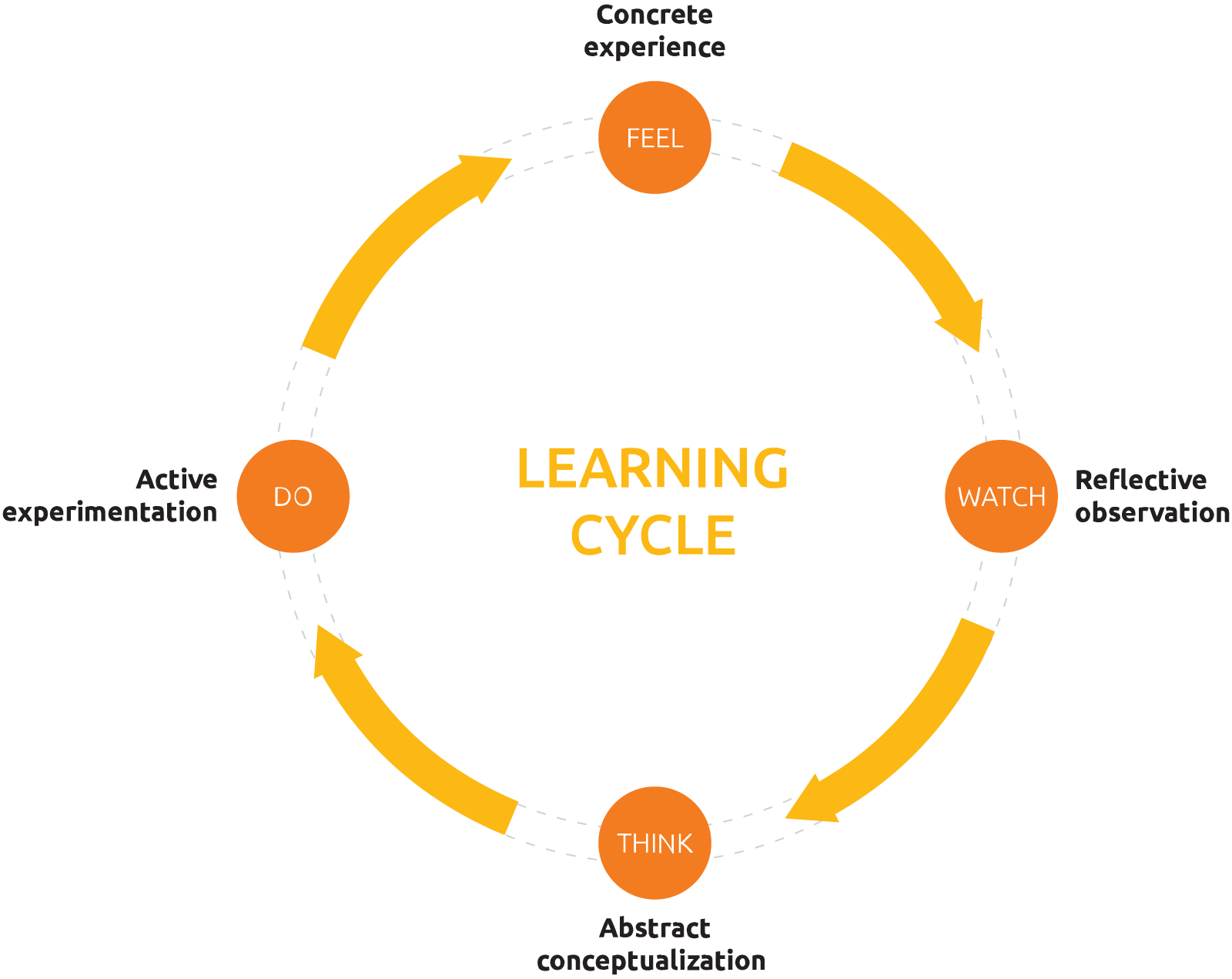](https://inchainge.com/wp-content/uploads/2021/10/lc-001.png)
*The iterative process of learning from error*
This iterative process of error, criticism, and improvement is vital to the scientific method. However, it is also a framework for general learning and growth outside scientific pursuits, including the arts, humanities, ethics, politics, and everyday life.
#### Practical Implications and Applications
To truly understand the pervasiveness and significance of the role of learning from errors, let us consider a few diverse examples that elucidate the value of embracing our fallibility and learning from our mistakes.
##### Example 1: Science and Engineering
The first example stems directly from Deutsch's background in science and engineering. Throughout history, scientists and engineers have proposed a litany of incorrect theories or have made faulty calculations. However, each of these errors provided unique learning opportunities, which ultimately lead to substantial gains in knowledge and progress.
Consider an early historical example in the annals of physics: the infamous discrepancy encountered in the calculation of Mercury's orbit around the Sun, perplexing astronomers for decades. While Urbain Le Verrier postulated the existence of the elusive planet Vulcan, Albert Einstein's general theory of relativity actually resolved the calculation predicament. Despite the failed hypothesis about a missing planet, the iterative process of conjecture, criticism, and refinement eventually led to the most accurate workings of the universe's cosmic dance.
[](https://i0.wp.com/www.sciencenews.org/wp-content/uploads/2018/04/041018_ec_mercury-orbit_feat.jpg)
*Mercury orbit calculation and the theory of relativity*
##### Example 2: Computer Programming
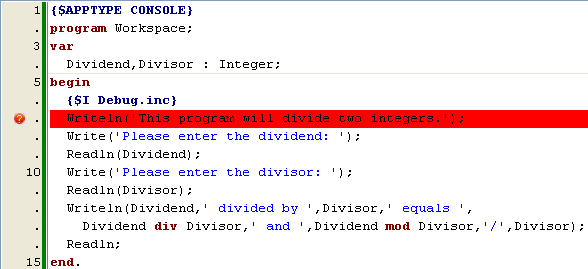
Another example of the importance of recognizing, understanding, and moving past errors is illustrated in the field of computer programming. In software development, debugging is a crucial step in deploying functional, reliable products that consumers have come to rely upon in their daily lives. While most software bugs are eventually identified and rectified before final implementation, many bugs do escape early detection and are only discovered through user feedback and vigilant monitoring of feedback loops.
[](https://www.freetext.org/Introduction_to_Computer_Programming/Assets/Images/GX29.png)
*Debugging in computer programming*
In the case of hidden or overlooked bugs, rectification becomes difficult, particularly when a defect leads to unanticipated consequences. One notorious historical example is the case of the Ariane 5 Flight 501 disaster, where a software bug in the control systems resulted in the catastrophic failure of the European Space Agency (ESA) rocket. By embracing the iterative, critical process of identifying, rectifying, and learning from the error, the ESA has made substantial strides in improving the reliability and success rate of Ariane rocket launches.
##### Example 3: Aircraft Disasters and Safety Improvements
Beyond scientific and engineering endeavors, the central role of error in progress and improvement is evident in the case of the airline industry. Aircraft disasters, such as those involving the Boeing 737 MAX line, underscore the importance of self-correction in enabling the industry to minimize the risk of such incidents in the future.
By conducting comprehensive investigations into aviation accidents, industry professionals and safety organizations can identify core issues leading to a specific incident. In the aftermath of an accident, investigators propose updates to aircraft designs, maintenance policies, or flight crew training. This iterative process of error, criticism, and refinement has yielded substantial improvements in aviation safety over the past century.
[](https://commercial.allianz.com/news-and-insights/expert-risk-articles/how-aviation-safety-has-improved/_jcr_content/root/parsys/wrapper/wrapper/grid_2_columnlayout/grid-0-par/image_28533926.img.82.3360.png/1687356896471/agcs-aviation-safety-dangers-body.png)
*Aircraft safety improvements*
#### Conclusion
In conclusion, the significance of recognizing the role of error and learning from it is immense and manifests in various fields and domains. This recognition and subsequent learning can be applied in every sphere of human endeavor to drive progress and learning, including scientific and engineering disciplines, the arts, and the humanities.
As students explore the depths of their chosen fields, cultivating an understanding of the value of an iterative process of conjecture, criticism, and refinement equips them to navigate and overcome challenges with resilience, innovation, and determination.
To further explore this concept, consider pursuing the following recommendations:
- Further delve into *The Beginning of Infinity* by David Deutsch to grasp the full scope of intellectually audacious ideas.
- Investigate further historical examples where error was instrumental in progress and learning, and where learning from mistakes contributed to significant scientific and engineering breakthroughs.
- Consider real-life case studies and applications in which errors, when acknowledged and confronted, led to substantial improvements in industries or sectors.
Incorporating the knowledge point *Learning from error is the key to progress* into the intellectual framework of students will better prepare them for the challenges and opportunities they are likely to encounter in the course of their academic and professional careers.
Last updated: 2024-04-05
Related Books

Related Knowledges