# Unlimited Potential for Knowledge Growth: Tapping into the Infinite Frontier
_Inspired by David Deutsch's_ [_The Beginning of Infinity_](https://en.wikipedia.org/wiki/The_Beginning_of_Infinity)
[](https://pi.tedcdn.com/r/pe.tedcdn.com/images/ted/b5bd878df6cbd99d226018b2653636f66824e499_254x191.jpg?w=255)
*David Deutsch, author of The Beginning of Infinity*
## Introduction
Welcome to our intellectual journey through one of the most transformative ways of understanding and experiencing the world: the unlimited potential for knowledge growth. Although the idea has been a subject of intrigue for centuries, it was the theoretical physicist David Deutsch who eloquently presented and justified it in his groundbreaking book, _The Beginning of Infinity_ (henceforth BoI).
In essence, the unlimited potential for knowledge growth underlines the notion that human knowledge is not constrained by predetermined boundaries. Instead, it has the propensity to expand infinitely. We owe the ever-growing nature of knowledge to conjecture and criticism: creating hypotheses about the world and actively seeking to disprove them. This idea of unbounded knowledge growth stands in stark contrast to the more fatalistic notion of finite knowledge.
So why spend time learning about the unlimited potential for knowledge growth? Here are a few compelling reasons:
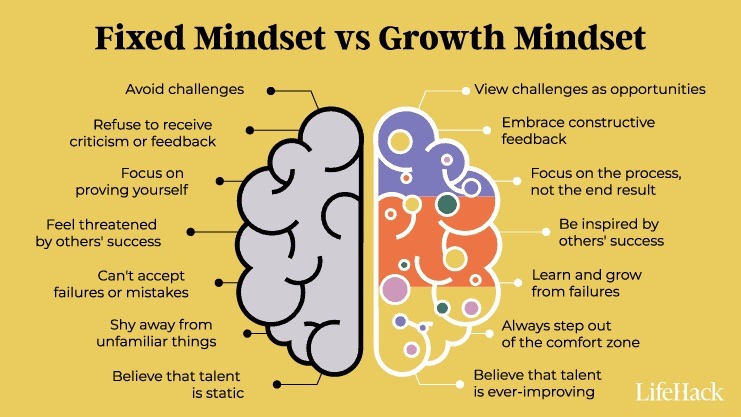
1. **Fostering growth mindset:** Adopting and internalizing the unlimited potential for knowledge growth leads to the development of a growth mindset, as opposed to a fixed one. This growth mindset paves the way for learning opportunities, personal growth, and resilience.
[](https://mentorloop.com/wp-content/uploads/2023/05/growth-vs-fixed-mindset.jpeg)
*Illustration of a Growth Mindset vs Fixed Mindset*
2. **Encouraging curiosity:** The idea of unlimited potential serves as intellectual fuel for curiosity and exploration, enriching our lives and rendering them more meaningful.
3. **Inspiring problem-solving:** It equips us to tackle complex problems and embrace uncertainty instead of fixating on unchanging dogmas.
## Unlimited Potential for Knowledge Growth: Core Concepts
To truly grasp and appreciate the idea of unlimited potential for knowledge growth and its relevance in our daily lives, we must explore and understand the fundamental concepts underpinning it, such as:
- **Knowledge as a process:** In BoI, Deutsch argues against 'knowledge as a thing' and supports 'knowledge as a process.' A vast majority views knowledge as established facts and ideas (a 'thing') accumulated throughout history. However, the unlimited potential for knowledge growth considers it an evolving and self-correcting process.
- **Actively seeking ignorance:** A vital aspect of the unlimited potential concept is the realization that ignorance isn't merely a shortcoming but an opportunity waiting to be seized. Confronting and exploring ignorance contributes to the expansion of our knowledge while refining our understanding.
- **Conjecture and criticism:** Deutsch maintains that the cornerstone of error correction (and thereby unbounded knowledge growth) is the duo of conjecture and criticism. Conjecture involves proposing ideas or solutions to problems based on prior knowledge and information. Criticism refers to the systematic attempt to falsify or refute the conjectures by employing evidence, logical thinking, and other conjectures and criticisms.
## Examples and Applications
### Case Study: Science and the Advancement of Human Knowledge
[](https://www.thoughtco.com/thmb/BdT2a-9EHeSFyPUs_-EcuUFL_Ao=/1500x0/filters:no_upscale%28%29:max_bytes%28150000%29:strip_icc%28%29/scientific-method-56a12d193df78cf772682814.jpg)
*Diagram of the Scientific Method Process*
The philosophy of unlimited potential for knowledge growth echoes profoundly through the scientific method, the very bedrock of scientific discovery and innovation. Encapsulated in the scientific method are the ideas of generating hypotheses (conjecture), examining experimental results (criticism), and refining or discarding theories based on this exchange (iterative improvement).
Take, for instance, the historical development of the atomistic model – the idea that all matter in the universe is made up of tiny, indivisible building blocks known as atoms. Around 400 BCE, Leucippus and Democritus pioneered the first ancient atomistic model based on philosophical arguments.
As science progressed through the centuries, the atomistic model faced several waves of criticism and modifications. For example, the ground-breaking discovery of radioactivity challenged the idea of indivisible atoms. This consequential finding prompted physicists to propose subatomic particles (conjecture), such as electrons (J.J. Thomson, 1897) and protons (Ernest Rutherford, 1911).
In time, the atomistic model underwent a paradigm shift from a classical to a quantum mechanical perspective. Reeling from the implications of quantum mechanics and the discovery of new particles, our understanding of atoms evolved from indivisible, solid objects to complex, dynamic systems that exhibit probabilistic qualities.
[](https://i0.wp.com/www.compoundchem.com/wp-content/uploads/2023/09/History-of-the-Atom-2023.png?fit=2646%2C1871&ssl=1)
*Evolution of the Atomistic Model*
### Case Study: Artificial Intelligence and the Quest for Human-Level Intelligence
The field of Artificial Intelligence (AI) seeks to develop intelligent systems that can perform tasks requiring human-level cognitive abilities, such as understanding natural language, recognizing patterns, and making decisions. Despite notable advances in the past few decades, AI has yet to achieve human-like intelligence.
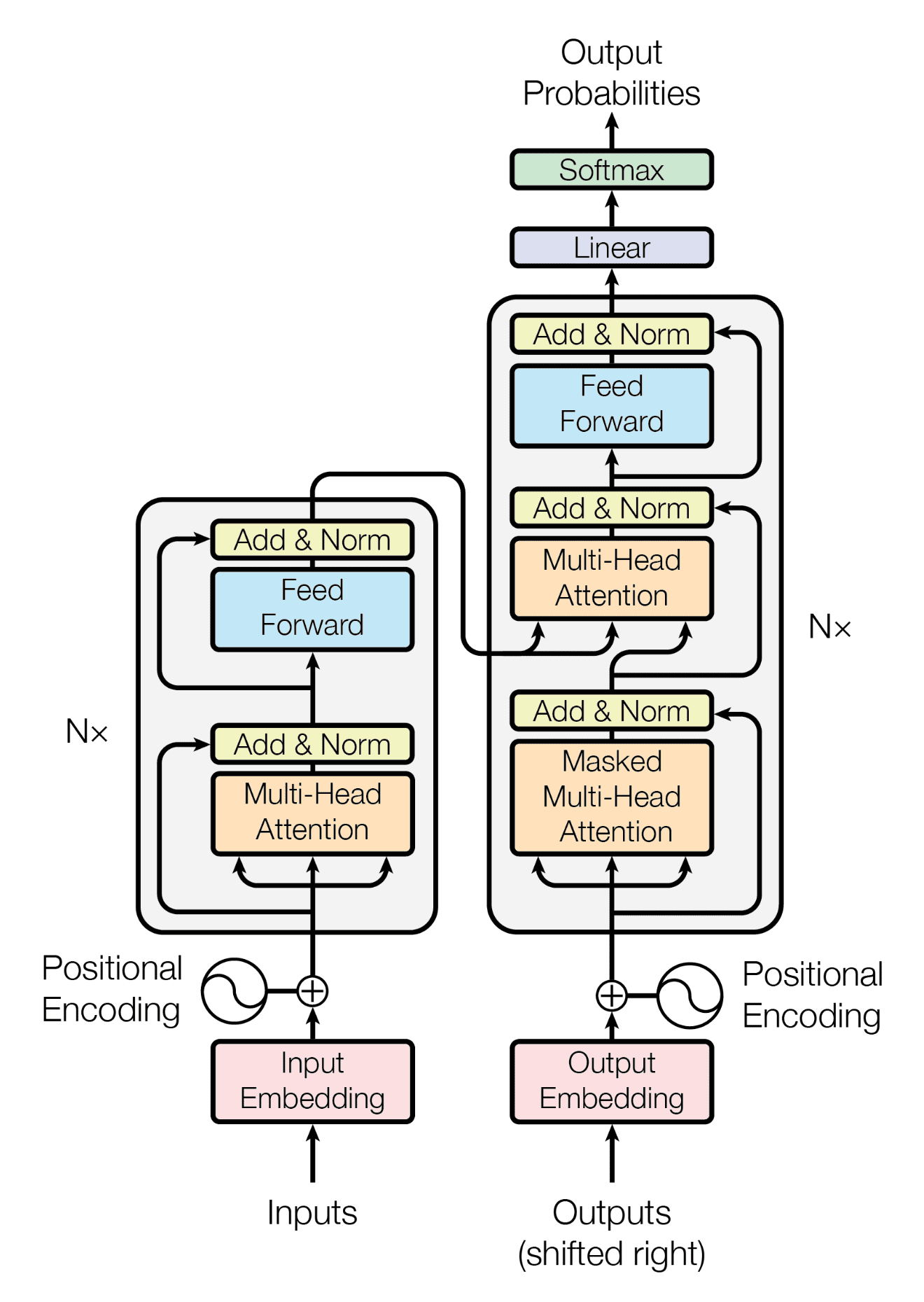
The unlimited potential for knowledge growth can be observed in the iterative, conjecture-criticism dynamic that characterizes AI research, particularly in the subfield of machine learning and neural networks. A prominent example is the development of the transformer neural network – a disruptive innovation that supplanted traditional recurrent neural networks in natural language processing.
The inception of the transformer architecture was birthed from a conjecture challenging the predominant assumption that encoder-decoder architectures must process sequences sequentially. Vaswani et al. (2017) proposed a novel architecture that computes hidden states for all positions simultaneously using self-attention mechanisms. These innovations sparked a firestorm of academic critique and further refinements.
[](https://machinelearningmastery.com/wp-content/uploads/2021/08/attention_research_1.png)
*Transformer Neural Network Architecture*
Following the release of the original transformer paper, researchers tirelessly sought to address its identified limitations, such as substantial computational complexity and performance variance among different sequence lengths. Consequently, subsequent works developed novel adaptations, including BERT (Devlin et al., 2019), RoBERTa (Liu et al., 2019), and ELECTRA (Clark et al., 2020). These refined models significantly outperformed their predecessors on a wide range of natural language processing tasks.
The transformer case study amply demonstrates the unfolding of the unlimited potential for knowledge growth: question, challenge, refine, and repeat.
## Conclusion
The unlimited potential for knowledge growth championed by David Deutsch's BoI presents a radical yet compelling departure from traditional views on knowledge and understanding. By embracing the fluid and malleable nature of human knowledge and nurturing the innate desire to learn and grow, it encourages a more dynamic approach to problem-solving, decision-making, and self-improvement.
### Extending your exploration on unlimited potential for knowledge growth
As you proceed to traverse the vast and intriguing intellectual landscape of unbounded knowledge growth, consider the following thought-provoking questions and activities to further deepen your understanding and appreciation:
- Delve into the [philosophy of science and Popper's falsifiability criterion](https://plato.stanford.edu/entries/falsification/).
- Contemplate the role of unlimited potential for knowledge growth in [moral and ethical education](https://www.tandfonline.com/doi/abs/10.1080/13504620601068815).
- Reflect on the connection between the unlimited potential for knowledge growth and the cognitive psychology concepts, [growth mindset](https://www.khanacademy.org/khan-academy/career-advice/psychology-of-learning/growth-mindset/a/what-growth-mindset-is-not) and [fixed mindset](https://www.khanacademy.org/khan-academy/career-advice/psychology-of-learning/growth-mindset/v/intro-to-fixed-mindset).
- Dissect the role of [curiosity and creativity](https://www.sciencedirect.com/science/article/pii/S0160289617300952) in the unlimited potential for knowledge growth and share your thoughts on ways to foster both in your personal and academic life.
- Design and run a small-scale [educational experiment](https://www.researchgate.net/publication/321626733_The_Impact_of_Integrating_Curiosity_in_Instructional_Design_on_Learning_Outcomes) applying the BoI idea and compare the results with existing literature.
The journey to grasp the concept of the unlimited potential for knowledge growth equips us with the intellectual agility to face the challenges and intricacies of tomorrow's world and ultimately become lifelong learners.
Last updated: 2024-04-09
Related Books

Related Knowledges