# Ur-Physics: Unifying Theories and the Beginning of Infinity
_Ur-physics_ is a term coined by philosopher and physicist David Deutsch in his book, *The Beginning of Infinity: Explanations that Transform the World* (2011). It refers to the idea of a single, unified theory that can successfully explain and unite all physical phenomena in the universe. Often considered the "holy grail" of physics, ur-physics seeks to reconcile general relativity and quantum mechanics under a single conceptual framework, thereby illuminating the deep interconnections among the fundamental forces of nature.
[](https://www.physics.ox.ac.uk/sites/default/files/styles/scale_crop_732/public/user_photos/DD%20head%202018%20cropped.jpg?itok=OjBVMVxF)
*David Deutsch, author of The Beginning of Infinity*
By exploring ur-physics, we engage in a timeless quest for the most fundamental explanations of our universe and foster a deeper understanding of the logical and philosophical underpinnings of scientific discovery.
## Core Concepts and Relevance
In *The Beginning of Infinity*, Deutsch argues that the progress of knowledge in any domain is driven by the iterative processes of conjecture and refutation, where theories are continually challenged and refined to produce more explanatory power and encompass increasingly broader sets of phenomena. Ur-physics, then, represents the ultimate objective of this iterative process in the realm of fundamental physics.
As a unifying theory, ur-physics embodies the following core concepts:
1. **Unity**: Explaining the four fundamental forces (electromagnetic, weak nuclear, strong nuclear, and gravitational) within a single, coherent framework.
2. **Explaining all phenomena**: Successfully predicting, explaining, and simulating all physical phenomena in the universe.
3. **Logical depth**: Providing a deep, elegant, and mathematically sound structure that elucidates the interconnections of the fundamental forces.
4. **Testability**: Yielding clear and testable predictions that allow the scientific community to either support or refute its validity through empirical evidence.
[](https://m.media-amazon.com/images/I/71Z-T9RMiUL._AC_UF1000,1000_QL80_.jpg)
*Conceptual illustration of unified forces of nature*
The search for ur-physics is relevant because it represents a summit of understanding that would offer profound insights into the deep structure of the cosmos and our place within it. Additionally, it could potentially spark further breakthroughs across various scientific disciplines, given that a unified theory would have far-reaching implications for our understanding of the universe.
## Examples and Applications
In recent decades, several groundbreaking attempts have been made towards discovering ur-physics. While we have yet to achieve a fully unified theory, these efforts have resulted in the development of powerful and informative frameworks that significantly advance our understanding of the physical world.
### 1. Superstring Theory and M-Theory
One of the most prominent approaches towards discovering ur-physics is superstring theory, which posits that all particles are composed of tiny, one-dimensional "strings" instead of point-like particles. These vibrating strings give rise to the fundamental forces and elementary particles through various modes of vibration.
[](https://sayostudio.com/wp-content/uploads/2020/02/physics-string-theory.jpg)
*Representation of superstring theory*
While superstring theory proposed fascinating insights, it faced limitations in addressing the four fundamental forces uniformly due to inconsistencies between general relativity (a theory of gravity) and quantum mechanics (a theory for electromagnetism and nuclear forces). Addressing these challenges led to the conception of M-theory, the 11-dimensional parent theory that subsumes superstring theory within a broader framework.
As a potential ur-physics candidate, M-theory aims to reconcile all known physical phenomena under a single mathematical structure. It suggests that our observable reality arises from the spontaneous compactification of multiple dimensions in the 11-dimensional space of M-theory, thus providing a unified perspective on particle physics and cosmology.
### 2. Loop Quantum Gravity
An alternative approach to ur-physics is loop quantum gravity (LQG), which attempts to reconcile general relativity with quantum mechanics by treating space-time as a quantum entity composed of discrete nodes - the so-called spin networks.
LQG suggests that space-time is not a smooth manifold, but consists of a vast fabric of interconnected quantum loops. These loops, which can be understood as quantized excitations of the gravitational field, exhibit a discrete, granular structure that furnishes us with a new perspective on the nature of space itself.
[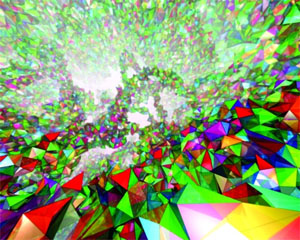](https://www.symmetrymagazine.org/sites/default/files/breaking/wp-content/uploads/2009/09/Quantum_M.jpg)
*Visualization of loop quantum gravity concept*
In proposing a description of space-time dynamics, LQG offers another potential avenue for the attainment of ur-physics. Its discrete structure, combined with its quantum origin, allows for a profound reevaluation of some of the foundational assumptions underlying our understanding of the physical world.
## Conclusion
By delving into the concept of ur-physics, we explore the frontier of human knowledge and seek to understand the most fundamental, intricate questions that animate the minds of scientists, philosophers, and scholars alike. The search for ur-physics reaffirms the inherently creative, interconnected nature of scientific discovery and underlines the importance of the symbiotic relationship between conjecture and refutation.
The examples highlighted - superstring theory, M-theory, and loop quantum gravity - showcase some of the most advanced attempts to construct a unified framework for the physical world. While complete ur-physics has yet to be discovered, the advances fostered by these attempts shed light on the depth, beauty, and elegance of the universe.
To continue exploring ur-physics and its applications, consider the following:
1. Investigate and compare other approaches to ur-physics such as twistor theory or causal sets.
2. Delve into the implications of loop quantum gravity in fields such as cosmology and black hole physics.
3. Discuss epistemological and philosophical topics related to ur-physics such as the nature of scientific realism or the role of mathematical symmetries in fundamental theories.
By critically engaging with these questions, we not only expand our understanding of the universe but also strengthen our ability to create and evaluate future conjectural frameworks that stretch beyond our current horizons.
Last updated: 2024-06-04
Related Books

Related Knowledges