# Tinkering and Discovering by Trial-and-Error: Insights from "Skin in the Game"
In our exploration of innovation, learning, and growth, we venture into a realm where the conventional path of linear progression is often outpaced by the chaotic, yet profoundly effective method of tinkering and discovering through trial-and-error. This concept, significantly highlighted in Nassim Nicholas Taleb's influential work, "Skin in the Game," serves as our compass in navigating the unpredictable terrain of real-world problem-solving and creativity.
## Introduction to Tinkering and Trial-and-Error
At its core, the philosophy of tinkering and discovering by trial-and-error champions the idea that the most valuable insights and breakthroughs often stem from hands-on experimentation, failures, and serendipitous accidents rather than from top-down, meticulously planned strategies. It is the antithesis of the theoretical ivory tower approach, advocating instead for a deeply engaged, iterative process where the stakes are real, the outcomes are uncertain, and the knowledge gained is profoundly grounded in experience.
This method underscores the importance of having "skin in the game," a term Taleb uses to describe the state of being personally invested and exposed to the risks and rewards of one's decisions. It implies a commitment to learning through doing, where the cost of failure is not just theoretical but tangible, thereby enriching the learning experience with layers of realism, urgency, and practical wisdom.
## Examples and Applications
### Technological Innovation
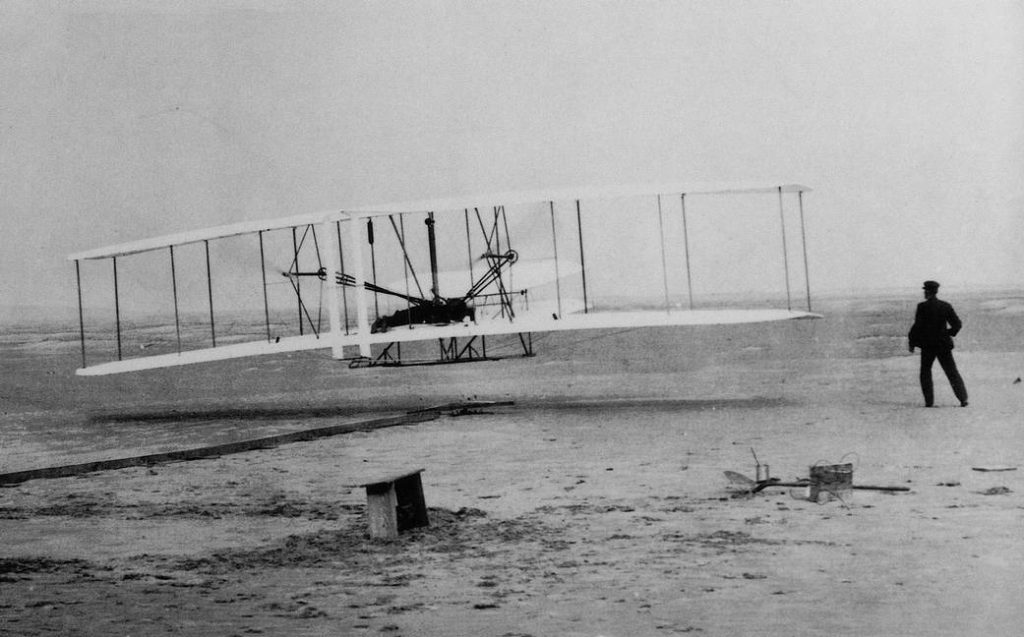
Consider the development of the airplane by the Wright brothers, which stands as a quintessential example of innovation achieved through trial-and-error. Unlike their contemporaries, who relied heavily on mathematical predictions and theoretical aerodynamics, Orville and Wilbur Wright adopted a hands-on approach. They built numerous prototypes, endured countless failed attempts, and learned from each mishap until they successfully achieved powered flight. This iterative process was grounded in physical experimentation, resilience in the face of failure, and an intimate understanding of the practical challenges involved, illustrating the power of tinkering and trial-and-error in driving technological breakthroughs.
[](https://spacecenter.org/wp-content/uploads/2019/12/206311main_wright_brothers_full-1024x637.jpg)
*Wright Brothers' first successful flight*
### Medical Breakthroughs
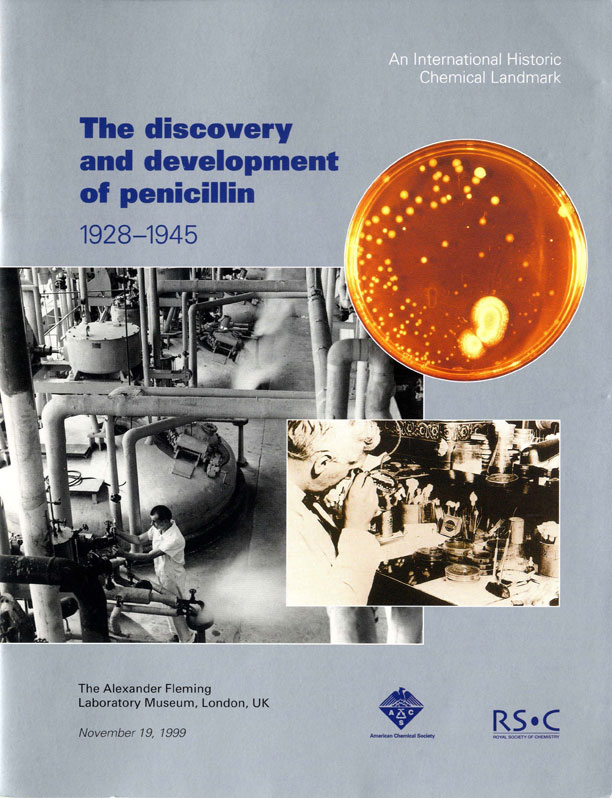
The discovery of penicillin by Alexander Fleming is another hallmark of serendipitous discovery through tinkering. In 1928, while studying influenza, Fleming noticed that a mold had contaminated a petri dish of Staphylococcus bacteria, creating a bacteria-free circle around itself. Rather than dismissing this as a mere contamination, Fleming's curious and observant mind recognized the potential of this accidental discovery, leading to the development of the world's first antibiotic. This breakthrough, which has saved countless lives, was not the product of a direct, goal-oriented research project but rather the outcome of an open, observant, and experimental mindset, embodying the essence of trial-and-error learning.
[](https://www.acs.org/content/acs/en/education/whatischemistry/landmarks/flemingpenicillin/_jcr_content/articleContent/columnbootstrap_0/column1/image_3.img.jpg/1383674286053.jpg)
*Alexander Fleming and the discovery of Penicillin*
### Business and Entrepreneurship
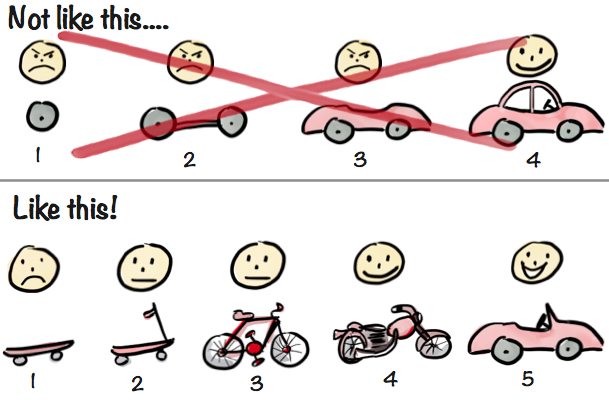
The lean startup methodology, popularized by Eric Ries, encapsulates the application of trial-and-error in the business world. This approach advocates for the development of minimal viable products (MVPs) to test market hypotheses, gather user feedback, and iterate rapidly. It exemplifies how businesses, especially startups, can benefit from a tinkering mindset by embracing failure as a learning opportunity, continuously adapting, and evolving based on real-world data. This iterative process enables entrepreneurs to discover viable business models through a series of experiments, adjustments, and occasionally, fortuitous accidents, highlighting the practical implications of trial-and-error in a commercial context.
[](https://blog.crisp.se/wp-content/uploads/2016/01/Making-sense-of-MVP-.jpg)
*Lean Startup Methodology*
## Key Insights and Further Exploration
The philosophy of tinkering and discovering by trial-and-error, as elucidated in "Skin in the Game," offers several pivotal insights:
1. **Embrace Uncertainty:** Innovation often arises from the unexpected. By embracing uncertainty and being open to serendipitous discoveries, we position ourselves to capitalize on the unforeseen opportunities that trial-and-error processes may unveil.
2. **Value Practical Wisdom:** There is an irreplaceable value in knowledge and wisdom gained through hands-on experience. Tinkering and trial-and-error learning emphasize the importance of understanding the intricacies of real-world application, beyond theoretical knowledge.
3. **Resilience in the Face of Failure:** The trial-and-error method inherently involves exposure to failure. However, these failures are not terminal but are stepping stones to deeper understanding and eventual success.
4. **Iterative Improvement:** Continuous iteration and adaptation are central to this approach. Each cycle of trial, error, and refinement brings one closer to a viable solution or breakthrough.
As students and professionals navigating an increasingly complex and unpredictable world, the philosophy of tinkering and discovering by trial-and-error invites us to reconsider our approach to learning, innovation, and problem-solving. It encourages us to step beyond the comfort zones of theoretical models and engage directly with the messy, nonlinear, yet profoundly enriching process of making, breaking, and learning.
For those interested in further exploration, delving into interdisciplinary studies that span fields such as design thinking, agile and lean methodologies, and the history of science and technology can provide deeper insights into the practical applications and theoretical underpinnings of this approach. Additionally, engaging in hands-on projects, whether in academic, professional, or personal contexts, can serve as a fertile ground for applying and experiencing the principles of tinkering and trial-and-error learning firsthand.
In summary, the journey of tinkering and discovering by trial-and-error is not merely a methodological choice but a philosophical stance towards learning and innovation that celebrates the unpredictable, values the tangible, and thrives on the dynamic interplay of theory and practice. Through this lens, we are invited to redefine our understanding of knowledge, success, and the paths that lead us there.
Last updated: 2024-05-01
Related Books

Related Knowledges