# Risk Budgeting: An In-depth Look at Managing Tail Risks
## Introduction
Risk budgeting is a crucial concept in finance and investment management, which allows portfolio managers to effectively manage and control risks within a portfolio. The primary goal of risk budgeting is to ensure that the overall risk level of the portfolio is aligned with the investor's risk tolerance and investment objectives. In the book "Tail Risk Hedging" by Vineer Bhansali, risk budgeting is discussed in detail as a key component of an effective risk management framework.
At its core, risk budgeting involves allocating a predefined amount of risk to various investment opportunities within a portfolio. By doing so, risk budgeting helps investors to construct well-diversified portfolios that seek to optimize risk-adjusted returns. In this article, we will delve deeper into the concept of risk budgeting, discussing its relevance, examples, and real-world applications.
[](https://www.wallstreetmojo.com/wp-content/uploads/2019/08/Risk-Budgeting.jpg)
*Illustration of risk budgeting process in portfolio management*
## Relevance and Core Concepts
Risk budgeting is particularly relevant for investors who seek to manage their exposure to extreme market events, also known as tail risks. In the context of a diversified portfolio, tail risks are events that have a low probability of occurrence but can have a significant impact on portfolio performance. Common examples of tail risks include market crashes, geopolitical crises, and extreme weather events.
[](https://www.wallstreetmojo.com/wp-content/uploads/2019/08/Tail-Risk-1.jpg)
*Examples of tail risks in financial markets*
The primary objective of risk budgeting is to ensure that the overall risk level of a portfolio is maintained within a predefined range. This is achieved by allocating risk allowances to individual investment opportunities within the portfolio, based on their risk profiles and contribution to overall portfolio risk. By doing so, investors can effectively manage their exposure to tail risks, ensuring that their investment objectives and risk tolerance are maintained.
There are two main types of risk budgeting methods: top-down and bottom-up. Top-down risk budgeting involves setting an overall risk target for the portfolio and then allocating risk to individual asset classes or investment opportunities based on their risk-return profiles. Bottom-up risk budgeting, on the other hand, involves setting risk limits at the individual security level and then aggregating these limits to determine the overall risk profile of the portfolio. Both methods have their advantages and disadvantages, and investors should choose the approach that best suits their investment objectives and risk tolerance.
[](https://cdn.corporatefinanceinstitute.com/assets/top-down-budgeting.png)
*Diagram of top-down and bottom-up risk budgeting approaches*
## Examples and Applications
To better understand the practical implications of risk budgeting, let's consider a few examples and applications.
### Pension Fund Management
Pension funds are a prime example of investors who can significantly benefit from risk budgeting. Pension funds typically have long investment horizons and seek to generate stable, consistent returns to meet their liabilities. As a result, pension funds are often risk-averse and focus on managing tail risks.
In the context of a pension fund, risk budgeting can be used to ensure that the overall risk level of the portfolio remains within a predefined range. For instance, a pension fund may set an overall risk target of 5%, which is then allocated to various asset classes such as equities, fixed income, and alternative investments. The risk budget for each asset class is then further allocated to individual securities or investment opportunities within that class, ensuring that the overall risk level of the portfolio remains within the 5% target.
### Hedge Fund Risk Management
Hedge funds are another example of investors who can benefit from risk budgeting. Hedge funds typically employ more sophisticated investment strategies and take on higher levels of risk compared to pension funds. However, hedge funds still need to manage their exposure to tail risks to protect their investors' capital.
[](https://www.slidegeeks.com/media/catalog/product/cache/560x315/H/e/Hedge_Funds_Risk_Management_Strategies_Contribution_Ppt_PowerPoint_Presentation_Infographic_Template_Example_Topics_Slide_1.jpg)
*Hedge fund risk management through risk budgeting*
In the case of a hedge fund, risk budgeting can be used to ensure that the overall risk level of the portfolio remains aligned with the investment objectives and risk tolerance of the fund. For instance, a hedge fund may set a risk target of 10%, which is then allocated to various investment strategies such as long/short equity, global macro, and event-driven investments. The risk budget for each investment strategy is then further allocated to individual securities or investment opportunities within that strategy, ensuring that the overall risk level of the portfolio remains within the 10% target.
### Tail Risk Hedging Strategies
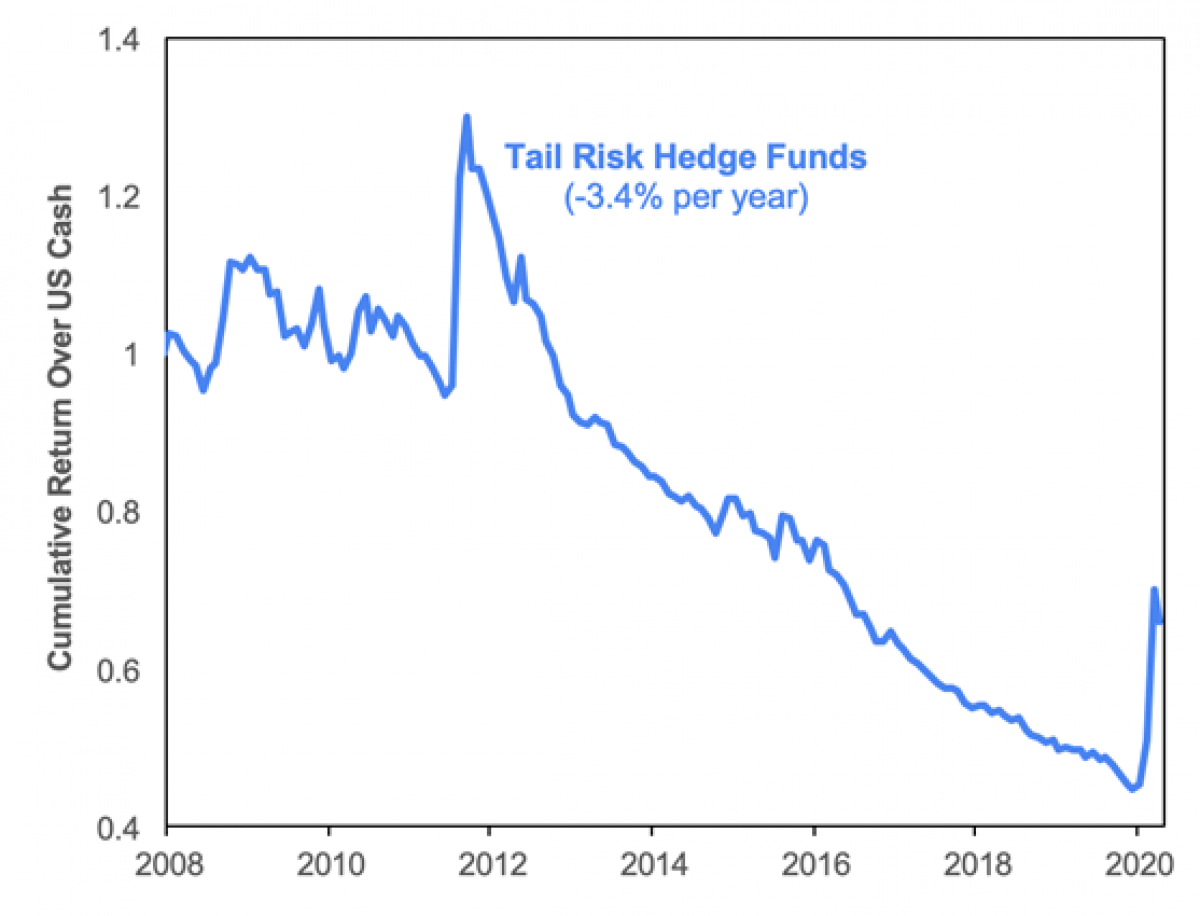
Risk budgeting can also be applied to tail risk hedging strategies, which are designed to protect portfolios from extreme market events. Tail risk hedging strategies typically involve investing in instruments that have a negative correlation with the overall market, such as put options, volatility futures, and inverse exchange-traded funds (ETFs).
[](https://caia.org/sites/default/files/styles/full_width/public/2021-07/Figure%2B2.png?itok=Maj0xZcM)
*Tail risk hedging strategy components*
In the context of tail risk hedging, risk budgeting can be used to ensure that the overall risk level of the hedging strategy remains within a predefined range. For instance, an investor may allocate 2% of their portfolio to a tail risk hedging strategy, which is then invested in a combination of put options, volatility futures, and inverse ETFs. The risk budget for each instrument is then managed to ensure that the overall risk level of the hedging strategy remains within the 2% target.
## Conclusion
Risk budgeting is a powerful tool for investors seeking to manage their exposure to tail risks and maintain their investment objectives and risk tolerance. By allocating risk allowances to individual investment opportunities within a portfolio, investors can construct well-diversified portfolios that seek to optimize risk-adjusted returns. Furthermore, risk budgeting can be applied to various types of investors, including pension funds, hedge funds, and individual investors, and can be used to manage a wide range of investment strategies, from traditional long-only portfolios to tail risk hedging strategies.
To further explore the topic of risk budgeting and its applications, interested readers are encouraged to delve deeper into the book "Tail Risk Hedging" by Vineer Bhansali. Additionally, readers may consider researching other risk management techniques, such as value-at-risk (VaR) and expected shortfall (ES), and their applications in portfolio management. By developing a strong understanding of risk management techniques, investors can better protect their capital and achieve their long-term investment goals.
Last updated: 2024-04-19
Related Books
Related Knowledges