# Minimizing Tail Risks: Protecting Your Portfolio from Extreme Events
As investors, we're constantly reminded of the importance of managing risk in our portfolios. While most of us focus on maximizing returns, it's equally crucial to mitigate potential downsides. One of the most critical aspects of risk management is minimizing tail risks, which refer to low-probability, high-impact events that can significantly harm our investments. In this lecture, we'll delve into the concept of tail risks, their relevance, and strategies for minimizing them.
**What are Tail Risks?**
Tail risks are rare, extreme events that occur in the tail ends of probability distributions. They are characterized by their low probability of occurrence (often less than 1%) and high potential impact on our portfolios (often exceeding 10%). These events can be devastating, causing massive losses or even complete ruin. Examples of tail risks include:
[](https://www.investopedia.com/thmb/EmYaUIvKu6ZoJORUu3U0vFnRhAE=/1500x0/filters:no_upscale%28%29:max_bytes%28150000%29:strip_icc%28%29/Clipboard01-5c684fb046e0fb0001f0e38b.jpg)
*Probability Distribution Curve showing Tail Risks*
* Market crashes (e.g., the 2008 global financial crisis)
* Natural disasters (e.g., hurricanes, earthquakes)
* Geopolitical shocks (e.g., wars, trade wars)
* Corporate failures (e.g., Enron, Lehman Brothers)
[](https://www.investopedia.com/thmb/1ct4l03zPw_-STbF8BREGkgBt5w=/1500x0/filters:no_upscale%28%29:max_bytes%28150000%29:strip_icc%28%29/great-recession_sourcefile-1-26478e8a0b5e48ce9df18f92cc991a7e.jpg)
*Global Financial Crisis 2008 impact*
**Why are Tail Risks Important?**
Tail risks are critical to understand because they can have a disproportionate impact on our portfolios. A single tail event can wipe out years of returns, making it essential to develop strategies to mitigate these risks. Furthermore, traditional risk management techniques often fail to account for tail risks, as they are based on normal distributions that underestimate the likelihood of extreme events.
**Minimizing Tail Risks: Strategies and Examples**
So, how can we minimize tail risks in our portfolios? Here are some strategies and examples to illustrate their practical implications:
### 1. **Diversification**
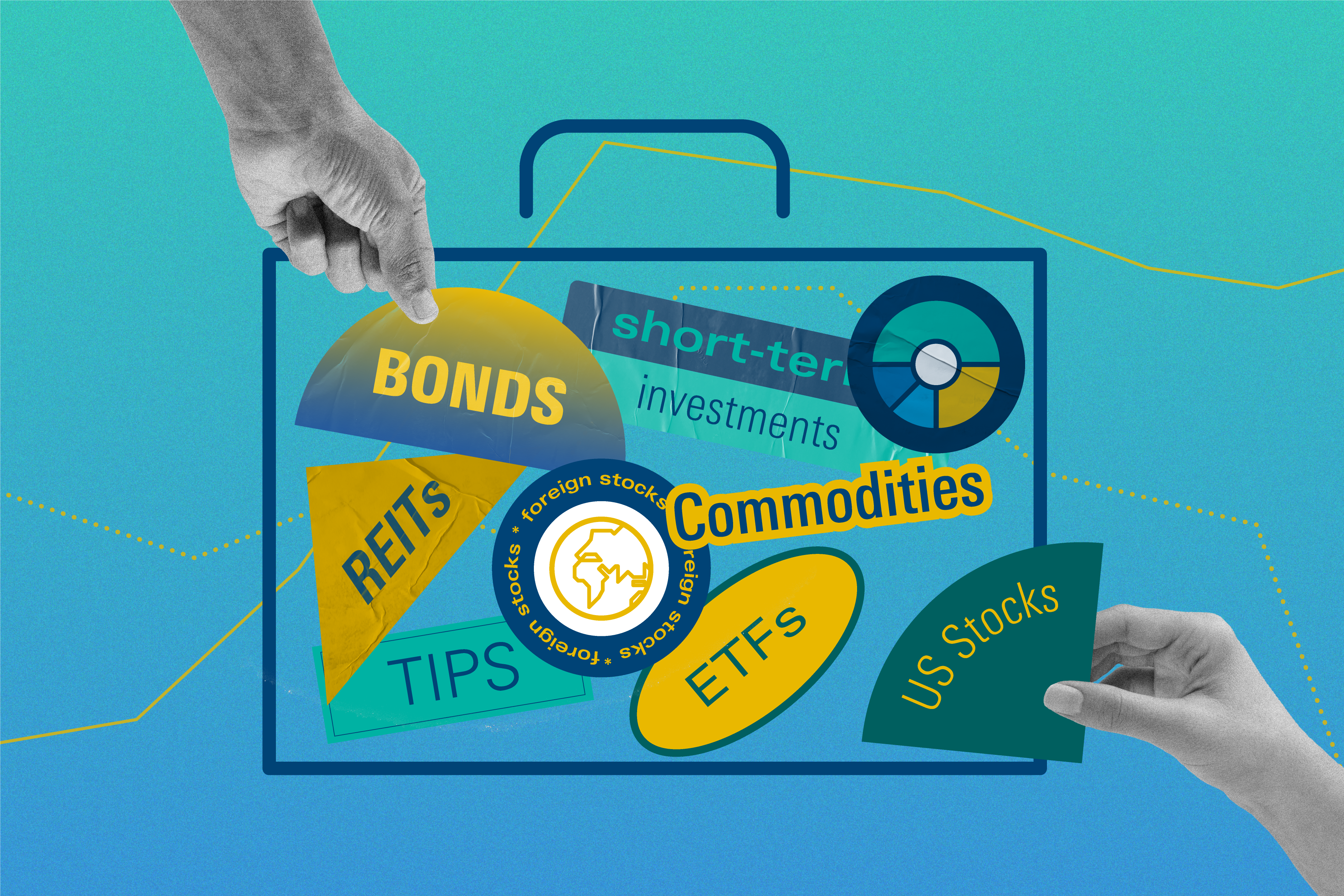
Diversification is a fundamental concept in portfolio management, and it can help reduce tail risks by spreading investments across different asset classes, sectors, and geographies. For instance, a portfolio with 60% stocks and 40% bonds can reduce its exposure to stock market crashes.
[](https://cloudfront-us-east-1.images.arcpublishing.com/morningstar/LUIUEVKYO2PKAIBSSAUSBVZXHI.png)
*Diversification in Portfolio Management*
**Example:** During the 2008 global financial crisis, a diversified portfolio with 60% stocks and 40% bonds would have performed better than a portfolio with 100% stocks. The bond component would have helped cushion the fall in stock prices.
### 2. **Hedging**
Hedging involves taking positions to offset potential losses in other parts of the portfolio. This can be achieved through derivatives, such as options, futures, or swaps.
**Example:** An investor holding a long position in a stock can buy put options to protect against a potential decline in the stock's value. If the stock price falls, the put option can help limit the losses.
[](https://www.investopedia.com/thmb/EzEPTEjUN0he7bGyrP26y9wNtjY=/1500x0/filters:no_upscale%28%29:max_bytes%28150000%29:strip_icc%28%29/deltahedging.asp-final-0f7419fd8d574f35a8db99c1339fec37.png)
*Hedging with Options*
### 3. **Risk Parity**
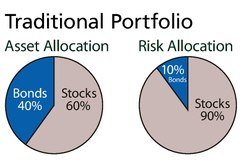
Risk parity involves allocating risk equally across different asset classes, rather than allocating based on market capitalization. This approach can help reduce tail risks by not over-allocating to any one asset class.
**Example:** A risk parity portfolio with 25% allocation to stocks, 25% to bonds, 25% to commodities, and 25% to currencies can reduce its exposure to any one asset class, thereby minimizing tail risks.
[](https://upload.wikimedia.org/wikipedia/commons/thumb/6/64/Risk_Parity_C1.pdf/page1-243px-Risk_Parity_C1.pdf.jpg)
*Risk Parity Asset Allocation*
### 4. **Tail Risk Hedging Strategies**
Several tail risk hedging strategies can be employed, including:
* **Option-based strategies:** Buying put options or call options to protect against potential losses or gains.
* **Futures-based strategies:** Using futures contracts to hedge against potential losses in specific markets.
* **Dynamic hedging:** Adjusting hedge positions dynamically based on market conditions.
[![PDF\] A Dynamic Hedging Strategy for Option Transaction Using ...](https://d3i71xaburhd42.cloudfront.net/b2b7a406d41d7c957feb181e24f756aacf2e8830/3-Figure1-1.png)](https://d3i71xaburhd42.cloudfront.net/b2b7a406d41d7c957feb181e24f756aacf2e8830/3-Figure1-1.png)
*Dynamic Hedging Strategy*
**Example:** An investor concerned about a potential decline in the S&P 500 index can buy put options on the index to protect against losses. If the index falls, the put option can help limit the losses.
### 5. **Regime-Based Investing**
Regime-based investing involves adjusting portfolio allocations based on market regimes, such as growth or recession. This approach can help reduce tail risks by adapting to changing market conditions.
**Example:** During a recession, an investor can shift their portfolio allocation from stocks to bonds to reduce exposure to the declining stock market.
[](https://d2csxpduxe849s.cloudfront.net/media/469BA343-4BDA-4DA8-82EFE0F61A0F858A/09DF8216-E28C-4D12-98073B4EE1954C15/webimage-ABEF1D71-9DC0-4309-BB524C138015EAEA.jpg)
*Adjusting Portfolio Allocation in Different Market Regimes*
**Conclusion**
Minimizing tail risks is an essential aspect of portfolio management, as extreme events can have devastating consequences. By employing strategies such as diversification, hedging, risk parity, and tail risk hedging, investors can reduce their exposure to low-probability, high-impact events. It's crucial to understand that tail risks are an inherent part of investing and that proactively managing them can help protect our portfolios and achieve long-term investment goals.
**Avenues for Further Exploration**
* **Quantifying Tail Risks:** Developing methods to quantify and measure tail risks, such as expected shortfall (ES) and value-at-risk (VaR).
* **Machine Learning Applications:** Exploring the use of machine learning algorithms to identify early warning signs of tail risks and optimize hedging strategies.
* **Behavioral Finance:** Investigating how cognitive biases and emotional responses to tail risks can impact investment decisions.
As we conclude this lecture, remember that minimizing tail risks is an ongoing process that requires continuous monitoring and adaptation. By understanding the concepts and strategies discussed today, you'll be better equipped to navigate the complex world of investing and protect your portfolios from extreme events.
Last updated: 2024-04-19
Related Books
Related Knowledges