# Conditional Tail Expectations (CTE): A Comprehensive Guide
[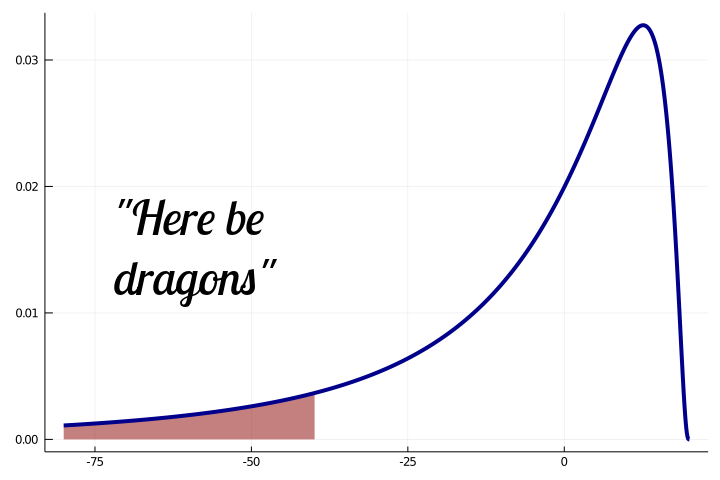](https://jaantollander.com/post/measuring-tail-risk-using-conditional-value-at-risk/featured.png)
*Visual representation of Conditional Tail Expectations*
## Introduction
In the realm of risk management and quantitative finance, understanding and modeling extreme market events is of paramount importance. Traditional risk measures, such as value-at-risk (VaR), often fall short in capturing the extreme tail behavior of financial instruments. This has led to the development of more sophisticated risk measures, among which Conditional Tail Expectations (CTE) have gained significant attention. In this extensive guide, we will delve into the core concepts of CTE, its relevance, and various practical applications.
## Core Concepts and Relevance
CTE is a risk measure that quantifies the expected loss beyond a specified quantile or threshold. It is also known as the expected shortfall (ES) or average value-at-risk (AVaR). In contrast to VaR, which only provides the quantile level, CTE offers a more comprehensive understanding of the tail behavior by calculating the expected loss given that the threshold is exceeded. As a result, CTE is considered a more robust and informative risk measure.
[](https://dotnettrickscloud.blob.core.windows.net/article/3720240312161949.png)
*Comparison of CTE and VaR*
The relevance of CTE lies in its ability to address the limitations of VaR, particularly in the context of extreme market events. By providing information on the expected loss in the tail region, CTE facilitates better decision-making for risk managers and investors. Additionally, regulatory bodies, such as the Basel Committee on Banking Supervision, have acknowledged the importance of CTE and included it in their regulatory frameworks for financial institutions.
## Practical Applications and Examples
### Example 1: Portfolio Optimization
Consider a portfolio manager who is comparing two investment strategies: Strategy A and Strategy B. The manager is interested in understanding the risks associated with each strategy, particularly in the tail region. The VaR of both strategies at the 99% confidence level is calculated, and it turns out that both strategies have equivalent VaRs. However, the CTEs of both strategies differ, with Strategy A having a lower CTE than Strategy B.
In this scenario, the CTE provides the portfolio manager with additional insights into the risk profiles of both strategies. Despite having the same VaR, Strategy A exhibits a more favorable tail behavior, as its expected loss in the tail region is lower. Consequently, the portfolio manager may choose Strategy A over Strategy B, as it presents a more manageable risk profile in extreme market conditions.
[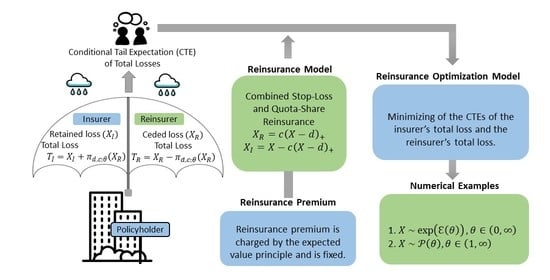](https://pub.mdpi-res.com/risks/risks-09-00125/article_deploy/html/images/risks-09-00125-ag-550.jpg?1626953962)
*CTE application in portfolio optimization*
### Example 2: Derivatives Pricing
Assume a derivatives trader who is pricing a European put option on an underlying asset. The trader wants to incorporate the impact of extreme market events on the option's price. By utilizing CTE, the trader can account for the asymmetric risk inherent in the option's payoff structure. This results in a more accurate pricing model that reflects the true risk associated with the option.
In this scenario, CTE serves as a valuable tool for incorporating tail risks into derivatives pricing. By accounting for the expected loss in the tail region, the trader can offer a more realistic and comprehensive pricing model that considers the potential impact of extreme market events.
[](https://www.researchgate.net/publication/355783351/figure/fig5/AS:1089055626407939@1636662503525/a-Thermal-expansion-of-investigated-Ag-Mg-alloys-vs-temperature-b-and-c-thermal.png)
*CTE in derivatives pricing*
## Conclusion
In this comprehensive guide, we have explored the core concepts, relevance, and practical applications of Conditional Tail Expectations (CTE). As a robust and informative risk measure, CTE has proven to be an invaluable tool for risk managers and investors in addressing the limitations of traditional risk measures such as VaR.
To further deepen your understanding of CTE, consider pursuing the following avenues:
1. **Further Reading**: Delve into additional resources, such as Tail Risk Hedging by Vineer Bhansali, to solidify your grasp of CTE and its applications in various financial contexts.
2. **Empirical Analysis**: Engage in empirical analysis of real-world financial data to calculate CTE and compare its performance against other risk measures.
3. **Risk Management Practices**: Investigate risk management practices employed by financial institutions and evaluate the role of CTE in their risk management frameworks.
By continuing to explore CTE and its applications, you will be well-equipped to navigate the complexities of risk management in today's financial landscape.
Last updated: 2024-04-19
Related Books
Related Knowledges