# Liability-Driven Investments: A Comprehensive Overview
## Introduction
Liability-Driven Investments (LDI) is a strategic framework that aligns a portfolio's assets with its liabilities. By focusing on the mismatch between the two, LDI aims to minimize the financial impact of fluctuations in liability values due to interest rate changes and other market factors. This investment approach is particularly relevant for pension funds, insurance companies, and other institutions with long-term liabilities. In this overview, we will delve into the core concepts of LDI, its relevance, and various examples to illustrate its practical implications.
[](https://www.investopedia.com/thmb/mn5v-EQn-2tRN-Q1yMU8YvZFgM4=/1500x0/filters:no_upscale%28%29:max_bytes%28150000%29:strip_icc%28%29/ldi.asp-final-0a7e5f3b91e14fafa1f40dda4c233f0d.png)
*Illustration of Liability-Driven Investment \(LDI\) strategy*
## Core Concepts and Relevance
The core concepts of LDI revolve around managing the duration gap, interest rate risk, and inflation risk. The duration gap is the difference between the duration of the assets and liabilities, where duration represents the sensitivity of a financial instrument's price to changes in interest rates. A negative duration gap implies that the liability's duration is longer than that of the assets, leaving the investor exposed to interest rate risk.
Interest rate risk arises from the uncertainty in future interest rates, which can significantly impact the value of both assets and liabilities. For instance, an increase in interest rates would reduce the present value of liabilities but also decrease the market value of fixed-income assets. LDI aims to hedge this risk by matching the duration of the assets and liabilities.
[](https://www.investopedia.com/thmb/XVLX5nOLo1LIMxP24srQcwbYp1o=/1500x0/filters:no_upscale%28%29:max_bytes%28150000%29:strip_icc%28%29/final235-040b20455a3e4238929d2af40b5fa860.jpg)
*Graph showing the impact of interest rate changes on assets and liabilities*
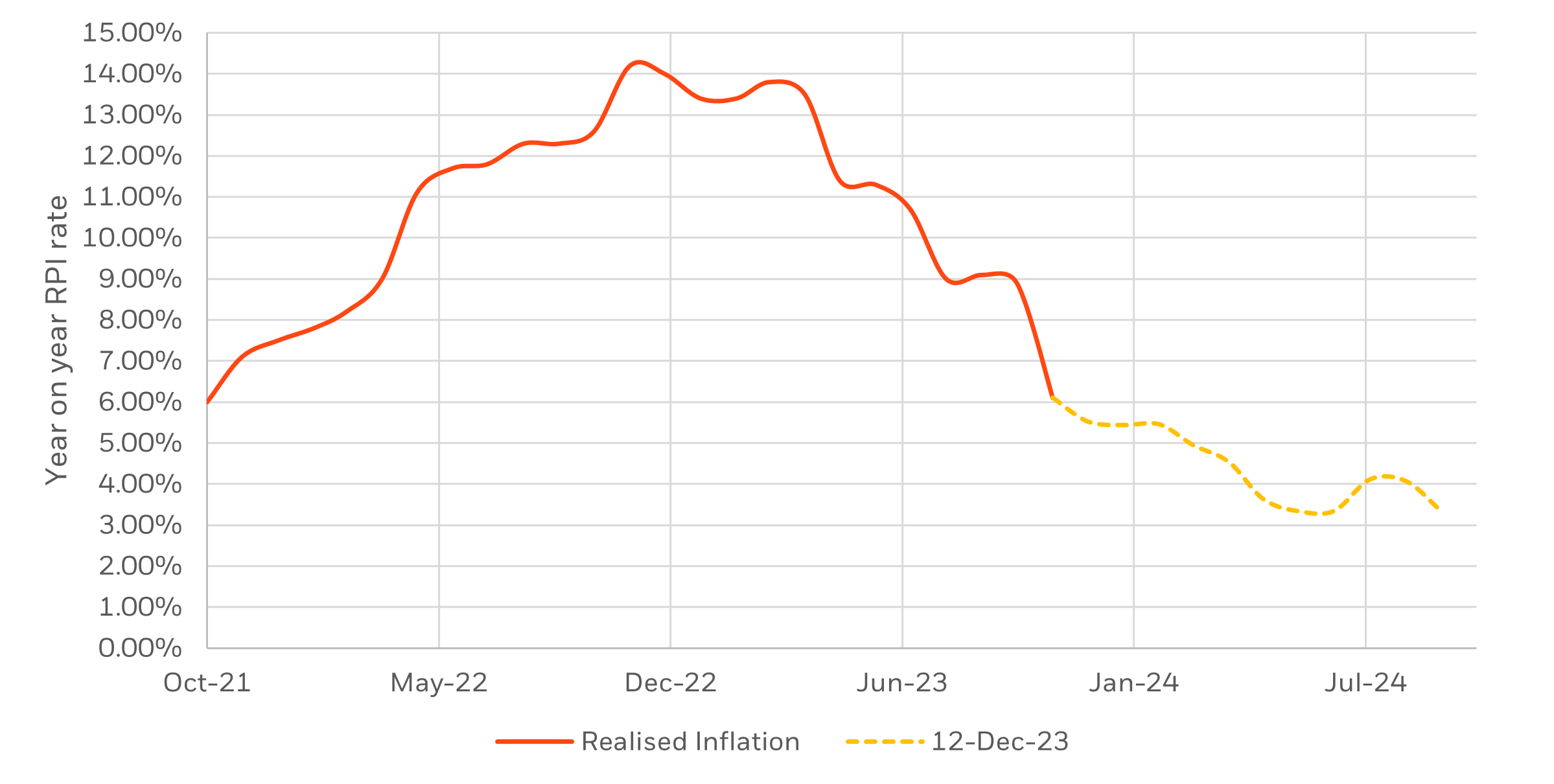
Inflation risk is another critical factor in LDI, especially for liabilities that are linked to inflation, such as pensions. Inflation erodes the purchasing power of both assets and liabilities, but the impact might be more pronounced on the latter. By incorporating inflation-protected securities in the asset portfolio, LDI can help manage inflation risk.
[](https://www.blackrock.com/uk-retail-c-assets/cache-1702976115000/images/media-bin/web/uk-one/professionals/solutions/fixed-income/liability-driven-investing/chart-2-inflation-path-as-implied-by-rpi-swaps.png)
*Diagram of inflation risk management in LDI*
The relevance of LDI lies in its ability to provide a more robust risk management framework for institutions with long-term liabilities. By aligning the asset and liability profiles, LDI enables investors to better predict their future cash flows, maintain solvency, and fulfill their obligations to beneficiaries or policyholders.
## Examples and Applications
**Example 1: Pension Funds**
Consider a pension fund with a large and growing pool of liabilities linked to the inflation rate. The fund has a significant negative duration gap, exposing it to interest rate risk. An LDI strategy would involve investing in a mix of long-duration fixed-income securities and inflation-protected securities to match the duration and inflation sensitivity of the liabilities. This approach would help the pension fund minimize the impact of interest rate and inflation fluctuations on its funding status.
[](https://www.investopedia.com/thmb/mn5v-EQn-2tRN-Q1yMU8YvZFgM4=/1500x0/filters:no_upscale%28%29:max_bytes%28150000%29:strip_icc%28%29/ldi.asp-final-0a7e5f3b91e14fafa1f40dda4c233f0d.png)
*Example of LDI strategy for pension funds*
**Example 2: Insurance Companies**
Insurance companies face various liability profiles depending on the type of insurance products they offer. For instance, life insurers typically deal with long-term liabilities, making them particularly susceptible to interest rate risk. An LDI strategy would involve investing in a portfolio of long-duration bonds that match the duration of their liabilities. This would help insurers maintain a stable risk profile and ensure their ability to meet future obligations.
[](https://www.investopedia.com/thmb/mn5v-EQn-2tRN-Q1yMU8YvZFgM4=/1500x0/filters:no_upscale%28%29:max_bytes%28150000%29:strip_icc%28%29/ldi.asp-final-0a7e5f3b91e14fafa1f40dda4c233f0d.png)
*Example of LDI application in insurance companies*
## Conclusion
Liability-Driven Investments offer a proactive and holistic approach to managing the risks associated with long-term liabilities. By focusing on aligning the asset and liability profiles, LDI strategies can help institutions maintain solvency, fulfill their obligations, and enhance their risk management capabilities. To further explore the topic, interested students can delve into the various hedging strategies and instruments employed in LDI, as well as the challenges and limitations associated with this investment approach.
Last updated: 2024-04-19
Related Books
Related Knowledges