# Portfolio Diversification: A Key Risk Management Strategy
## Introduction
In finance and investment, portfolio diversification is a risk management strategy that aims to reduce investment risk by allocating investments across various assets or asset classes. In his book 'Tail Risk Hedging,' Vineer Bhansali emphasizes the importance of portfolio diversification as a tool for managing tail risk, which refers to the risk of extreme market movements that result in significant losses. This article explores the core concepts of portfolio diversification, its relevance, and its practical implications.
[](https://cdn.prod.website-files.com/5ded36b5e942e74b13468d23/5f9b837d2d99b6cc9c72bb7d_00-Header%402x.png)
*Illustration of diversified vs concentrated portfolio*
## Core Concepts and Relevance
The primary objective of portfolio diversification is to create a portfolio that performs well in various market conditions. Diversification reduces the overall risk of the portfolio by combining assets with low or negative correlations, i.e., assets that do not move in tandem with each other. By doing so, investors can achieve a more stable return profile with lower volatility than individual assets.
[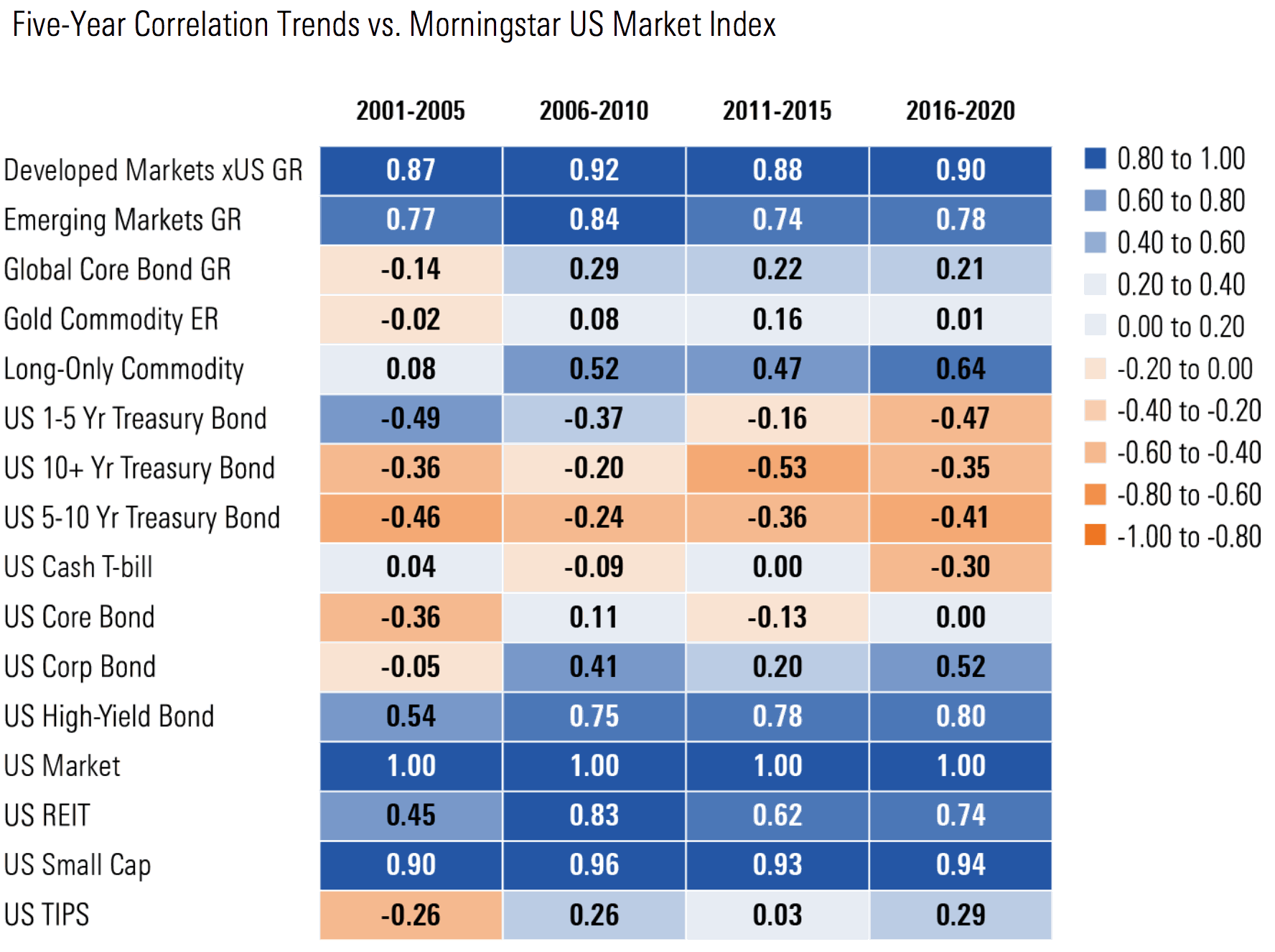](https://www.mymoneyblog.com/wordpress/wp-content/uploads/2021/04/2021corr2.gif)
*Correlation matrix of different asset classes*
Bhansali highlights that tail risk is the most damaging type of risk for investors. Portfolio diversification helps manage tail risk because, during extreme market conditions, the probability of all assets in a diversified portfolio performing poorly at the same time is low. As a result, the impact of extreme market movements on the overall portfolio is less severe than on a concentrated portfolio.
## Practical Implications
To illustrate the practical implications of portfolio diversification, consider two examples:
### Example 1: Equity Portfolio Diversification
Suppose an investor has a portfolio consisting of only one stock, Apple Inc. (AAPL). Although Apple is a financially sound company with a solid growth trajectory, the stock's performance is vulnerable to various external factors such as changes in government regulations, macroeconomic conditions, and technological innovations. As a result, the investor faces a significant risk of loss if Apple's stock price experiences a sharp decline.
[](https://us.beyondbullsandbears.com/wp-content/uploads/2023/12/ETF-outlook-650x450-blog.jpg)
*Technology ETFs as an example of diversification*
Now, suppose the investor diversifies the portfolio by investing in a technology-focused exchange-traded fund (ETF) instead of holding only Apple stock. The ETF provides exposure to a diverse range of technology companies, thereby reducing the overall risk of the portfolio. If one or more of the companies in the ETF experience a decline in stock price, the impact on the portfolio's overall performance is less severe than if the investor held only Apple stock.
### Example 2: Multi-Asset Portfolio Diversification
Suppose an investor has a portfolio consisting of only equities. While equities have historically provided high long-term returns, they are also subject to significant short-term volatility. During periods of market stress, such as the 2008 financial crisis or the COVID-19 pandemic, equities can experience sharp declines in value.
Now, suppose the investor diversifies the portfolio by allocating a portion of the portfolio to fixed-income investments, such as government bonds or corporate bonds. Fixed-income investments are generally less volatile than equities and provide a stable source of income. During market stress, fixed-income investments often perform well as investors seek safe-haven assets, thereby reducing the overall risk of the portfolio.
[](https://images.wsj.net/im-913574/?width=1278&size=1)
*Equities and bonds during market stress illustration*
## Conclusion
Portfolio diversification is a crucial risk management strategy used to create a well-balanced and optimized portfolio. By investing in various assets or asset classes, investors can achieve a more stable return profile with lower volatility than individual assets. Diversification allows investors to manage tail risk and reduce the impact of extreme market movements on their overall portfolio performance.
In conclusion, to gain a deeper understanding of portfolio diversification and its applications, college students can explore further reading on topics such as modern portfolio theory, efficient frontier, and risk parity. By pursuing additional knowledge in these areas, students can gain a more comprehensive understanding of the principles and practical implications of portfolio diversification in finance and investment.
Last updated: 2024-06-25
Related Books
Related Knowledges