### Live Beneath Your Means: Frugal Wisdom from Benjamin Franklin
[](https://npg.si.edu/sites/default/files/class_ben.jpg)
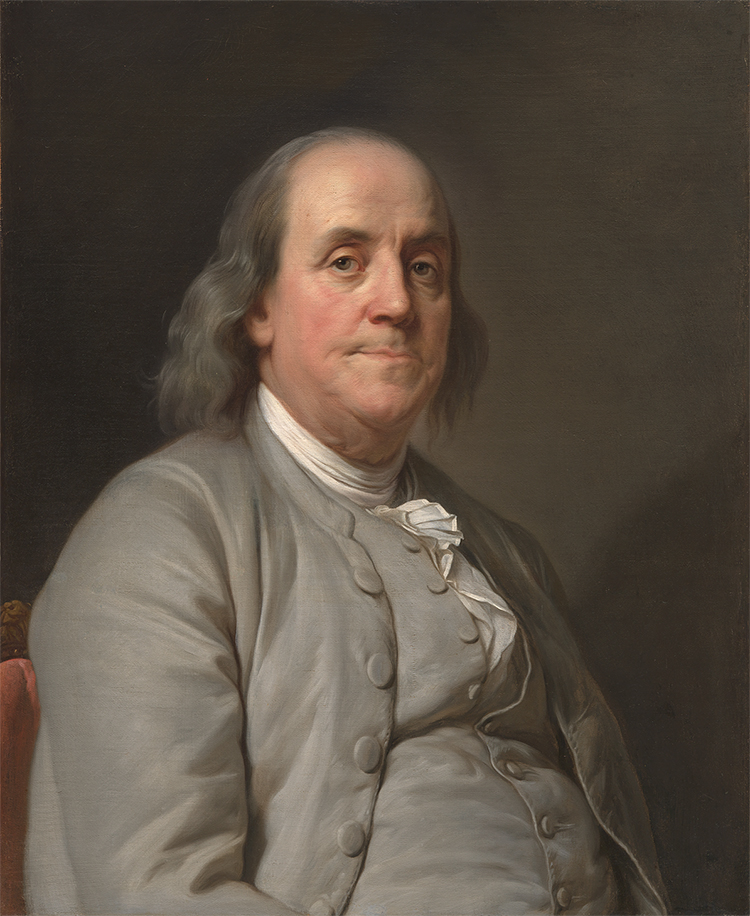
*Portrait of Benjamin Franklin*
In *The Way to Wealth* \cite{franklin1736}, Benjamin Franklin, one of the Founding Fathers of the United States, polymath, and a prolific writer, compiles and expands upon his earlier essays on thrift, industry, and the importance of avoiding debt, for the purpose of offering financial advice to his fellow citizens. First published as a preface to a collection of Poor Richard's Almanack, *The Way to Wealth* encapsulates the essence of Franklin's thoughts on financial well-being and personal prosperity in the form of maxims, aphorisms, and anecdotes, woven together as an imaginary conversation between a town's inhabitants and a learned man, known as Father Abraham.
The adage "Live beneath your means" stands out as one of the most enduring lessons in *The Way to Wealth,* and has great relevance for contemporary society, particularly for college students as they navigate the challenges and opportunities of higher education and embark on their journey towards financial independence.
#### What does it mean to "live beneath your means"?
At its core, living beneath one's means involves spending less than one earns, thereby avoiding the accumulation of debt while building a financial cushion for the future. This prudent approach to personal finance enables individuals to safeguard themselves from financial shocks, such as a sudden loss of income or unforeseen expenses, while simultaneously creating opportunities for investment, charitable giving, and long-term financial planning.
In *The Way to Wealth*, Father Abraham delivers a series of maxims that elucidate the principle of living beneath one's means as a means to achieve financial security and prosperity. A few of these adages include:
- "A penny saved is a penny earned" - highlighting the importance of thrift and the benefits of saving.
- "He that goes a-borrowing goes a-sorrowing" - cautioning against the perils of debt and the unhappiness it often brings.
- "Rather go to bed supperless than rise in debt" - emphasizing the significance of avoiding debt by prioritizing financial obligations over unnecessary expenditures.
These maxims, while seemingly simple, convey significant wisdom and foresight, reflecting the enduring relevance of Benjamin Franklin's financial advice for modern-day readers.
#### Practical implications and applications:
1. Budgeting and financial planning: Students can begin by tracking their income and expenses, identifying areas where they can reduce spending, and allocating their resources towards their most pressing financial obligations and goals. This can include the creation of a personal budget or the use of budgeting apps that enable students to monitor their spending and savings in real-time.
[](https://uizard.io/static/e5e3f55026058f0840ef3fdf6da870b3/a8e47/87d0745ed998cfec021bd9d49f4657a5a160b03a-1440x835.png)
*Examples of Budgeting Apps*
2. Avoiding unnecessary debt: Understanding the difference between "good debt" and "bad debt" is crucial in living beneath one's means. While "good debt" refers to investments that generate future income, such as student loans for education or a mortgage for real estate, "bad debt" typically involves borrowing for unnecessary or frivolous purchases that do not contribute meaningfully to one's long-term goals. In this sense, students can evaluate the necessity of their potential purchases and opt for saving or earning instead of borrowing when possible.
[](https://www.newamericanfunding.com/media/3532/good-debt-vs-bad-debt-infographic.jpg)
*Infographic on Good Debt vs Bad Debt*
3. Prioritizing long-term financial goals: Living beneath one's means allows individuals to allocate resources towards their long-term financial aspirations, such as retirement savings, emergency funds, or significant investments. For college students, this may include contributing to a retirement savings plan, such as a Roth IRA, investing in a diversified portfolio of stocks and bonds, or establishing an emergency fund to cover unexpected expenses.
[](https://i.pinimg.com/736x/45/47/28/454728cfb62e77834dac399105cbd860.jpg)
*Emergency Fund Savings Concept*
#### Case studies:
1. *Sarah's story*: Sarah, a college student, earns a part-time job during the academic year and dedicates her summers to internships and full-time employment, enabling her to graduate debt-free by carefully allocating her resources. By living beneath her means, Sarah manages to save for an emergency fund, contribute to her retirement savings, and invest in a diversified portfolio of stocks and bonds. By adopting the principles of living beneath her means, Sarah positions herself for long-term financial success while simultaneously building a safety net for her post-graduate years.
[](https://www.rga-advisors.com/sites/default/files/users/rgaadvisors2/save-money-while-going-to-college.jpg)
*Student Savings and Investments*
2. *Alex's story*: Alex, another college student, decides to pursue an unpaid internship during the summer, banking on the prospect of securing full-time employment upon graduation. While Alex struggles initially with living beneath his means, he eventually learns to prioritize his financial obligations by reducing non-essential expenditures, utilizing public transportation, and cooking at home. By the time he graduates, Alex has managed to establish an emergency fund, pay off his student loans, and secure a full-time position at a reputable company.
#### Conclusion:
The wisdom of living beneath one's means, as articulated by Benjamin Franklin in *The Way to Wealth*, extends far beyond the pages of this 18th-century classic. By incorporating the principles outlined in Father Abraham's maxims, modern-day students can cultivate prudent financial habits, equip themselves for successful post-graduate life, and transcend the shackles of debt that constrain so many of their contemporaries.
Further exploration of the topic is encouraged through the diversification of financial knowledge sources and the cultivation of a like-minded community of peers committed to living frugally and investing wisely. By engaging with the wealth of information available on personal finance and making deliberate, informed choices about income, expenditures, savings, and investments, students can live beneath their means and lay the groundwork for a prosperous life.
#### References:
franklin1736. *The Way to Wealth*. 1736. [Online]. Retrieved from .
Last updated: 2024-05-29
Related Books

Related Knowledges