Moore's Law and Its Acceleration: A Key Concept in Technological Advancement
=============================================================================
Introduction
------------
Moore's Law, first articulated by Gordon Moore in 1965, is a prediction about the exponential growth of computing power. Specifically, Moore observed that the number of transistors on a microchip doubles approximately every two years, leading to an exponential increase in computing power. This law has held true for over half a century and has been the driving force behind the rapid advancement of digital technology.
[](https://www.investopedia.com/thmb/-UfKmuGHdkXNlWIaPwPI_8N4FUA=/1500x0/filters:no_upscale%28%29:max_bytes%28150000%29:strip_icc%28%29/moores-law-4192714-1-5432709ba34c4a86bc7356f5274946ee.jpg)
*Gordon Moore and the concept of Moore's Law*
In Ray Kurzweil's book "The Singularity Is Near," Moore's Law plays a central role in his vision of the future. Kurzweil argues that Moore's Law is not only continuing but also accelerating, leading to a future where technology will surpass human intelligence, a concept known as the technological singularity.
Understanding Moore's Law and its acceleration is crucial for anyone interested in the future of technology and its impact on society. In this article, we will explore the core concepts of Moore's Law, its relevance, and its acceleration, as well as its practical implications and applications.
Relevance of Moore's Law
------------------------
Moore's Law has been a guiding principle for the technology industry for over 50 years. It has allowed for the miniaturization of electronic components, leading to the development of smaller, faster, and more powerful devices. From personal computers to smartphones, Moore's Law has been the driving force behind the exponential growth of computing power.
[](https://www.the-waves.org/wp-content/uploads/2022/12/Screenshot-2022-12-19-at-1.51.14-PM.png)
*The evolution of microchips according to Moore's Law*
Moreover, Moore's Law has implications beyond the technology industry. It has shaped the way we live, work, and communicate. For example, the rapid advancement of computing power has led to the development of the internet, social media, and the digital economy.
Examples and Applications
------------------------
### Artificial Intelligence
One of the most significant implications of Moore's Law is its impact on artificial intelligence (AI). As computing power increases, AI systems are able to process and analyze larger amounts of data, leading to more accurate and sophisticated models. This has led to the development of advanced AI systems in various fields, such as healthcare, finance, and transportation.
[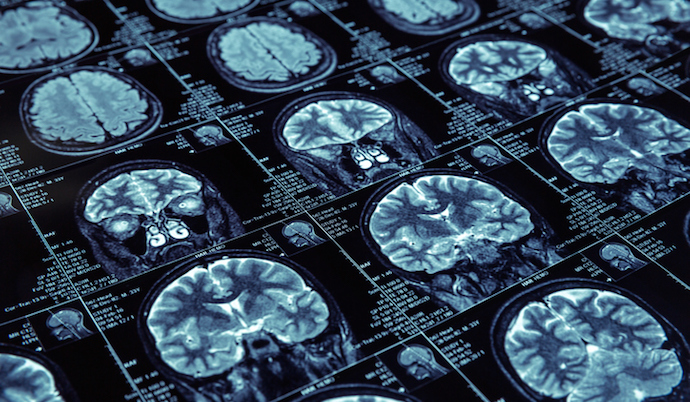](https://healthitanalytics.com/images/site/article_headers/_normal/ThinkstockPhotos-513688464.jpg)
*AI in healthcare: Analyzing medical images*
For example, in healthcare, AI systems are being used to analyze medical images to detect diseases such as cancer. These systems are able to process large amounts of data, allowing for early detection and more accurate diagnoses.
### Quantum Computing
Another example of the acceleration of Moore's Law is in the field of quantum computing. Quantum computers are a new type of computer that uses the principles of quantum mechanics to perform calculations. These computers have the potential to solve complex problems that are currently beyond the capabilities of classical computers.
[](https://www.investopedia.com/thmb/mL2a2GAnrskc-ebuq-UT-GM_bwU=/1500x0/filters:no_upscale%28%29:max_bytes%28150000%29:strip_icc%28%29/quantum-computing.asp-FINAL-1-68635090f7534414b9173598fe0ad95c.png)
*The potential of quantum computing*
Quantum computers have the potential to revolutionize fields such as cryptography, drug discovery, and optimization problems. For example, in cryptography, quantum computers could potentially break encryption codes that are currently considered unbreakable.
Conclusion
----------
Moore's Law and its acceleration are crucial concepts for understanding the rapid advancement of technology. From artificial intelligence to quantum computing, the acceleration of Moore's Law is driving the development of new technologies and applications.
As we have seen, Moore's Law has significant implications for society, shaping the way we live, work, and communicate. As such, it is essential for college students to have a deep understanding of Moore's Law and its acceleration.
For further exploration, students can delve into the following topics:
* The history and evolution of Moore's Law
* The limitations and challenges of Moore's Law
* The social and ethical implications of the acceleration of Moore's Law
* The role of government and industry in shaping the future of technology
By exploring these topics, students can gain a deeper understanding of the impact of Moore's Law and its acceleration on society and the future of technology.
Last updated: 2024-05-29
Related Books

Related Knowledges