# The Singularity Timeframe: 2045 and Its Practical Implications
[](https://m.media-amazon.com/images/I/51Pv8X7oUNL.jpg)
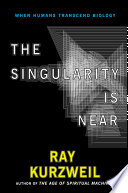
*Ray Kurzweil predicting the Singularity*
According to renowned inventor, author, and futurist Ray Kurzweil, the *singularity* refers to a hypothetical future point in time when technological growth becomes uncontrollable and irreversible, leading to unprecedented and profound changes for humanity. Kurzweil posits that the singularity will emerge as a result of the convergence of various emerging technologies, such as artificial intelligence, biotechnology, nanotechnology, and information technology, among others. In *The Singularity Is Near*, Kurzweil asserts that this profound shift in human evolution will take place around 2045, which has significant implications for college students and society at large.
[](https://media.licdn.com/dms/image/D4D12AQFXq6PZ13I_Fw/article-cover_image-shrink_720_1280/0/1700628969589?e=2147483647&v=beta&t=-GPmXAIEFWyR6U6ZlqgjF20CoxSNkmOFFG2vqtw2R7Y)
*Convergence of emerging technologies*
In this exploration of the singularity timeframe (2045), we will delve into the following key areas:
- The underpinnings and relevance of the concept of the singularity (2045)
- Practical implications and illustrative examples of the singularity and its potential impact
- Suggestions for further study of the singularity and related topics
## Core Concepts and Relevance of Singularity (2045)
The year 2045 marks a critical juncture in human history when, according to Kurzweil, technology will achieve a level of sophistication and advancement that surpasses human intelligence, resulting in rapid sociotechnological transformations. The singularity milestone will not be a single event but a series of exponential advancements in several technology sectors.
For instance, the rapid growth of AI applications has profound implications for various industries, from healthcare to transportation, as machine learning algorithms and deep learning models are increasingly demonstrating remarkable capabilities in problem-solving, pattern recognition, and decision-making. These advances enable AI systems to make independent decisions and optimize complex processes, thereby revolutionizing numerous sectors and functions.
In essence, the singularity (2045) concept frames our understanding of humanity's relationship with technology and signifies a critical inflection point that will demand a comprehensive re-evaluation of established norms, ethics, and policies. Understanding and preparing for the singularity and its timeframe is thus significant for college students and other stakeholders.
## Practical Implications and Illustrative Examples
The singularity (2045) has several practical implications and potential applications. The following are some illustrative examples that highlight its potential impact:
### Healthcare
Advances in medicine, driven by biotechnology, nanotechnology, and AI, have promising exponential trajectories that will converge at the singularity milestone. By 2045, personalized, precise, and preventive healthcare could become a reality, as medical treatments could be tailored to individual's genetic makeup, lifestyle factors, and environmental conditions.
[](https://www.medicaldevice-network.com/wp-content/uploads/sites/23/2023/06/shutterstock_2270998021.jpg)
*Healthcare advancements in the future*
*Nanobots*, for example, will be capable of targeted drug delivery, tissue regeneration, and tumor eradication in real-time. These nanobots can communicate and collaborate with other, more complex medical devices and AI systems to facilitate early disease detection, real-time health monitoring, and immediate intervention, transforming patient outcomes and revolutionizing healthcare as we know it.
### Education and Lifelong Learning
The rapid advancement of technology and the singularity timeframe (2045) have profound implications for education and lifelong learning. As AI and machine learning increasingly replicate and augment human cognitive functions, the nature and purpose of education may change significantly.
By 2045, students could benefit from immersive, adaptive, and AI-driven learning environments that focus on critical thinking, creativity, and complex problem-solving skills. These AI tutoring systems will dynamically adjust learning materials, pace, and evaluations based on individuals' strengths, weaknesses, and preferences. Consequently, these adaptive, data-driven educational platforms will optimize learning outcomes and improve student engagement, thereby revolutionizing education.
[](https://edsurge.imgix.net/uploads/post/image/15595/Shutterstock_2095821793-1697914488.jpg?auto=compress%2Cformat&w=640&h=259&fit=crop)
*Future of education with AI*
### Space Exploration
The singularity milestone in 2045 also presents new opportunities for space exploration and settlement. As AI, robotics, and nanotechnology advance, these technologies converge to create new possibilities for human expansion beyond our planet.
In the coming decades, AI-driven spacecraft will autonomously navigate, maintain, and repair themselves, reducing the dependency on human intervention. Additionally, nanobots will facilitate the creation and construction of habitats and infrastructure on distant celestial bodies, enabling the establishment of human colonies.
By 2045, AI-assisted virtual reality systems will enable real-time, immersive exploration of distant planets and galaxies, advancing scientific understanding and popularizing space exploration. Furthermore, integrated AI and nanotechnology systems may significantly reduce the cost, time, and complexity of space travel, enabling more extensive human space exploration and habitation.
[](https://scx1.b-cdn.net/csz/news/800a/2018/8-researcherdi.jpg)
*Space Exploration in 2045*
## Suggestions for Further Exploration
To further explore the concept of the singularity and its timeframe (2045), consider the following recommendations:
- Reading: In addition to Ray Kurzweil's *The Singularity Is Near*, explore other influential books on the topic, including *Life 3.0: Being Human in the Age of Artificial Intelligence* by Max Tegmark and *Homo Deus: A Brief History of Tomorrow* by Yuval Noah Harari.
- Online Learning Platforms and MOOCs: Coursera, edX, and other reputable online learning platforms offer courses on various topics that intersect with the singularity, such as artificial intelligence, biotechnology, nanotechnology, and space exploration.
- Media and Podcasts: Engage with podcasts and media sources focused on the singularity and other related topics, including *The Singularity Podcast*, *Exponential View*, and *The Future of Everything*.
- Research and Projects: Investigate current and emerging research and innovations in the converging fields of AI, biotechnology, nanotechnology, and other related areas. Consider participating in meaningful projects and initiatives that facilitate the advancement of these technologies.
Understanding the singularity (2045) and its practical implications enables college students and other stakeholders to make informed decisions and harness the potential of converging exponential technologies. Embracing and preparing for this critical inflection point in human history will ensure that future generations thrive and prosper in a rapidly changing, technologically advanced world.
Last updated: 2024-05-29
Related Books
Related Knowledges