# Human-Machine Symbiosis: Unlocking the Power of Integrated Intelligence
## Introduction
[](https://kstatelibraries.pressbooks.pub/app/uploads/sites/28/2020/10/2-Picture1-300x235.png)
*Human-machine symbiosis concept*
In his groundbreaking book, *The Singularity Is Near*, Ray Kurzweil explores the concept of human-machine symbiosis, a transformative paradigm wherein human intelligence and artificial intelligence (AI) converge to create an integrated system that amplifies the capabilities of both entities. As we stand on the precipice of the Singularity - the hypothetical future point at which technological growth becomes uncontrollable and irreversible - understanding and harnessing the power of human-machine symbiosis is essential to shaping a future where humanity and AI coexist harmoniously and productively.
Human-machine symbiosis encompasses various dimensions of interaction, including cognitive symbiosis, physical symbiosis, and emotional symbiosis. At its core, human-machine symbiosis is about creating a harmonious and synergistic relationship between humans and AI, empowering both to achieve goals that might not be possible individually.
Two crucial aspects of human-machine symbiosis are the Turing Test and the Law of Accelerating Returns. The Turing Test, named after the pioneering computer scientist Alan Turing, measures a machine's ability to mimic human-level intelligence through text-based conversation. If a human cannot distinguish whether they are interacting with another human or a machine, the machine has successfully passed the test.
[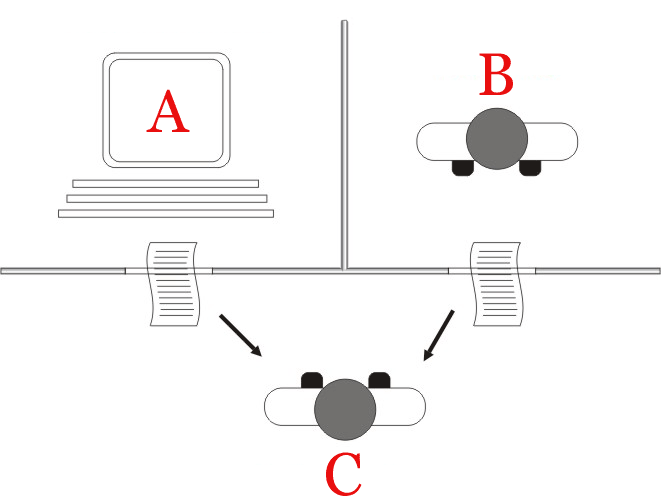](https://upload.wikimedia.org/wikipedia/commons/5/55/Turing_test_diagram.png)
*Turing Test illustration*
The Law of Accelerating Returns posits that the rate of technological progress follows an exponential curve, with each new development building on and enhancing previous innovations at an increasing rate. This rapid acceleration of technological advancements paves the way for human-machine symbiosis by blurring the lines between human and artificial intelligence.
[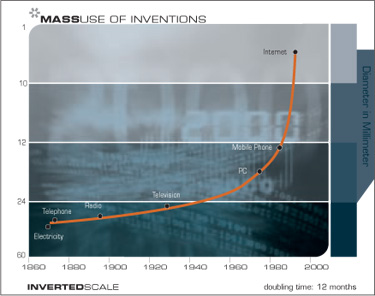](https://www.writingsbyraykurzweil.com/images/chart01.jpg)
*Law of Accelerating Returns graph*
In this exploration of human-machine symbiosis, we shall delve into its practical implications and various applications, providing students with a comprehensive understanding of its far-reaching impact on society, the economy, and the future of intelligence.
## Practical Implications and Applications
### Cognitive Symbiosis: Expanding Human Intelligence
Cognitive symbiosis refers to the synergistic relationship between human intelligence and AI, wherein the strengths of both are combined to create a more powerful, integrated system.
#### Intelligent Personal Assistants
One prominent example of cognitive symbiosis is intelligent personal assistants, such as Apple's Siri, Amazon's Alexa, and Google Assistant. These AI systems employ natural language processing and machine learning algorithms to provide users with real-time assistance, answering questions, setting reminders, and controlling smart devices.
[](https://sf16-sg.larksuitecdn.com/obj/suite-public-file-sg/open_file/resources/global-pseo/global-pseo/lark-topics/ai-glossary/intelligent-personal-assistant.webp)
*Intelligent Personal Assistants*
The symbiotic relationship between these AI personal assistants and their users enables a seamless flow of information, expanding human cognitive capacity. For instance, users can rely on their personal assistants to manage schedules, make reservations, and even engage in light conversation, freeing up mental resources for more complex tasks.
#### Augmented Reality and Virtual Reality
Another example of cognitive symbiosis is the integration of AI in augmented reality (AR) and virtual reality (VR) environments. AR and VR systems overlay digital information onto the real world or create immersive digital environments, respectively. By incorporating AI algorithms, these systems can adapt to user behavior and preferences, delivering tailored, context-aware experiences that augment cognitive abilities.
For instance, AR and VR systems can help users learn new skills, such as assembling furniture or performing complex surgical procedures, by providing visual cues and real-time feedback. These systems can also adapt to a user's learning style and pace, leading to more efficient and effective learning experiences.
[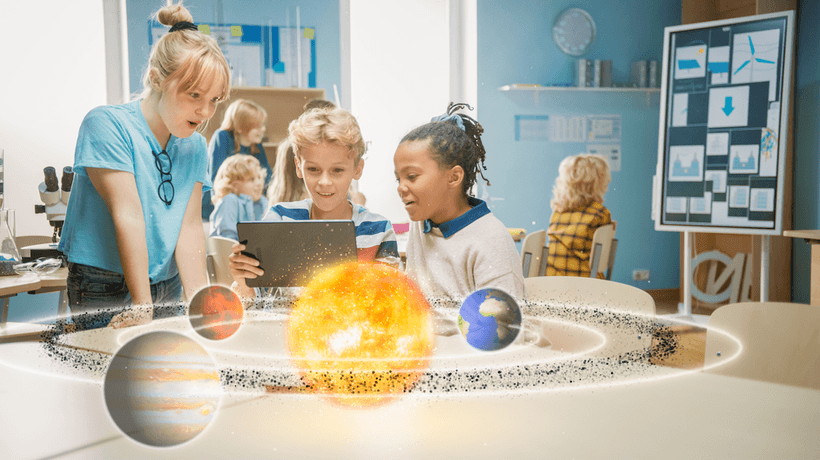](https://cdn.elearningindustry.com/wp-content/uploads/2020/12/augmented-reality-in-education.png)
*Augmented Reality in education*
### Physical Symbiosis: Enhancing Human Capabilities
Physical symbiosis involves the integration of AI and robotics with human physical systems, resulting in enhanced capabilities and improved functionality.
#### Prosthetics and Exoskeletons
In the realm of physical symbiosis, advanced prosthetic limbs and exoskeletons demonstrate the potential for human-machine synergy. Powered by AI algorithms, these devices can adapt to a user's movement, intention, and environment, effectively amplifying human strength and dexterity.
Cutting-edge prosthetic limbs can even incorporate sensory feedback mechanisms, allowing users to experience touch and proprioception – the sense of the relative position of one's own parts of the body and strength of effort being employed in movement. This level of integration transforms prosthetics from mere functional replacements to extensions of the human body.
[](https://wevolver-project-images.s3.us-west-1.amazonaws.com/0.xaek3f2ariimage1.png)
*AI-powered prosthetic limb*
Exoskeletons – wearable devices that augment human strength and mobility – have numerous applications in industries requiring heavy lifting or physically demanding tasks, such as construction, manufacturing, and healthcare. By integrating AI algorithms, exoskeletons can adapt to a user's movements, delivering optimal assistance and minimizing energy expenditure.
#### Brain-Computer Interfaces
Brain-computer interfaces (BCIs) offer exciting possibilities in the field of physical symbiosis, providing a direct communication pathway between the human brain and external devices. By decoding neural signals, BCIs can enable users to control machines or devices using their thoughts alone.
For instance, BCIs can assist individuals with motor disabilities, enabling them to communicate or manipulate objects through AI-powered devices. These systems can also enhance human performance in various domains, such as gaming, entertainment, and even military applications.
[](https://images.squarespace-cdn.com/content/v1/5a0c82936957da9f556f5c30/1540014199241-D11J0N8PDY7FEKFYK2N0/mindovermatt.jpg)
*Brain-Computer Interface in use*
### Emotional Symbiosis: Understanding and Responding to Human Emotions
Emotional symbiosis involves AI systems that can recognize, interpret, and respond to human emotions, fostering more profound connections and more intuitive interactions between humans and machines.
#### Emotion Recognition
Emotion recognition systems employ AI algorithms to analyze facial expressions, speech patterns, and text-based cues, identifying and classifying human emotions. These systems have various applications in fields such as mental health, education, and marketing.
[](https://visagetechnologies.com/app/uploads/2023/08/Emotion-detection-software-demo-555x509.webp)
*Emotion Recognition Technology*
For instance, AI-powered mental health platforms can leverage emotion recognition to provide personalized therapy and support services, closely monitoring a user's emotional state and providing tailored interventions.
#### Emotionally Intelligent AI
Emotionally intelligent AI systems go a step further, adapting their responses to human emotions to foster more authentic and engaging interactions. These systems can analyze user emotions through various channels, such as voice tonality, facial expressions, text-based cues, and even physiological signals.
For example, emotionally intelligent AI can enhance customer service experiences by detecting frustration or dissatisfaction in a user's voice or text inputs and adjusting its responses accordingly. By adapting to the user's emotional state, emotionally intelligent AI can foster more satisfying interactions and build stronger relationships between humans and machines.
## Conclusion
Human-machine symbiosis holds immense potential for augmenting human intelligence, enhancing physical capabilities, and fostering more profound emotional connections between humans and machines. As we continue to advance towards the Singularity, understanding and harnessing the power of human-machine symbiosis will be crucial to ensuring a harmonious and productive coexistence.
To further explore the topic, students can delve into areas such as ethics in AI, the economic implications of human-machine symbiosis, and the challenges and limitations of AI integration. By engaging with these complex issues, students can contribute to the ongoing discourse around human-machine symbiosis and help shape a future where humans and AI thrive in unity.
Last updated: 2025-10-23
Related Books
Related Knowledges