The Technological Singularity: A Deep Dive into Ray Kurzweil’s Predictions
============================================================================
[](https://img.freepik.com/premium-photo/advanced-artificial-intelligence-future-rise-technological-singularity-using-deep-learning-algorithms-generative-ai-illustrator_993599-1076.jpg?w=360)
*Illustration of the Technological Singularity concept*
Introduction
------------
Ray Kurzweil, a renowned inventor, author, and futurist, introduced the concept of the technological singularity in his seminal work, *The Singularity Is Near* (2005). The technological singularity refers to a hypothetical future point in time when technological growth becomes uncontrollable and irreversible, resulting in unforeseeable changes to human civilization. Kurzweil argues that this rapid acceleration of technology is driven by the law of accelerating returns, a concept he introduced in his 1999 book, *The Age of Spiritual Machines*.
The law of accelerating returns posits that the pace of technological progress is exponential, not linear. In other words, the growth rate of technological capacity increases over time because the capacity to innovate, design, and implement new technologies improves at a faster rate than the technological capacity being improved. This positive feedback loop drives humanity towards the singularity.
[](https://www.investopedia.com/thmb/-UfKmuGHdkXNlWIaPwPI_8N4FUA=/1500x0/filters:no_upscale%28%29:max_bytes%28150000%29:strip_icc%28%29/moores-law-4192714-1-5432709ba34c4a86bc7356f5274946ee.jpg)
*Exponential growth of computing power graph*
At the heart of Kurzweil's predictions lies the exponential growth of computing power, driven primarily by Moore's Law, which claims that the number of transistors on a chip doubles approximately every two years, resulting in an exponential increase in computing power for the same cost. Kurzweil extends the implications of this observation far beyond computers, suggesting that advanced nanotechnology, biotechnology, and artificial intelligence (AI) will undergo exponential growth as well, ultimately merging to create a world that transcends our current understanding of reality.
### Practical Implications and Applications
#### Example 1: Advanced Artificial Intelligence in Everyday Life
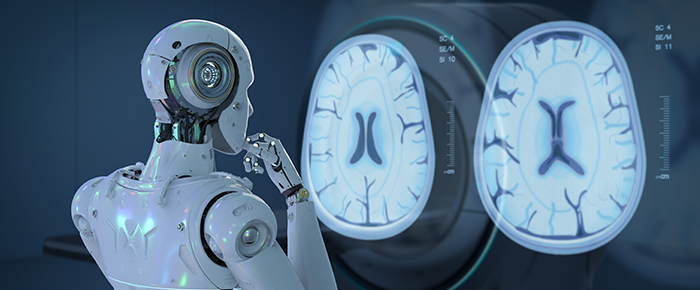
The emergence of sophisticated AI systems will result in significant changes across a wide range of industries. One such example is the field of medicine, where AI can help improve diagnostic accuracy, optimize treatment plans, and enable better patient outcomes. Through the analysis of vast amounts of data, machine learning algorithms can already identify complex patterns and help medical professionals make better decisions. Additionally, AI systems can provide care beyond the hospital, continuously monitoring patient health data, and suggesting interventions in real-time.
[](https://blog.labtag.com/wp-content/uploads/2021/10/0139-Diagnostic-AI-700x290px.jpg)
*AI in medicine - Diagnostic imagery analysis*
As AI technology progresses, it could reach a point where artificial general intelligence matches or surpasses human capabilities. This milestone would lead to the development of superintelligent systems, which could generate unimaginable benefits – and risks – for humanity.
#### Example 2: Whole Brain Emulation and Immortality
Another significant aspect of the technological singularity is whole brain emulation, which involves mapping the functionality of the human brain onto an artificial substrate, allowing for the creation of a digital version of an individual's consciousness. This process could theoretically lead to unlimited life extension by transferring the digital consciousness to progressively more powerful computational hardware.
[](https://img.freepik.com/premium-photo/brain-emulation-whole-brain-simulation-digital-consciousness-solid-color-background_964851-1535.jpg)
*Digital consciousness and brain emulation concept*
While the concept of digital immortality might seem far-fetched, research in the fields of neuroscience and computing is moving closer to enabling this possibility. For example, the Human Connectome Project, supported by the National Institutes of Health, aims to map the neural connections within the human brain. Combined with advances in computing power, these breakthroughs lay the groundwork for future whole brain emulation efforts.
Conclusion
----------
Ray Kurzweil's predictions of the impending technological singularity spark excitement and concern. The anticipated transformations of our society and world carry the potential for immense benefits and risks. As we stand at the precipice of these developments, it is crucial to understand and evaluate their implications.
Delving into the technological singularity provides college students with an extraordinary opportunity to explore multiple aspects of computing, engineering, and other disciplines. The potential of advanced AI, nanotechnology, and biotechnology should be met with rigorous inquiry, ethical discourse, and multidisciplinary collaboration. Encouraging this curiosity and critical reflection equips students to navigate and contribute to the rapidly changing technological landscape.
Further exploration of the technological singularity can include evaluating ethical considerations, studying the history and implications of emerging technologies, and fostering multidisciplinary discussions that help to broaden and deepen one's understanding of these powerful concepts. Immersing oneself in Kurzweil's works provides an excellent starting point for students eager to investigate the technological singularity's intriguing potential and complexities.
Last updated: 2024-05-29
Related Books
Related Knowledges