# Cybernetic Telepathy: Bridging Minds and Machines
Imagine a world where communication is not limited by language, distance, or even the need for verbal speech. This is the realm of cybernetic telepathy, a concept popularized by futurist Ray Kurzweil in his book, *The Singularity Is Near*. Kurzweil describes cybernetic telepathy as a form of communication that utilizes advanced technologies to directly translate and transmit thoughts, emotions, and sensory experiences between individuals. In this section, we will delve into the core concepts of cybernetic telepathy, its practical implications, and future potential.
[](https://m.media-amazon.com/images/M/MV5BMjA5MDc0ODk2MV5BMl5BanBnXkFtZTcwNDU3Njk0MQ@@._V1_.jpg)
*Cover of \*The Singularity Is Near\* by Ray Kurzweil*
## Core Concepts of Cybernetic Telepathy
Cybernetic telepathy combines elements of cybernetics, the study of communication and control in machines and living beings, and telepathy, the supposed transmission of information from one mind to another. In the context of cybernetic telepathy, however, telepathic communication is facilitated not by supernatural means but through the use of advanced technology.
At the heart of cybernetic telepathy lies the concept of a *neural interface*, a connection between the human brain and an external computing device. This interface enables the direct exchange of information between the two systems, effectively merging biological and artificial intelligence.
[](https://neurosciencenews.com/files/2023/06/bci-neural-implants-neurosicnes.jpg)
*Illustration of a neural interface connecting the human brain to a computer*
The realization of cybernetic telepathy relies on several technological advancements:
1. **Brain-computer interfaces (BCIs)**: Devices that translate neural signals into commands for machines, allowing individuals to control devices using their thoughts.
2. **Artificial intelligence (AI) and machine learning**: Techniques used to analyze, interpret, and generate responses to neural signals in real-time, facilitating seamless communication between brains and machines.
3. **Neuroimaging and neurostimulation techniques**: Methods used to visualize and modulate brain activity, enabling the decoding of thoughts, emotions, and sensory experiences.
[](https://cdn.the-scientist.com/assets/articleNo/68762/aImg/42181/bci-article-l.png)
*Example of a Brain-computer interface \(BCI\) device*
## Practical Implications of Cybernetic Telepathy
Cybernetic telepathy holds the potential to revolutionize various aspects of human life, from communication and collaboration to healthcare and entertainment. Here, we discuss two examples that illustrate the practical implications of cybernetic telepathy.
### Enhancing Communication and Collaboration
Telepathic communication could dramatically alter the way we interact with one another. By directly exchanging thoughts, individuals could overcome language barriers, miscommunications, and cultural differences. Moreover, cybernetic telepathy could enable the sharing of ideas, knowledge, and experiences in a more immersive and efficient manner, fostering innovation and collaboration on a global scale.
Consider a team of researchers working on a complex problem. With cybernetic telepathy, team members could instantly share their thoughts, insights, and data as they arise. This direct exchange could accelerate the problem-solving process, allowing teams to tackle challenges more effectively and efficiently.
[](https://avispl.com/wp-content/uploads/2021/02/AVI_56907_Global-Story_Woman-work-from-home-multiple-screens-edit.jpg)
*Visual representation of global team collaboration facilitated by cybernetic telepathy*
### Improving Healthcare and Rehabilitation
Cybernetic telepathy could significantly impact healthcare and rehabilitation by providing new avenues for treating neurological disorders and injuries. For instance, BCIs could help individuals with speech impairments or paralysis regain their ability to communicate or control devices.
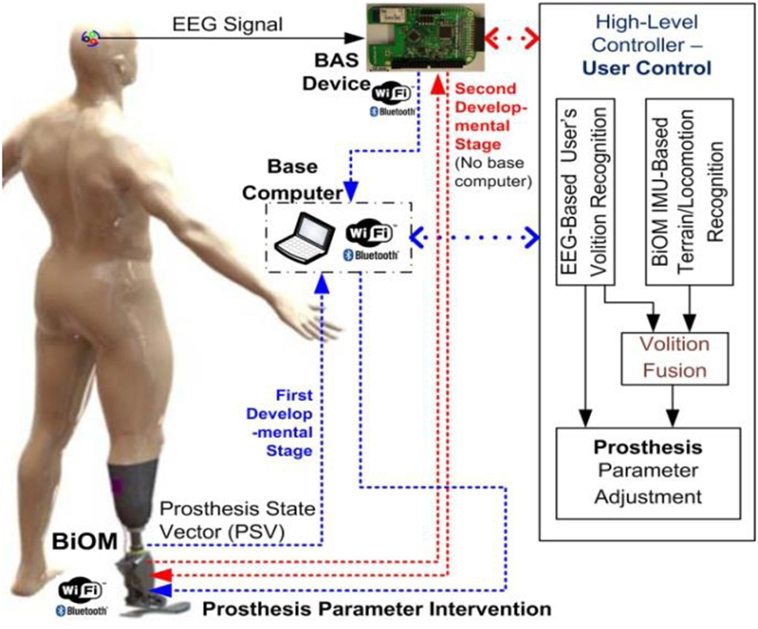
Suppose a person has suffered a spinal cord injury that has left them paralyzed from the neck down. By utilizing a BCI, this individual could control a prosthetic limb or communicate using a computer, restoring some degree of independence and self-sufficiency. Furthermore, AI and machine learning algorithms could help these individuals retrain their brains to adapt to new situations, facilitating neuroplasticity and recovery.
[](https://www.frontiersin.org/files/Articles/308916/fneur-08-00696-HTML/image_m/fneur-08-00696-g001.jpg)
*Illustration of an individual controlling a prosthetic limb using a BCI*
## Conclusion
Cybernetic telepathy, as envisioned by Ray Kurzweil and other futurists, represents a profound shift in how we perceive and interact with machines and one another. Direct brain-machine interfaces, AI, and neuroimaging techniques will fundamentally change the way we communicate, collaborate, and innovate.
As we continue to advance in these technologies, it is crucial that we engage in thoughtful discussions concerning their implications and ethical considerations. For instance, how might cybernetic telepathy affect privacy, security, or even our sense of identity? As college students, you are encouraged to explore these questions and contribute to the ongoing dialogue surrounding the future of cybernetic telepathy.
For further exploration, consider researching the following topics:
- The history and current state of brain-computer interfaces.
- The role of AI and machine learning in understanding and interpreting neural signals.
- Ethical considerations and societal implications of cybernetic telepathy.
By investigating these areas, you will not only deepen your understanding of cybernetic telepathy but also prepare yourself for a future where the boundaries between humans and machines continue to blur.
Last updated: 2024-05-29
Related Books

Related Knowledges