# The Nanotech Revolution: A Key Driver of the Singularity
In *The Singularity Is Near*, Ray Kurzweil explores how accelerating progress in technology will lead to a future of radical transformations. Among the key drivers of this change, Kurzweil highlights the nanotech revolution – the emerging ability to manipulate matter at the atomic and molecular levels. This development holds immense potential, enabling innovations that could address some of humanity's most pressing challenges and reshaping our understanding of the world.
[](https://www.theneweconomy.com/wp-content/uploads/2013/12/swiss-nano-leadership.jpg)
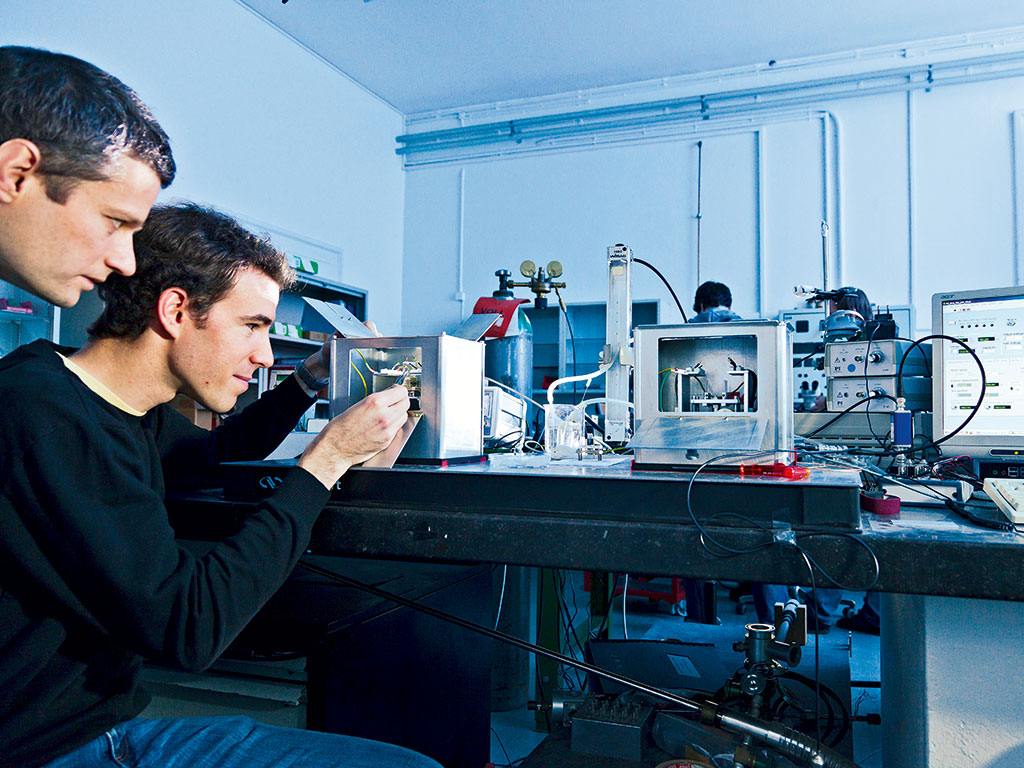
*Conceptual illustration of the nanotech revolution.*
## Nanotechnology: Laying the Foundation for a New Era
Nanotechnology refers to the design, characterization, production, and application of structures, devices, and systems by controlling shape and size at the nanometer scale (1-100 nanometers). At this size range, the properties of matter differ significantly from those observed at larger scales. Nanotech harnesses these unique characteristics to create novel materials and systems that exhibit remarkable features, such as enhanced strength, increased conductivity, or improved catalytic activity. Consequently, nanotech can enable significant advances in areas including medicine, computing, energy, and environmental sustainability.
[](https://chembam.com/wp-content/uploads/2017/01/nanoscale.png)
*Visualization of nanotechnology at the nanometer scale.*
Before delving into specific examples and applications, it is crucial to understand the distinction between two branches of nanotech: passive and active. Passive nanotech involves the use of nanostructured materials to enhance or modify the properties of existing systems. Active nanotech, on the other hand, pertains to the development of autonomous, programmable nanomachines capable of performing specific tasks. These nanobots hold the promise of revolutionizing industries and solving complex societal problems.
### Nanotech Applications in Medicine: Revolutionizing Healthcare
[](https://ars.els-cdn.com/content/image/1-s2.0-S2414644723000337-gr1.jpg)
*Examples of nanotech applications in medicine.*
One of the most promising areas of nanotech is medicine, with potential applications spanning diagnostics, drug delivery, and regenerative medicine.
#### Nanodiagnostics
Nanotech can significantly improve diagnostic techniques by enabling the detection of biological markers at very low concentrations. For instance, nanoparticle-based biosensors can detect specific proteins, DNA sequences, or even individual viruses. These ultrasensitive tools can facilitate early disease detection, enabling faster and more effective treatment. Furthermore, nanodiagnostics can enable personalized medicine by tailoring therapies to individual patients based on their unique molecular profiles.
#### Nanomedicine: Targeted Drug Delivery
Another promising application of nanotech in medicine is targeted drug delivery. This approach involves encapsulating therapeutic compounds within nanocarriers, which can then be directed to specific locations within the body. By shielding drugs from degradation, nanocarriers can protect sensitive compounds and increase their bioavailability. Moreover, targeted drug delivery can reduce side effects by minimizing systemic exposure to potentially toxic agents.
In recent years, significant progress has been made in developing nanoscale drug delivery systems for various applications, including cancer therapy and neurological disorders. For instance, researchers have designed liposome-based nanocarriers that can cross the blood-brain barrier, delivering drugs directly to the central nervous system for the treatment of conditions such as Alzheimer's and Parkinson's diseases (Lockman, Kozlowski, and Burns, 2014).
#### Regenerative Medicine: Tissue Engineering and 3D Printing
In addition to diagnostics and drug delivery, nanotech can contribute to the advancement of regenerative medicine by enabling tissue engineering and 3D bioprinting. Nanofibrous scaffolds can be used as templates for cell growth and tissue regeneration, thereby facilitating the fabrication of complex structures such as blood vessels, tendons, and even entire organs. By harnessing the self-assembly properties of nanomaterials, researchers can create biomimetic environments that closely resemble native tissues, thereby promoting cell adhesion, proliferation, and differentiation.
Furthermore, the combination of nanotech and 3D bioprinting enables the generation of patient-specific tissues and organs, paving the way for personalized regenerative therapies. This approach has the potential to address the challenges associated with transplantation, including donor shortages, tissue rejection, and lifelong immunosuppression.
### Nanotech Applications in Computing: Merging Biology and Technology
[](https://d1otjdv2bf0507.cloudfront.net/images/Article_Images/ImageForArticle_3251%281%29.jpg)
*Nanotechnology's role in advancing computing.*
Beyond medicine, nanotech holds significant promise for computing and information technology. As described in *The Singularity Is Near*, Kurzweil envisions a future where nanoscale devices interact seamlessly with biological systems, leading to the emergence of hybrid technologies that blur the boundaries between living and nonliving matter.
#### Molecular Computing: DNA and Protein-Based Computers
At the forefront of nanotech-enabled computing are molecular computers, which leverage the inherent properties of DNA and proteins to process information and perform computational tasks. By harnessing the natural processes of DNA replication, transcription, and translation, molecular computers can execute complex algorithms using relatively simple and energy-efficient mechanisms. Moreover, these systems can be integrated with biological systems, thereby enabling the creation of living computers that can adapt, evolve, and learn.
#### Biocompatible Electronics: Merging Biology and Technology
Another area of interest in nanotech-driven computing is the development of biocompatible electronic interfaces that can communicate directly with biological systems. These interfaces can facilitate the exchange of information between electronic devices and living organisms, paving the way for advanced prosthetics, neural implants, and other hybrid systems that merge biology and technology.
For example, researchers have developed nanoscale electrodes capable of recording and stimulating neural activity at the single-cell level. These interfaces can be integrated into neural networks, enabling the restoration of sensory function in individuals with sensory impairments or motor control in those with neurological disorders. Furthermore, biocompatible electronics can be used to create closed-loop systems that respond dynamically to physiological signals, thereby enhancing the performance of assistive devices and enabling more effective therapeutic interventions.
## Concluding Remarks
In summary, nanotech represents a key driver of the singularity, holding immense potential for transforming various aspects of human life. From medicine to computing, nanotech can enable novel applications and solutions that address pressing societal challenges while offering opportunities for technological and personal growth.
[](https://miro.medium.com/v2/resize:fit:1400/1*atRgo2eWLI--29_xY-eyEg.jpeg)
*Envisioning the future of nanotech.*
To further explore the topic of nanotech, consider the following resources:
1. Research publications, such as those available through the [National Nanotechnology Initiative](https://www.nano.gov/) and [IEEE Nanotechnology Council](https://nte.ieee.org/).
2. Popular science magazines and blogs, such as [Scientific American](https://www.scientificamerican.com/) and [MIT Technology Review](https://www.technologyreview.com/).
3. Online courses, such as those offered by platforms like [edX](https://www.edx.org/) and [Coursera](https://www.coursera.org/).
4. Books, such as *Engines of Creation* by K. Eric Drexler and *Nano* by Richard E. Smalley.
By engaging with these resources, students can deepen their understanding of nanotech and its implications for the future of humanity, thereby contributing to the ongoing conversation about the role of technology in shaping our world.
### References
- Lockman, P. R., Kozlowski, M. A., & Burns, M. M. (2014). Nanomedicine for the central nervous system: Progress, challenges, and opportunities. *ACS Nano*, *8*(3), 2413-2428. doi:10.1021/nn405127s
Last updated: 2024-05-29
Related Books

Related Knowledges