# Flexible Planning & Execution: Adapting to the Fast-Paced Business Landscape
*Flexible planning & execution* is a strategic approach to navigating the ever-changing business landscape, a vital concept discussed in Andrew S. Grove's influential book, *Only the Paranoid Survive*. This method focuses on developing the organizational agility required to swiftly adapt to competitive, technological, and market shifts by fostering a culture that embraces change and continuous improvement. This essay will offer an in-depth examination of the concept, along with practical examples and applications, to help students deepen their understanding of these critical ideas.
## The Core Concepts
[](https://media.licdn.com/dms/image/D4E12AQH43EvB8_ay1g/article-cover_image-shrink_720_1280/0/1709123353783?e=2147483647&v=beta&t=WrVd2lCCRE6kJS2DBlF7naTYnz5u3vC5b7I1qvy-SwE)
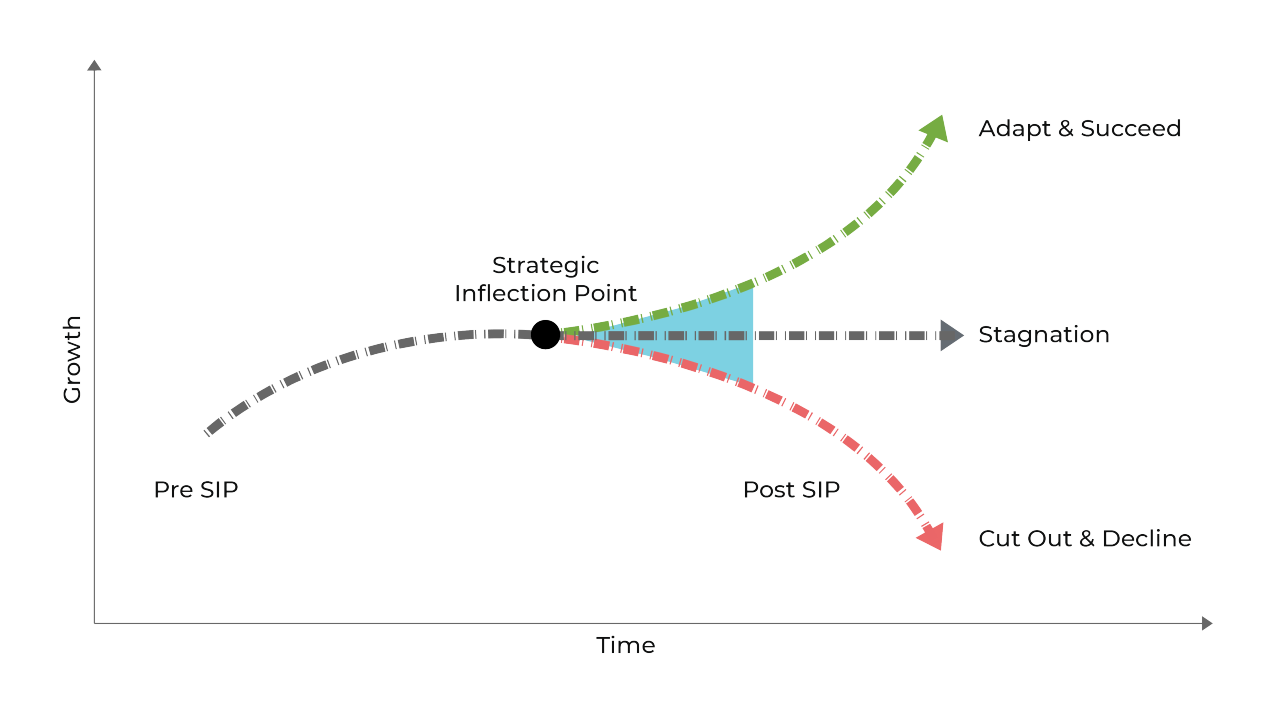
*Example of Strategic Inflection Points*
Andrew S. Grove posits that strategic inflection points—significant, disruptive changes—shape the business world and force organizations to adapt (Grove, 1996). Companies must tackle these inflection points through flexible planning and execution, which emphasizes integrating change management, adaptive thinking, and continuous learning to confront and overcome challenges effectively.
At the heart of this concept is a three-step process:
[](https://media.licdn.com/dms/image/C4D12AQGlROpNpfEWDA/article-cover_image-shrink_600_2000/0/1520111801338?e=2147483647&v=beta&t=w1_yIqaIz5KUbqVodvBtViMRcltkSiku_c_jgVWViBU)
*Flexible Planning & Execution Process*
1. Identify potential inflection points: Companies must keep abreast of cultural, technological, and market trends to foresee strategic inflection points and respond in a proactive manner.
2. Develop adaptive plans: By fostering a culture of experimentation and creativity, organizations can construct flexible strategies to navigate emerging challenges.
3. Encourage continuous learning and improvement: Encouraging a growth mindset and providing ongoing learning opportunities are essential for maintaining organizational responsiveness and resilience.
## Real-World Examples and Applications
### Case Study 1: Nokia's Decline
Nokia, once a leading mobile phone manufacturer, serves as a prime example of a company that struggled to adapt to strategic inflection points. In the early 2000s, Nokia controlled about 40% of the global smartphone market. However, the rise of the iPhone and Google's Android operating system brought about a significant shift in the industry. Nokia's resistance to change and slow response ultimately led to its downfall.
[](http://cdn.statcdn.com/Infographic/images/normal/3626.jpeg)
*Case Study: Nokia's Decline*
As a counterfactual, if Nokia had embraced flexible planning and execution, they might have invested resources into exploring and adopting emerging mobile technologies. This proactive approach could have allowed Nokia to maintain and strengthen its position in the rapidly changing smartphone market.
### Case Study 2: Netflix's Evolution
In stark contrast to Nokia, Netflix—a leading streaming platform—demonstrates the effective implementation of flexible planning and execution. Netflix has continually adapted to industry shifts and technological advances, evolving from a DVD-by-mail service to the behemoth it is today.
[](https://miro.medium.com/v2/resize:fit:1200/1*cUVWMoz0bDWQgaPDA3JXMg.png)
*Case Study: Netflix's Evolution*
Netflix's strategy includes:
1. Regular monitoring of market conditions and technological trends
2. Willingness to abandon established business models in pursuit of innovation
3. Encouraging a culture of continuous learning and improvement
Through these efforts, Netflix has managed to navigate the turbulent digital media landscape, reshaping its business model in response to strategic inflection points.
## Key Insights and Further Exploration
Flexible planning & execution empowers organizations by enabling them to:
* Build resilience against disruptions
* Stay abreast of market and industry trends
* Implement proactive adaptive strategies
* Cultivate a supportive learning environment
Exploring the concept further, students may consider the following questions:
* What strategies can organizations employ to maintain a proactive approach towards potential disruptive changes?
* What role does leadership play in cultivating flexible planning and execution within an organization?
* How can organizations strike an effective balance between established business models and disruptive innovation?
## Concluding Thoughts
In an ever-changing business landscape, flexible planning & execution plays a vital role in ensuring that companies can adapt and thrive in the face of strategic inflection points. By incorporating adaptive thinking, proactive change management, and continuous learning, organizations can foster the resilience and agility necessary to maintain a competitive edge. Through the study of real-world examples and the exploration of foundational concepts, students can better understand the value of flexibility and take critical first steps towards its integration within their organizations.
### Reference
Grove, A. S. (1996). Only the Paranoid Survive: How to Exploit the Crisis Points That Challenge Every Company (1st ed.). Crown Business.
Last updated: 2024-06-28
Related Books

Related Knowledges