# Change or Be Changed: Fundamentals and Applications from "Only the Paranoid Survive"
[](https://californiamuseum.org/wp-content/uploads/Grove-Cropped-Black-and-White-Resized.jpg)
*Andrew S. Grove*
_"The most important, and indeed the truly unique, contribution of managers is the regular, methodical illumination of future events and future patterns—in short, the regular creation of a forward view.... The task of creating the future has to be recognized as a task of crucial importance to any company that expects to have a future of its own." - Andrew S. Grove, Only the Paranoid Survive_
## Introduction to Change or Be Changed
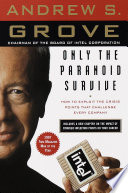
In his influential book, "Only the Paranoid Survive," Intel's former CEO and Chairman Andrew S. Grove discusses the concept of "strategic inflection points" which prompt companies to adapt and evolve or face decline. This idea of 'Change or Be Changed' is a powerful message for businesses and individuals alike, urging them to maintain a constant state of preparedness and awareness in the face of industry shifts.
In Grove's view, strategic inflection points emerge from various sources: technological innovations, regulation changes, and societal shifting values. By recognizing and addressing these shifts, businesses are better equipped to respond proactively and capitalize on opportunities.
In this piece, we aim to dissect the core components of 'Change or Be Changed' while providing real-world examples and applications to demonstrate its relevance and importance. We hope that by understanding these principles, college students can develop a strategic mindset and be better prepared for an ever-evolving world.
## Real-World Examples and Applications
### Example 1: The Emergence of Ride-Hailing Services
The story of how Uber transformed the transportation industry is a prime example of 'Change or Be Changed.' Before the emergence of Uber, the taxi industry operated for decades using largely unchanged business models. Nevertheless, the widespread adoption of smartphones and the development of mobile technology opened up new opportunities for entrepreneurs.
[](https://d3.harvard.edu/platform-digit/wp-content/uploads/sites/2/2020/03/uber.jpeg)
*Uber and taxi difference*
Uber recognized the potential of these technological advancements and harnessed them to create a seamless, on-demand transportation experience. Since its inception, the company has relentlessly expanded its offerings to include ride-sharing, food delivery, electric bikes, and scooters. Meanwhile, traditional taxi companies that failed to adapt are struggling to regain market share.
The Uber example shows us how crucial it is for businesses to be aware of and responsive to the ongoing evolution of technology and its potential applications.
### Example 2: Streaming Platforms and the Decline of Physical Media
In the realm of media consumption and entertainment, streaming platforms like Netflix, Hulu, and Spotify have significantly affected the way people access movies, TV shows, and music. These platforms have effectively replaced physical media, such as DVDs and CDs, on a massive scale.
Blockbuster, once a market leader in home entertainment, neglected to embrace digital innovations in time and, in turn, lost market share to these streaming services. The company declared bankruptcy in 2010 and ultimately closed its last corporate-owned store in 2013.
[](http://cdn.statcdn.com/Infographic/images/normal/29775.jpeg)
*Streaming platforms transformation*
Netflix's rise and Blockbuster's fall demonstrate the importance of staying ahead of market trends and being prepared for seismic shifts in consumer behavior. Streaming platforms' success illustrates the necessity of forward-thinking and constant adaptation in an ever-changing industry.
## Summary and Further Exploration
In "Only the Paranoid Survive," Andrew S. Grove expertly conveys how important it is for businesses and individuals to maintain vigilance, assess market shifts, and be prepared to adapt in the face of change. As these real-world examples and applications show, staying committed to 'Change or Be Changed' can provide significant advantages in competitive landscapes.
To expand on this topic, consider exploring the following questions and activities:
1. Research and analyze other companies in various industries that faced their strategic inflection points and were able to reinvent themselves. Illustrate how they recognized the signs of change and what actions they took to adapt.
2. Apply 'Change or Be Changed' in a real-world context. Identify and assess a current industry that is undergoing a shift or experiencing disruption. Contemplate the implications for businesses and industries that fail to respond and consider potential strategies for those looking to remain competitive.
3. Consider the role of governments in regulating and supporting industries experiencing strategic inflection points. Investigate case studies of legislative or executive responses to industry shifts in various nations and evaluate their effectiveness.
By examining and understanding these concepts and experiences, individuals can hone their understanding of the strategic mindset that underpins the notion of 'Change or Be Changed' and apply it in their academic, personal, and professional pursuits.
Last updated: 2024-06-25
Related Books
Related Knowledges