# Prioritizing Resources: Strategies for Uncertain Times from "Only the Paranoid Survive"
In today's rapidly changing world, the ability to adapt and prioritize resources is crucial for organizations and individuals alike. The book "Only the Paranoid Survive," by Andrew S. Grove, former CEO of Intel, offers valuable insights into strategic decision-making and resource allocation during uncertain times. This article delves into the knowledge point 'Prioritize Resources' and its relevance for college students in their academic and professional lives.
[](http://content.tegna-media.com/photo/2016/03/22/635941917961588841-Grove_1099981_ver1.0.jpg)
*Andrew S. Grove, former CEO of Intel*
## Introduction
Effective prioritization is about allocating limited resources—time, money, and effort—towards endeavors that yield the most significant benefits. This principle is vital for college students as they balance academic responsibilities, extracurricular activities, and personal relationships.
In "Only the Paranoid Survive," Grove elaborates on the concept of '10x' improvements—strategies that deliver orders-of-magnitude gains over incremental improvements. Identifying such opportunities and focusing resources on them can result in substantial progress. This is particularly relevant for students, who constantly juggle various commitments and seek to maximize their academic and professional growth.
## Practical Implications and Examples
### Academic Success
Prioritizing resources in the academic context involves identifying critical courses, assignments, and extracurricular activities that contribute most to long-term goals. Students often face a wide array of choices in their course selection, research projects, and internships.
[](https://dart.ed.ac.uk/wp-content/uploads/2020/08/Time-Management-1760x880.png)
*Prioritizing resources for academic success*
Example 1: Suppose a computer science major has the option to enroll in three elective courses: Data Structures, Artificial Intelligence (AI), and Web Development. While all three subjects might be interesting, the student's long-term goal is to work in AI research. In this case, allocating the majority of resources (time, effort, and focus) towards the AI course, rather than spreading them evenly across all three subjects, would likely yield better academic performance and long-term career prospects.
Example 2: A student is selecting research projects and has narrowed down the choices to three: one on Blockchain, another on Natural Language Processing, and the last on Computer Vision. After careful analysis, the student finds that Computer Vision aligns best with their career aspirations and academic interests. Focusing their resources on the Computer Vision project provides the greatest potential for learning, professional growth, and networking opportunities.
### Personal Growth
Beyond academics, students must also prioritize personal development and relationships. Striking a balance between academic pursuits, extracurricular activities, and personal well-being is instrumental in achieving long-term success.
Example 1: A student is involved in various extracurricular activities, such as a coding club, a sports team, and a volunteer group. However, the student finds themselves overwhelmed and unable to dedicate sufficient time and effort to each activity. By reassessing their priorities and focusing on one or two activities that align most with their interests and long-term goals, the student can maximize their engagement and enjoyment while maintaining a healthy work-life balance.
[](https://miro.medium.com/v2/resize:fit:1358/1*icezzN8ChrczmXAXtT8MXg.jpeg)
*Balancing extracurricular activities*
Example 2: Students must also prioritize their mental and physical well-being to optimize their academic and professional success. By dedicating resources—time and energy—towards self-care activities like exercise, mindfulness, and adequate sleep, students can enhance their focus, productivity, and overall well-being.
## Conclusion
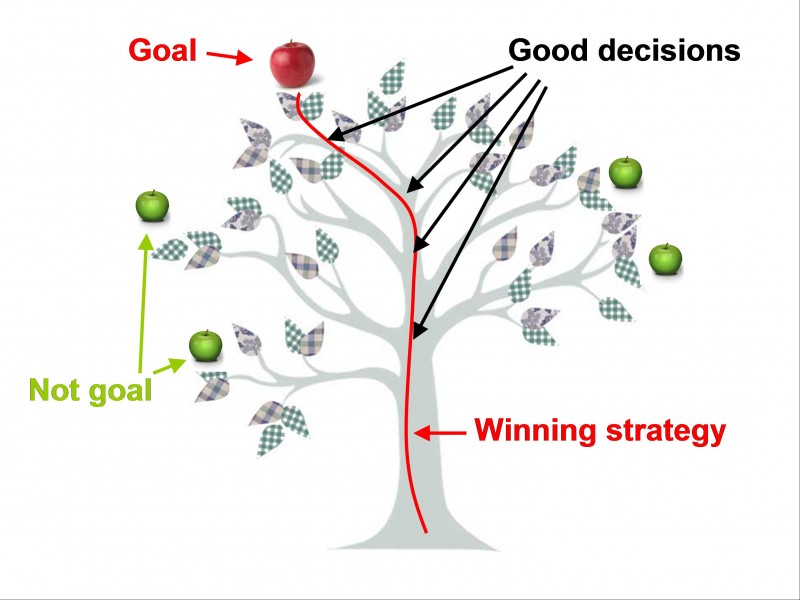
The concept of prioritizing resources is a crucial takeaway from "Only the Paranoid Survive." Andrew S. Grove's emphasis on the importance of identifying '10x' opportunities and focusing resources on them sheds light on effective decision-making and strategic planning. College students can apply these lessons by prioritizing academic pursuits, extracurricular activities, and personal well-being.
[](https://bauergriffith.com/wp-content/uploads/2020/10/how-to-fight-uncertainty-2-e1353942299515.jpg)
*Effective decision-making and strategic planning*
By focusing on critical courses, assignments, and extracurricular activities, students can optimize their academic and professional growth. Furthermore, by acknowledging and addressing their limitations and prioritizing self-care, students can achieve a healthier work-life balance.
For further exploration of the topic, consider the following questions and resources:
* What are other strategies for prioritizing resources during uncertain times?
* How can students determine their long-term goals and align their priorities accordingly?
* How can students maintain flexibility while committing to their priorities?
Resources for further learning:
* "Getting Things Done: The Art of Stress-Free Productivity" by David Allen
* "Essentialism: The Disciplined Pursuit of Less" by Greg McKeown
* "The 7 Habits of Highly Effective People" by Stephen Covey
* "Deep Work: Rules for Focused Success in a Distracted World" by Cal Newport
* "The Power of Focus: How to Hit Your Business, Personal and Financial Targets with Absolute Certainty" by Jack Canfield, Mark Victor Hansen, and Les Hewitt
Last updated: 2024-06-25
Related Books
Related Knowledges