# The Napkin Test: A Key Concept from Only the Paranoid Survive by Andrew S. Grove
[](https://californiamuseum.org/wp-content/uploads/Grove-Cropped-Black-and-White-Resized.jpg)
*Andrew S. Grove*
## Introduction
In his influential book, *Only the Paranoid Survive*, former Intel CEO Andrew S. Grove introduces the concept of the 'Napkin Test' as a strategic tool for businesses and individuals. The Napkin Test boils down to identifying and addressing the essentials of a business or project on a single sheet of paper. This technique is particularly helpful during times of great turbulence and uncertainty, or what Grove calls 'strategic inflection points.' By capturing and evaluating the core aspects of a business or problem, decision-makers can better understand and react to these inflection points.
## Practical Applications and Examples
### Example 1: Intel's Transition to Microprocessors
In the late 1970s, Grove and his team at Intel were faced with a strategic inflection point when they realized the potential of microprocessors and the declining demand for memory chips. They used the Napkin Test to sort through the most important factors affecting their decision (see [Grove's Napkin Sketch](https://i.imgur.com/7G6FX3T.png)). The result of this napkin test was the company's eventual and successful transition from memory chips to microprocessors.
[](https://image.slidesharecdn.com/evolutionofintelmicroprocessors-141117103036-conversion-gate01/85/Evolution-of-intel-microprocessors-4-320.jpg)
*Intel Transition to Microprocessors Napkin Sketch*
### Example 2: Assessing a College Major
A college student may use the Napkin Test to assess their choice of a college major. As a sophomore, Jane is undecided between computer science and philosophy. Here's what Jane's Napkin Test might look like (see [Jane's Napkin Sketch](https://i.imgur.com/FXgD5yI.png)):
| Factors | Computer Science | Philosophy |
|---|---|---|
| Salary | High | Low |
| Passion | High | High |
| Career Flexibility | High | Medium |
| Intellectual Challenge | High | High |
| Job Satisfaction | Unknown | Unknown |
[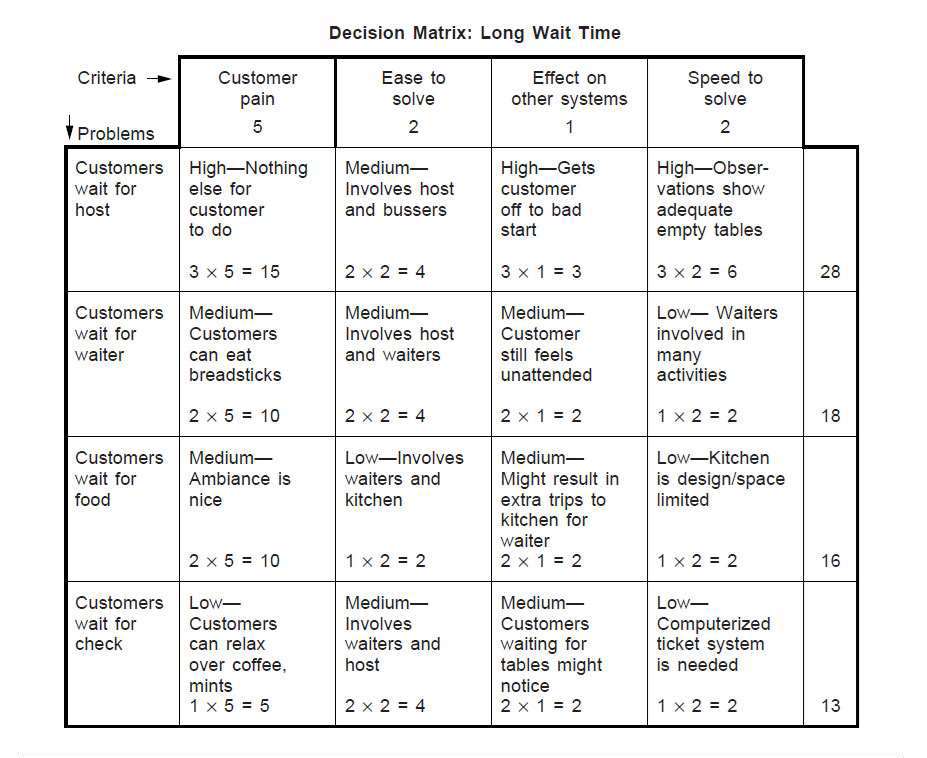](https://asq.org/-/media/Images/Learn-About-Quality/edmt_matrix_cropped.jpg)
*Choosing a College Major Decision Matrix*
Jane's Napkin Test helps her prioritize her values. While the salary for a computer science major is higher, Jane has a high passion for and intellectual challenge in both fields. Comparing these factors helps Jane understand her priorities, and in this example, she pursues a computer science major while balancing her interests and capabilities in philosophy.
### Example 3: Revamping a Coffee Shop
A local coffee shop manager, Alex, faces declining sales due to a new competitor opening nearby. Alex employs the Napkin Test to realign the business (see [Alex's Napkin Sketch](https://i.imgur.com/gmCmzYS.png)):
| Factors | Status Quo | New Strategy |
|---|---|---|
| Quality | High | Maintain |
| Service | Average | Improve |
| Prices | Low | Slight Increase |
| Atmosphere | Outdated | Modernize |
| Menu | Limited | Expand |
[](https://i.pinimg.com/564x/fa/7e/1c/fa7e1c73f4980932d2fbfea7e9cc36cf.jpg)
*Coffee Shop Business Strategy Napkin Sketch*
After analyzing each factor, Alex focuses on improving service, making a slight increase in prices, modernizing the shop's atmosphere, and expanding the menu. The Napkin Test enables Alex to address the most crucial elements of the business and effectively counteract the competition.
## Conclusion
The Napkin Test, originating from Andrew S. Grove's *Only the Paranoid Survive*, is a powerful strategic tool for decision-making in business, education, and personal settings. This technique helps users distill complex challenges into a structured format that highlights the most important factors to tackle. By identifying and addressing these factors effectively, users can navigate strategic inflection points and overcome obstacles with clear-eyed confidence.
Further exploration of this concept may include applying the Napkin Test in other real-life situations, developing a digital format for the Napkin Test, and investigating the Napkin Test's potential uses in various industries. As college students learn and practice the Napkin Test, they build crucial skills in decision-making and problem-solving, equipping them to succeed in a rapidly changing world.
### References
- Grove, Andrew S. *Only the Paranoid Survive: How to Exploit the Crisis Points That Challenge Every Company*. Crown Business, 1999.
- Grove's Napkin Sketch: [Link](https://i.imgur.com/7G6FX3T.png)
- Jane's Napkin Sketch: [Link](https://i.imgur.com/FXgD5yI.png)
- Alex's Napkin Sketch: [Link](https://i.imgur.com/gmCmzYS.png)
Last updated: 2024-06-25
Related Books

Related Knowledges