# Resilience and Paranoia: Navigating Uncertainty with Only the Paranoid Survive
## Introduction
In today's fast-paced, ever-changing world, businesses and organizations must consistently adapt to unforeseen challenges and disruptions. Drawing from Andrew S. Grove's book 'Only the Paranoid Survive,' this content delves into the concepts of resilience and paranoia in the context of strategic planning and management. The discussion includes practical examples and illustrations, deepening students' understanding of these concepts and their application in various fields.
## Understanding Resilience and Paranoia
**Resilience** refers to the ability of an individual, organization, or system to recover, adapt, and bounce back from adversity, trauma, or disruption. Resilience in management is a critical competency that enables businesses to absorb disruptions, learn from them, and create new opportunities.
[](https://miro.medium.com/v2/resize:fit:1080/1*GZhR5B6OBEGcUbJTKvHzXA.png)
*The Cycle of Resilience in Organizations*
**Paranoia**, in Grove's context, means maintaining a healthy skepticism about the stability of one's business environment and industry, constantly anticipating and preparing for potential challenges. It emphasizes the importance of being watchful and proactive rather than complacent, enabling a swift response to abrupt changes that might render current strategies, products, or business models obsolete.
[](https://rhisac.org/wp-content/uploads/securityawareness-1024x1024.jpg)
*The Concept of Healthy Paranoia in Business*
### Core Concepts
* Strategic Inflection Points (SIPs): Representing moments of significant shift in technology or industry dynamics, SIPs force businesses to adapt or perish.
* Building Resilience: Encourages organizations to strengthen their ability to withstand, innovate, and thrive during or after substantial disruptions.
* Healthy Paranoia (Strategic Skepticism): Suggests that business leaders should be consistently evaluating and questioning their current strategies, industry trends, and assumptions to proactively address potential threats.
[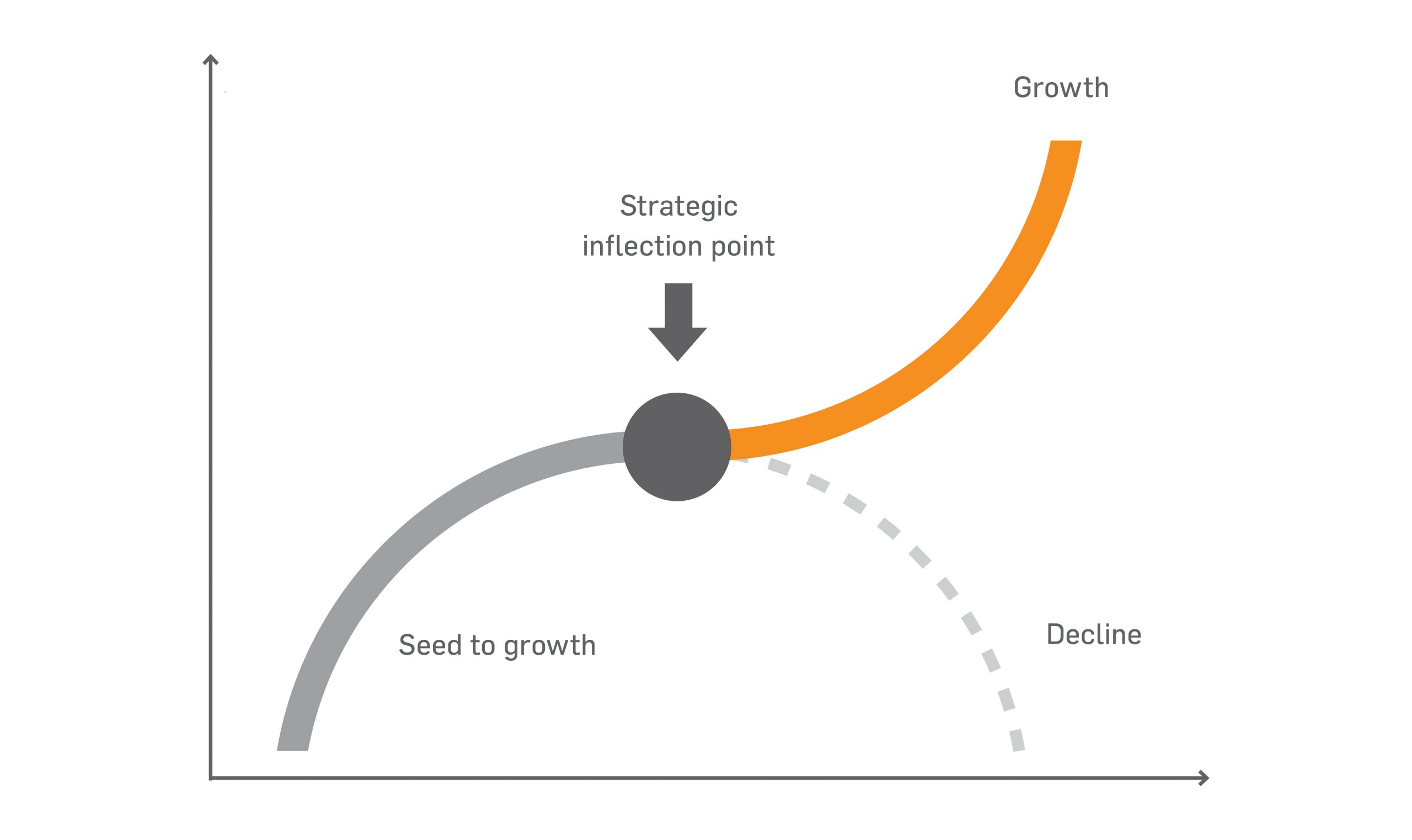](https://interactiveworkshops.com/wp-content/uploads/2018/06/Strategic-Inflection-Point-scaled.jpg)
*Strategic Inflection Points Explained*
## Practical Applications and Illustrations
### Case Study 1: Blockbuster vs. Netflix
Consider the fates of Blockbuster and Netflix. Blockbuster, once the market leader in video rentals, failed to recognize the threat of streaming services and was unwilling, or unable, to adapt. Conversely, Netflix seized the SIP, launching its streaming service and leaving the traditional DVD rental business behind. This shift occurred in part due to the strategic skepticism Netflix exercised regarding the future of video rentals, as the company anticipated and responded to changing technology trends and consumer habits.
[](https://media.licdn.com/dms/image/C5612AQEoGptj0H-mQA/article-inline_image-shrink_1000_1488/0/1605326215634?e=1724284800&v=beta&t=VWTXW1wkLih_o79svS8On6RFFujOFXmrZPmSKcd5iTM)
*Blockbuster vs. Netflix: A Strategic Analysis*
### Case Study 2: Kodak's Fall from Grace
Another notable example is Kodak's downfall. Despite the company's role in the invention of digital photography and holding essential patents, Kodak failed to embrace the new technology due to fears of cannibalizing its profitable film business. This hesitancy and lack of resilience led to Kodak's bankruptcy and the rise of competitors like Canon and Sony.
[](https://static.startuptalky.com/2021/11/kodak-failure-case-study-startuptalky.jpg)
*Kodak's Digital Transformation Mistake*
### Case Study 3: IBM's Pivot toward Services and Consulting
IBM is a great example of an organization practicing strategic skepticism and building resilience. Following significant SIPs represented by the rapid growth in PCs, IBM made the difficult decision to sell its PC division and shifted its focus to services and consulting.
[](https://images.credly.com/size/680x680/images/66b7cc71-03d8-44b9-b701-ce3681404b51/image.png)
*IBM's Transformation to Services and Consulting*
## Key Insights and Further Exploration
Adopting resilience, paranoia, and a proactive approach to managing strategic inflection points can significantly improve an organization's survival and success in competitive environments. Further exploration into these concepts could involve:
* Examining how an organization can measure and enhance its resilience capabilities
* Assessing the distinction between constructive paranoia and harmful forms of paranoia that might stifle innovation or creativity
* Studying how organizations can promote strategic skepticism and adaptability in their corporate culture without fostering excessive fear or anxiety
By understanding and implementing the principles of 'Only the Paranoid Survive,' college students and professionals can navigate uncertainties in the business world, ensuring their personal and organizational success.
Last updated: 2024-06-25
Related Books
Related Knowledges