# Planning for Survival: The Key to Long-Term Success
## Introduction
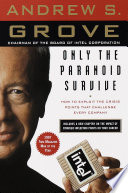
In today's fast-paced and ever-changing business environment, it is not enough to simply plan for growth; businesses must also plan for survival. This concept was popularized by Andrew S. Grove, former CEO and chairman of Intel, in his book "Only the Paranoid Survive." Grove emphasizes the importance of being constantly aware of and prepared for potential threats to the survival of one's business. In this section, we will explore the core concepts of this idea and its relevance to business strategy.
[](http://content.tegna-media.com/photo/2016/03/22/635941917961588841-Grove_1099981_ver1.0.jpg)
*Andrew S. Grove, former CEO and chairman of Intel*
## Core Concepts and Relevance
At its core, planning for survival means being proactive in identifying and addressing potential threats to the long-term viability of a business. This approach is rooted in the belief that complacency and a lack of foresight can lead to a business's downfall, even in the face of initial success.
This concept is particularly relevant in today's business world, where disruptive technologies and changing market conditions can quickly render a once-thriving business obsolete. By planning for survival, businesses can stay ahead of the curve and adapt to changing circumstances, ensuring their long-term success.
[](https://www.investopedia.com/thmb/5mhAdAXB0Cut17oWqWIX1W3HANo=/1500x0/filters:no_upscale%28%29:max_bytes%28150000%29:strip_icc%28%29/disruptive-technology.asp-final-50564c66b819471192ab7fbc88d07ae7.png)
*Illustration of a business adapting to disruptive technology*
## Examples and Applications
### Example 1: Blockbuster vs. Netflix
A classic example of a business that failed to plan for survival is Blockbuster, the once-dominant video rental chain. At the height of its success, Blockbuster was synonymous with movie rentals. However, as technology advanced and streaming services like Netflix gained popularity, Blockbuster was slow to adapt. Despite having the opportunity to purchase Netflix in its early days, Blockbuster failed to recognize the potential threat it posed and ultimately filed for bankruptcy in 2010.
[](https://miro.medium.com/v2/resize:fit:1080/1*OLNAttRvGZQ1E81hV-Oexw.jpeg)
*The competition between Blockbuster and Netflix*
On the other hand, Netflix recognized the shift in consumer behavior and planned for survival by transitioning from a DVD-by-mail service to a streaming powerhouse. By continuously adapting and staying ahead of the curve, Netflix has not only survived but thrived in the face of disruption.
### Example 2: Kodak vs. Fujifilm
Another example of a business that failed to plan for survival is Kodak, the former photography giant. Once the leader in the film photography market, Kodak failed to recognize the potential of digital photography and was slow to adapt. Meanwhile, its competitor Fujifilm recognized the writing on the wall and began diversifying its business early on, eventually transitioning from a film-centric company to a diversified healthcare and imaging powerhouse.
[](http://shop.indisposable.app/cdn/shop/articles/square_1200x1200.png?v=1623976339)
*Kodak vs Fujifilm in the age of digital photography*
These examples illustrate the importance of planning for survival and the potential consequences of failing to do so. By recognizing and addressing potential threats, businesses can stay ahead of the curve and ensure their long-term viability.
## Further Exploration
To further explore the concept of planning for survival, consider the following avenues for further study:
1. Case studies of businesses that have successfully planned for survival and adapted to changing market conditions.
2. Research on the role of foresight and proactivity in business strategy.
3. Examinations of the psychological factors that contribute to complacency and a lack of foresight in business.
4. Analyses of the challenges and best practices associated with transitioning a business model in response to disruptive technologies or changing market conditions.
In conclusion, planning for survival is a crucial aspect of long-term business success. By recognizing and addressing potential threats, businesses can stay ahead of the curve and adapt to changing circumstances. This proactive approach is particularly relevant in today's fast-paced and ever-changing business environment and is a valuable tool for any business looking to ensure its long-term viability.
Last updated: 2024-05-13
Related Books
Related Knowledges