# The 1% Doctrine: Embracing Extreme Scenarios and Uncertainty in Business Strategy
## Introduction
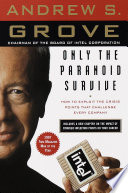
[](https://upload.wikimedia.org/wikipedia/commons/5/51/Andrew_Grove.jpg)
*Andrew S. Grove, author of \*Only the Paranoid Survive\**
In his thought-provoking work "*Only the Paranoid Survive*," Andrew S. Grove introduces the concept of the "1% Doctrine" as a strategic mindset for businesses operating in an ever-changing and unpredictable world. The 1% Doctrine proposes that businesses should invest time and resources to analyze and prepare for worst-case scenarios or events that possess a 1% chance of occurring, yet could have a severe impact on the organization's success or even existence. This concept is crucial for college students pursuing business and management degrees to grasp because it helps develop strategic foresight and proactive preparedness in an unpredictable business landscape.
In this post, we will explore the 1% Doctrine in-depth, delve into its core components, and provide real-world examples where applying the doctrine has brought about growth or prevented dire consequences.
## The 1% Doctrine: Core Concepts and Relevance
[](https://i.ytimg.com/vi/aTQpw8KzHzY/maxresdefault.jpg)
*Strategy planning session*
The 1% Doctrine is a strategic approach that pushes organizations to consider and prepare for low-probability-high-impact (LP/HI) events that could disrupt or even obliterate their businesses. It builds on the following core concepts:
- **Scenario Planning:** This involves forecasting and examining different potential incidents that could materialize. It enables a business to develop proactive strategies rather than relying solely on reactive approaches during a crisis.
- **Risk Assessment:** This entails determining the potential impact of LP/HI events and the likelihood of these events occurring. Risks with high impact but low probability require thorough preparation.
- **Resource Allocation:** Organizations that embrace the 1% Doctrine allocate resources and energy to explore critical contingencies and develop plans to circumvent the negative implications of such scenarios.
The 1% Doctrine's relevance becomes evident as businesses navigate an increasingly interdependent, complex, and volatile global economy. Technological advancements, socio-political changes, and environmental factors introduce a myriad of potential LP/HI events that demand proactive risk management strategies.
## Practical Implications and Applications: Thriving in an Unpredictable World
Below are real-world examples where adopting the 1% Doctrine made a significant difference:
### 1. The Y2K Problem
The Y2K issue serves as a textbook example of the 1% Doctrine. At the end of the 20th century, there was a concern that computers would be unable to process the change in date smoothly, potentially causing chaos in various industries. Despite the low probability of this event, the potential global impact was unquestionably significant.
[](https://wikizilla.org/w/images/f/ff/Y2K_Bug_%281%29.png)
*The Y2K Bug explained*
As early as the 1980s, forward-thinking organizations started investing in the early stages of risk assessment and solution development. According to a Gartner prediction from the '90s, businesses plunked down $60 billion worldwide to address the Y2K issue (Gartner, 1998). Despite their low-probability assessment, these companies still dedicated time, energy, and resources to thwart the LP/HI catastrophe. As a result, most organizations survived the date change flawlessly.
An interesting observation from the Y2K matter: it's suggested that the extensive preparations made by the private sector forced governments worldwide to react and update their systems, even if initially reluctant (Macintosh, 2013). Here, the 1% Doctrine had a ripple effect, leading to a wider implementation of precautionary measures than could have been achieved solely through top-down initiatives.
### 2. The COVID-19 Pandemic
The ongoing COVID-19 pandemic lends strong credibility to the 1% Doctrine. The World Health Organization (WHO) was alerted to a pneumonia-like illness on 31st December 2019. In the early stages, the probability of a worldwide health crisis was considered modest, but the potential for a colossal impact was undoubtedly high.
Governments and organizations that took decisive and swift actions to contain the pandemic mitigated adverse consequences. New Zealand, for example, was hailed as a success story because of its efficient response led by Prime Minister Jacinda Ardern. Their decisive actions and the 1% Doctrine's implementation include procuring personal protective equipment, investing in testing and contact tracing, and enforcing strict border control measures (Hetherington & Lloyd, 2020).
[](https://media.springernature.com/m685/springer-static/image/art%3A10.1038%2Fs41590-021-00872-x/MediaObjects/41590_2021_872_Fig1_HTML.png)
*New Zealand's COVID-19 response*
Contrastingly, governments and organizations that disregarded or were slow to react to the threat have suffered and more importantly have caused significant loss of lives. In retrospect, the COVID-19 threat's long-tail risk and vast impact fall precisely into the domain of the 1% Doctrine – low probability as the virus was a novel and unknown threat initially but high impact due to its transmissibility and virulence.
## Conclusion
The 1% Doctrine has provided us with a strategic roadmap for managing and alleviating potentially devastating threats. College students will undoubtedly benefit from building this mindset as it fosters an atmosphere of preparedness, emphasizes proactivity, and encourages embracing uncertainty.
Embracing the 1% Doctrine empowers students not only in their professional careers but also in their personal lives, teaching them how to:
- **Rationally confront fear:** With the 1% Doctrine, students learn to discern between overexaggerated threats and genuine LP/HI events to focus on what is genuinely important for their individual and organizational survival.
- **Develop an adaptive resiliency:** Preparation for LP/HI events allows students to respond to and recover from unexpected events more robustly.
- **Explore creativity in facing uncertainty:** The 1% Doctrine sparks curiosity and creativity, nurturing a student's ability to probe deeper and think systematically about alternative courses of action.
The 1% Doctrine teaches students that uncertainty and complexity should neither paralyze nor intimidate them but instead inspire a commitment to prudent foresight and proactive preparation. As aspiring business leaders, students can draw on the 1% Doctrine's wisdom to harness the power of strategic planning, risk assessment, and resource allocation when confronting the volatile and unpredictable business world.
## Suggestions for Further Exploration
The 1% Doctrine holds an extensively rich foundation for more detailed studies, critical analysis, and engaging discussions. Professionals and academics can delve deeper into:
- **Critical factors differentiating the successful implementation of the 1% Doctrine from failed attempts.**
- **Further investigation of the balance between short-term organizational efficiency and long-term adaptability to disruptive change.**
- **A more thorough examination of the impact of cognitive biases on organizations' strategic decision-making, particularly when considering LP/HI events.**
- **The role of the 1% Doctrine in managing various crises, including geopolitical tensions, economic downturns, and natural disasters.**
The 1% Doctrine not only addresses the concerns of business professionals and academics but also sheds light on broader issues of strategic decision-making. The doctrine's applicability extends well beyond the confines of private enterprise and serves as a crucial mental model for those in government and non-profit settings.
By unearthing the 1% Doctrine's broader implications and refining its core lessons, college students can forge impactful career paths that navigate, challenge, and triumph over uncertain realities.
**References**
Gartner. (1998). *Gartner says Global Y2K spending to total $60 billion by end of 1999 [Press release]*. Retrieved from [Gartner's Smarter With Gartner](https://www.gartner.com/en/newsroom/press-releases/1998-07-23-gartner-says-global-y2k-spending-to-total-60-billion-by-end-of-1999)
Hetherington, P., & Lloyd, L. (2020). *Coronavirus: What New Zealand did right – and how it could still get it wrong* [Online]. Retrieved from [The Guardian](https://www.theguardian.com/world/2020/mar/27/coronavirus-what-new-zealand-did-right-and-how-it-could-still-get-it-wrong)
Macintosh, A. (2013). Y2K: *How the world was saved from computer chaos – 13 years on from the bug that never bit*. [Online]. Retrieved from [The Telegraph](https://www.telegraph.co.uk/technology/news/10185297/Y2K-How-the-world-was-saved-from-computer-chaos-13-years-on-from-the-bug-that-never-bit.html)
Last updated: 2024-04-05
Related Books
Related Knowledges