Quants and Ph.D.s: The Data-Driven Minds Transforming Finance
==============================================================
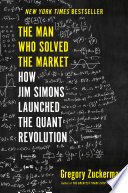
The world of finance has undergone profound changes in the last few decades. Among the key drivers of this transformation has been the increasing influence of quantitative analysis and academics within the financial industry. In his book *The Man Who Solved the Market* (2019), Gregory Zuckerman delves deep into the story of Jim Simons, the secretive mathematician-turned-investor, and his firm Renaissance Technologies (RenTech). Through its retelling of Simons' and his team's journey, the book provides powerful insights into the impact of quants and Ph.D.s in the world of finance.
Core Concepts and Relevance
---------------------------
* **Quantitative Investing**: The use of mathematically driven models, algorithms, and statistical analysis to make informed investment decisions. This approach seeks to extract insights from large data sets, providing a systematic and disciplined method for managing risk and generating alpha (excess returns).
* **Ph.D. Talent**: The influx of brainpower from doctoral graduates in fields like mathematics, physics, and engineering into finance. Such professionals bring with them complex problem-solving skills, a deep understanding of models, and rigorous empirical research methods, deploying them in the pursuit of market inefficiencies.
### Example 1: James Simons and Renaissance Technologies

Jim Simons, a brilliant mathematician and codebreaker, founded Renaissance Technologies in 1982. Simons and his team of Ph.D.s built a unique investment culture that combined advanced mathematical modeling with the powerful parallel processing power of computers. RenTech's Medallion fund, known for its exceptional algorithmic trading strategies, delivered staggering annualized returns of ~66% from 1988-2018.
#### Applications:
* **Modeling**: RenTech's approach to modeling incorporates varied data sources, like price and volume, derivatives, and alternative data sets, using sophisticated statistical techniques to uncover hidden patterns and relationships within the data.
* **Risk Management**: By quantifying risks and incorporating robust hedging techniques, RenTech's strategies limited downside exposure for its clients while maximizing returns.
### Example 2: Cliff Asness and AQR Capital Management
Another influential figure in the quantitative investing world is Cliff Asness, founder of AQR Capital Management. While not the central focus of Zuckerman's book, Asness's firm provides an alternative perspective on the application of quantitative methods.
#### Applications:
* **Factor Investing**: AQR Capital Management made its mark on the industry by embracing factor-based investing. By focusing on factors like value, momentum, quality, and defensive characteristics, AQR's approach attempts to deliver long-term success by tapping into well-established sources of risk premia.
* **Research**: AQR's commitment to research has enabled it to stay at the cutting edge of finance. Its working paper series, "Perspectives," provides invaluable resources for practitioners and academics alike, highlighting the importance of curiosity and continuous learning in quant finance.
Key Insights and Further Exploration
-----------------------------------
After reviewing the impact of quants and Ph.D.s in finance, several themes have emerged.
### Interdisciplinary Collaboration
The finance industry's increasing demand for advanced analytical thinking has given rise to a generation of professionals from diverse academic backgrounds. Blending their unique talents with the field of finance allows experts to challenge entrenched thinking and disrupt traditional methods.
### Data-Driven Approaches
The surge in data availability has provided quantitative investors with the raw materials needed for powerful models and algorithms. Utilizing novel data sets and deriving insights from ever more sophisticated techniques help quantitative investors gain an edge in the competitive financial landscape.
### Continuous Learning
To remain competitive and agile, quantitative investors must adopt a learning-focused mindset. Engaging in active experimentation, staying updated on emerging methods and research findings, and collaborating with colleagues from a variety of fields are crucial for growth.
### Further Exploration
Further reading and study are essential for those interested in diving deeper into the topic:
* **Academic Research**: Dive into the research foundations of factor investing, machine learning in finance, and portfolio optimization.
* **Industry Reports and Articles**: Stay updated on industry trends, breakthrough techniques, and career paths through various financial publications.
* **Data Science and Artificial Intelligence**: Embrace the ongoing revolution in these fields and understand how AI, machine learning, and natural language processing are transforming financial analysis and decision-making.
Quants and Ph.D.s have fundamentally altered the financial landscape. As data-driven finance continues to evolve, the need for talented professionals skilled in mathematical modeling, computing, and empirical research will remain paramount. Furthermore, continuous learning, adaptation, and collaboration will ensure that the industry continues to generate value for individuals, firms, and society as a whole.
Last updated: 2024-04-07
Related Books
Related Knowledges