# Tradeable Market Hypothesis (TMH): Unlocking theWorld of Quantitative Trading
## Introduction
The world of finance has long been entwined with the development of innovative ideas, frameworks, and strategies. One such concept that has garnered significant attention is the Tradeable Market Hypothesis (TMH), introduced by the legendary quantitative trader, Jim Simons, and his hedge fund, Renaissance Technologies (RenTech).
[](https://upload.wikimedia.org/wikipedia/commons/b/b4/James_Simons_2007.jpg)
*Jim Simons, founder of Renaissance Technologies*
At its core, the Tradeable Market Hypothesis posits that given enough data, computing power, and bright minds, it is possible to transform overwhelming financial market information into actionable insights. This, in turn, enables the identification of profitable trading opportunities. The TMH challenges the traditional, qualitative approach to investing and trading, favoring a more rigorous, quantitative methodology.
The Tradeable Market Hypothesis has significant implications for finance and economics, as it offers a new perspective on market efficiency and the role of information in trading. The rest of this educational content will elucidate its core concepts, shed light on its practical implications through the use of examples, and finally, suggest potential avenues for further exploration.
## Core Concepts of the Tradeable Market Hypothesis
The Tradeable Market Hypothesis rests on a few fundamental principles:
[](https://d1rwhvwstyk9gu.cloudfront.net/2022/04/Factors-leading-to-market-inefficiency.png)
*Efficient Market Hypothesis vs. Tradeable Market Hypothesis*
1. **Market Inefficiencies**: The TMH assumes that market inefficiencies exist and can be systematically exploited. This contrasts with the traditional Efficient Market Hypothesis (EMH), which posits that financial markets incorporate all available information instantaneously, thus making it impossible to consistently outperform the market.
2. **Data-Driven Investing**: The TMH advocates for a data-driven approach to investing, as opposed to relying on human intuition and experience. By analyzing vast quantities of data, patterns and relationships emerge that may not be apparent—or even accessible—to human analysts.
3. **Model Building**: The TMH emphasizes the construction of robust statistical models capable of identifying and profiting from market inefficiencies. These models typically incorporate a wide array of factors and variables, ranging from price to volume data, as well as factors specific to individual securities, sectors, or macroeconomic conditions.
[](https://media.springernature.com/full/springer-static/cover-hires/book/978-0-387-77827-3)
*Statistical modeling in finance*
4. **Backtesting**: A critical component of the TMH is backtesting, which entails applying a trading strategy to historical data to evaluate its performance. This process enables traders to gauge the robustness and stability of a given model, ensuring that it can withstand varying market conditions and potential overfitting.
5. **Risk Management**: The TMH stresses the importance of risk management. Implementing sound risk management practices ensures the sustainability of a trading strategy by controlling losses, minimizing volatility, and protecting capital.
### Practical Implications of the Tradeable Market Hypothesis
#### Application 1: The Market Wizardry of Renaissance Technologies
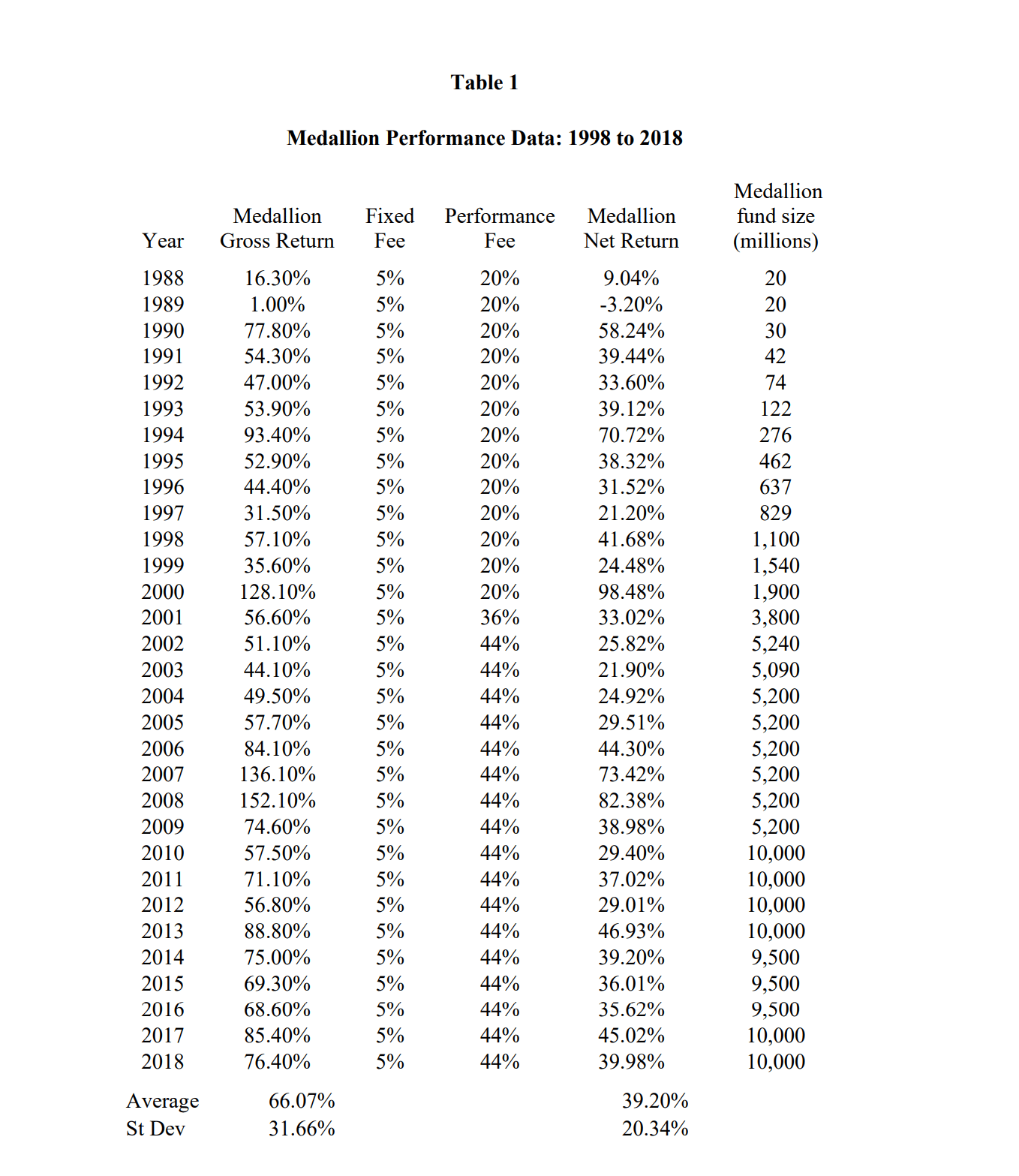
RenTech's success is a testament to the Tradeable Market Hypothesis. With its Medallion Fund consistently generating astronomical returns, RenTech's implementation of TMH has become a *de facto* industry standard for quantitative trading. RenTech's strategies encompass a myriad of techniques and methodologies, including high-frequency trading, trend following, and statistical arbitrage, to name but a few.
[](https://www.cornell-capital.com/wp-content/uploads/2021/04/Table1-1.png)
*Renaissance Technologies' Medallion Fund performance*
By employing the TMH, RenTech has harnessed the power of data, computing, and human capital to create a veritable trading powerhouse. The fund's dominance in the quantitative trading space speaks volumes about the potential of the Tradeable Market Hypothesis and its capacity to unlock untapped trading opportunities.
#### Application 2: Academic Pursuits and the Expansion of TMH-Related Research
The Tradeable Market Hypothesis has also inspired a wealth of academic research in recent decades. Scholars have increasingly delved into the intricacies of quantitative finance, shedding light on topics ranging from factor investing and smart beta strategies to machine learning and artificial intelligence applications in finance. Academic interest in the TMH has not only expanded the boundaries of financial knowledge but also fostered a deeper understanding of market mechanics and investor behavior.
In particular, a growing body of research has explored the potential of machine learning techniques in the context of the TMH. Utilizing complex algorithms and vast datasets, researchers have developed models capable of identifying and exploiting market inefficiencies with greater accuracy and consistency than traditional methods. These advancements have enormous implications for the future of quantitative trading, fueling the ongoing evolution of the Tradeable Market Hypothesis.
[](https://m.media-amazon.com/images/I/61Cd810MJHS._AC_UF1000,1000_QL80_.jpg)
*Machine learning in quantitative finance*
## Conclusion
The Tradeable Market Hypothesis offers a fresh perspective on financial markets and trading strategies. As a paradigm-shifting concept, TMH incorporates the power of data, computing, and human ingenuity to systematically and consistently uncover trading opportunities. By challenging the long-held assumptions of the Efficient Market Hypothesis, the TMH has ushered in a new era of quantitative finance.
Further exploration of the Tradeable Market Hypothesis may involve engaging with the following topics:
- The implications of the Tradeable Market Hypothesis for market efficiency, information asymmetry, and behavioral finance.
- A comparative analysis of the Tradeable Market Hypothesis versus the Efficient Market Hypothesis.
- Evaluating the impact of technological advancements on the Tradeable Market Hypothesis, including the rise and potential of machine learning and artificial intelligence.
- A deep dive into the ethical considerations and potential risks associated with the Tradeable Market Hypothesis, such as market instability, information security, and regulatory compliance.
Undoubtedly, the Tradeable Market Hypothesis has left an indelible mark on the financial landscape. Its transformative impact on investing and trading will undoubtedly continue to reverberate through financial institutions, academia, and markets for years to come.
Last updated: 2024-05-06
Related Books

Related Knowledges