# Flo-Traders: Pioneers of Quantitative Trading in The Man Who Solved the Market
## Introduction
"The Man Who Solved the Market" by Gregory Zuckerman chronicles the extraordinary story of Jim Simons and his revolutionary investment firm, Renaissance Technologies (RenTech). Though Simons' brilliance in mathematics and computational finance is a significant aspect of the narrative, a lesser-known group within RenTech called the Flo-Traders also played an instrumental role in the firm's success. This discussion focuses on Flo-Traders - their core concepts, roles, and applications. Lastly, the text concludes with further exploration avenues and a summery of key insights.
[](https://assets.bwbx.io/images/users/iqjWHBFdfxIU/iCJdDuA07brw/v1/-1x-1.jpg)
*Jim Simons and Renaissance Technologies*
### Flo-Traders: Who are they?
As a vital part of Renaissance Technologies, Flo-Traders (Flows Traders) are a team of individuals who deal with the flow of securities in various financial markets. These professionals employ a combination of mathematical models, quantitative finance techniques, and computational algorithmic strategies for trading and managing risk. Flo-Traders are categorized into three broad categories based on their level of expertise: Junior Flo-Traders, Medium Flo-Traders, and Senior Flo-Traders. The primary goal of Flo-Traders is to maximize profit while effectively controlling the firm's financial risk exposure.
## Core Concepts and Relevance
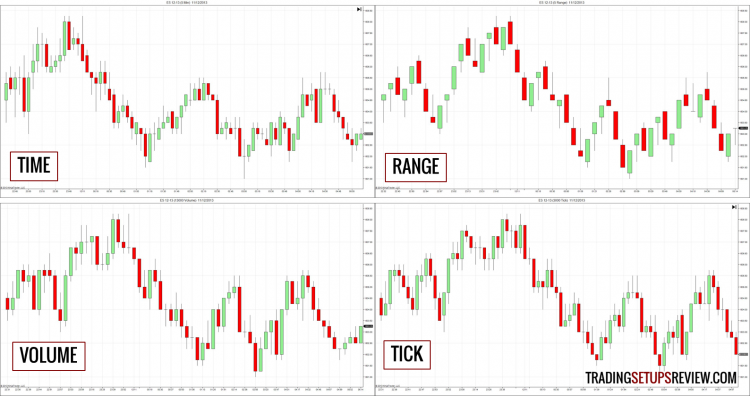
Flo-Traders focus on quantitative trading techniques, statistical arbitrage, and high-frequency trading strategies. These traders exploit price discrepancies, patterns, or inefficiencies using these methods. Quantitative techniques are essential in evaluating market data, forecasting trends and determining risk thresholds for their trading strategies.
[](https://miro.medium.com/v2/resize:fit:750/0*9ndnLTW4OdXOO5bU.png)
*Quantitative Trading Techniques*
RenTech's success story demonstrates the relevance and potential of quantitative trading and Flo-Traders. The firm has averaged a 66% annual return (after fees) from 1989 through 2018; this astronomical figure dwarfs the S&P 500's corresponding 9.69% average. Clearly, the incorporation of quants and Flo-Traders has provided an edge in generating abnormal returns and staying competitive within financial markets.
## Practical Implications and Examples
### Trading Strategies: Statistical Arbitrage
Statistical arbitrage is a quantitative trading strategy used by Flo-Traders to exploit short-term discrepancies in mispriced stocks. This strategy relies on mean-reversion principles and analyzing large datasets. A classic example is pair trading, where a trader takes a long position in an underpriced stock and simultaneously short-sells an overpriced counterpart.
[](https://www.investopedia.com/thmb/jUa_dxpyyTB8GwuA4cSjsCo2wpI=/1500x0/filters:no_upscale%28%29:max_bytes%28150000%29:strip_icc%28%29/dotdash_INV_final_Statistical_Arbitrage_Jan_2021-01-9b101a9011154329b2f9ce598ed52d39.jpg)
*Statistical Arbitrage Example*
Assume Flo-Trader A identifies a pair of pharmaceutical companies, Company X and Company Y, which historically have a strong correlation in price movements. Recently, she notices that Company X's stock price has been below its usual price relative to Company Y. Flo-Trader A hypothesizes that this discrepancy is temporary and will eventually revert to its mean. She then purchases Company X shares and short-sells an equal number of Company Y shares, simultaneously. Upon the price deviation's reversion, the trader realizes a profit as she closes the positions.
### Market-Making
Market-making is another crucial task assigned to Flo-Traders, especially during low-volatility periods. Market-making involves continuously quoting both a buy and a sell price for a particular asset, providing liquidity and facilitating trading activities.
Suppose Flo-Trader B works on behalf of RenTech for market-making in Treasury bonds. She continuously monitors market data and economic indicators to quote competitive buy and sell prices for these bonds. When traders transact with her at the quoted prices, Flo-Trader B profits from the spread. This process aids overall market efficiency, encourages trading activities, and supports the fair pricing of Treasury bonds.
[](https://www.wallstreetmojo.com/wp-content/uploads/2018/06/Market-Makers-1.jpg)
*Market Making in Finance*
## Further Exploration and Key Insights
To explore Flo-Traders and quantitative finance in greater depth, consider the following:
1. Study the impact of high-frequency trading (HFT) on modern financial markets. Focus on the role played by Flo-Traders and the subsequent consequences for large institutional investors, market microstructure, and price discovery mechanisms.
2. Investigate the increasing competition in algorithmic trading and the emergence of machine learning techniques in quantitative finance. Evaluate the advantages and potential drawbacks of incorporating artificial intelligence into Flo-Trader models and strategies.
In summation, Flo-Traders are a vital component of the modern financial industry and a key factor in Renaissance Technologies' historic success. Students of finance and economics can benefit from understanding their core concepts and learning from practical implications like statistical arbitrage and market-making. By further exploring the influence of Flo-Traders, one can grasp the far-reaching implications of quantitative trading in financial markets and gain a competitive edge in an ever-evolving landscape.
Last updated: 2024-06-27
Related Books
Related Knowledges