### Intraday Trading: Core Concepts, Practical Implications, and Further Exploration
Intraday trading, also known as day trading, is a popular trading strategy characterized by opening and closing positions within the same trading day. This approach aims to profit from short-term market fluctuations rather than relying on long-term investment strategies. The rise of powerful computer algorithms and sophisticated data analysis tools has transformed intraday trading, making it both more accessible and more complex.
[](https://www.investopedia.com/thmb/Vv_5p8BdJWqV-8XWbepim89-7C8=/1500x0/filters:no_upscale%28%29:max_bytes%28150000%29:strip_icc%28%29/dotdash_Final_Rules_for_Picking_Stocks_When_Intraday_Trading_Aug_2020-012-c113b470062745f098d9ca585bf2caf2.jpg)
*Example of intraday trading on market graphs*
For an in-depth understanding of intraday trading, consider reading Gregory Zuckerman's "The Man Who Solved the Market," which chronicles the journey of Jim Simons and his firm, Renaissance Technologies (RenTech); the book provides insights into the quantitative and systematic approaches employed in intraday trading.
#### Core Concepts
1. **Market inefficiencies**: Traders exploit tiny pricing discrepancies across various assets and markets to generate profits.
2. **Algorithmic and high-frequency trading**: The use of complex algorithms and powerful computers to analyze and act upon market data within milliseconds.
3. **Backtesting**: Testing trading strategies against historical data before employing them in live markets.
[](https://www.investopedia.com/thmb/8rJmxa-sv5G84wJrbVK1nP0BK7E=/1500x0/filters:no_upscale%28%29:max_bytes%28150000%29:strip_icc%28%29/high-frequency-trading.asp-final-88956b5664b34a51936e613a61219b25.png)
*High-frequency and algorithmic trading setups*
#### Relevance and Applications
Intraday trading allows traders to take advantage of short-term volatility, potentially generating substantial profits daily. However, it's crucial to understand the inherent risks, and this knowledge point is essential for those interested in:
- Quantitative finance
- Algorithmic trading
- Short-term market analysis
- Behavioral economics
- High-frequency trading
#### Practical Implications and Examples
##### 1. Jim Simons and Renaissance Technologies (RenTech)
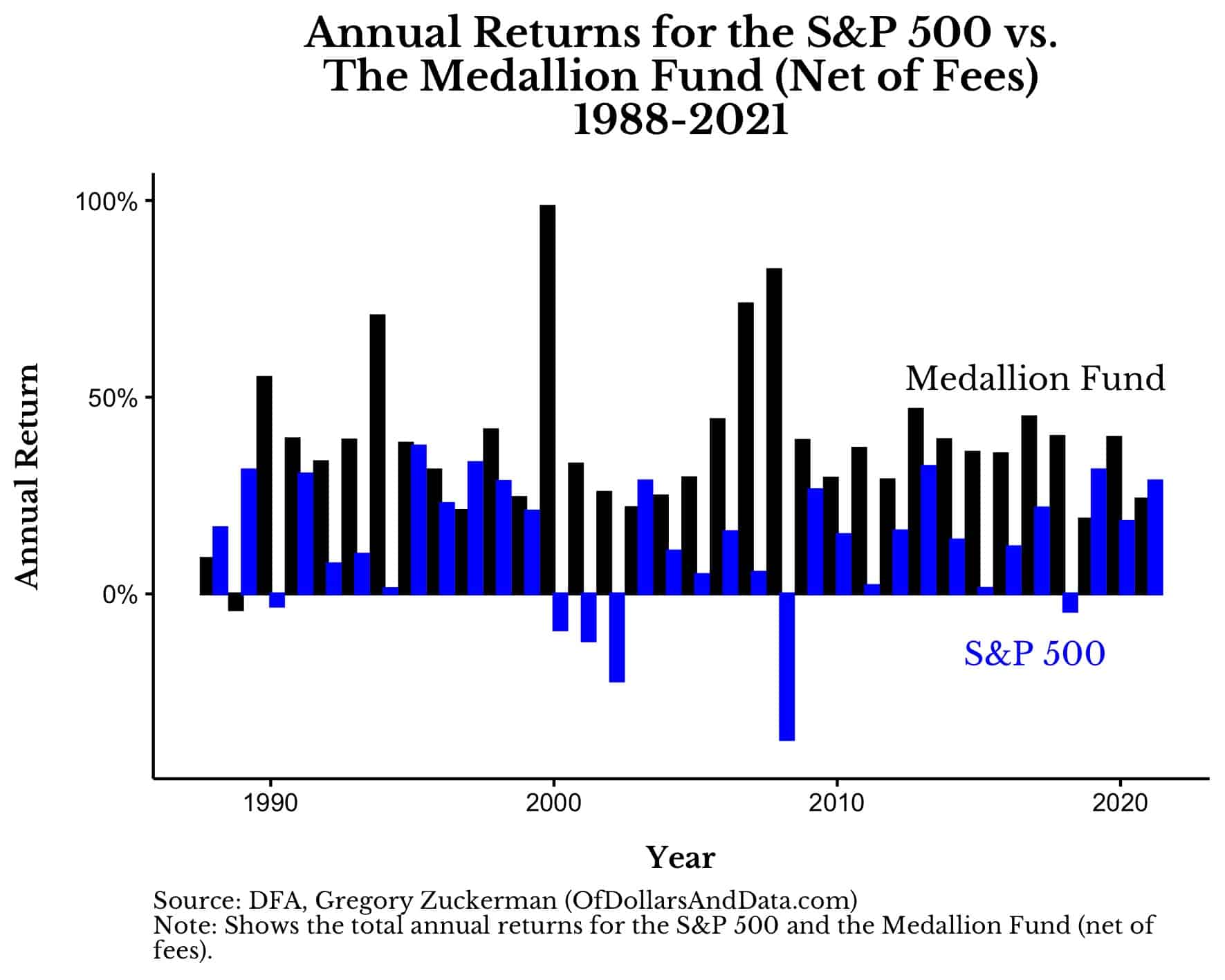
The story of the mathematical genius Jim Simons and his firm RenTech illustrates the power of intraday trading and quantitative strategies. RenTech's Medallion Fund, which aggressively trades commodities, stocks, and bonds during intraday sessions, has historically generated average annual returns exceeding 35% before fees. RenTech's systematic and algorithmic approach incorporates a myriad of factors, including time, price, volume, and volatility, to maximize performance.
[](https://ofdollarsanddata.com/wp-content/uploads/2019/11/ret_sp500_medallion_1988_2021.jpeg)
*Renaissance Technologies' Medallion Fund - An example of successful intraday trading strategy*
##### 2. Flash Crash of 2010
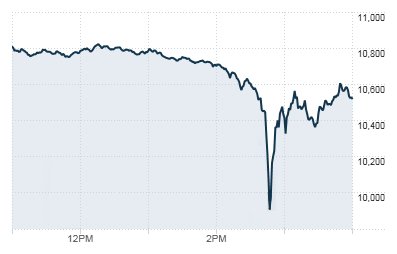
The infamous 2010 Flash Crash highlights the role of high-frequency trading in intraday markets. On May 6, 2010, the Dow Jones Industrial Average briefly plummeted and recovered nearly 1,000 points in a matter of minutes. This drastic shift was largely attributed to the proliferation of high-frequency trading algorithms. Although the Securities and Exchange Commission and the Commodity Futures Trading Commission eventually determined that a mutual fund company's large sell order triggered the crash, the role of high-frequency trading in contributing to the severity and speed of the decline remains a contentious topic.
[](https://upload.wikimedia.org/wikipedia/commons/b/bb/Flashcrash-2010.png)
*Graph depicting the 2010 Flash Crash in the Dow Jones Industrial Average*
#### Key Insights
- Intraday trading requires a deep understanding of markets and a willingness to leverage the latest technology and mathematical models.
- Balancing aggressive trading strategies with sound risk management is crucial for long-term success and survival.
- Systematic and algorithmic approaches to intraday trading often outperform reactive, intuition-driven methods.
#### Further Exploration
If you're interested in learning more about intraday trading and its complexities, consider the following topics for further exploration:
- [Statistical Arbitrage](https://en.wikipedia.org/wiki/Statistical_arbitrage)
- [Event-driven trading strategies](https://www.investopedia.com/terms/e/eventdrivenstrategy.asp)
- [Machine learning applications in finance](https://www.ibm.com/cloud/learn/machine-learning-for-finance)
- [Options pricing](https://en.wikipedia.org/wiki/Option_(finance)#Pricing)
- [Kelly criterion for optimal bet sizing](https://en.wikipedia.org/wiki/Kelly_criterion)
Last updated: 2024-06-27
Related Books
Related Knowledges