Program Trading: The Revolutionization of Wall Street
=====================================================
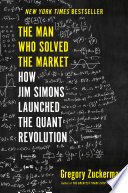
In the ever-evolving landscape of financial markets, the emergence of program trading has been a game-changer. Program trading, an automated trading strategy that uses complex algorithms to make high-speed trades, has revolutionized Wall Street by increasing efficiency, reducing costs, and enabling data-driven investment decisions. This educational content delves deep into the world of program trading, drawing insights from Gregory Zuckerman's book, "The Man Who Solved the Market."
[](https://bullsonwallstreet.com/wp-content/uploads/2022/02/Screen-Shot-2022-02-22-at-8.09.32-PM.png)
*Overview of Program Trading*
Core Concepts and Relevance
----------------------------
Program trading involves the use of computer programs to analyze market data, identify trends, and execute trades at lightning-fast speeds. It allows traders to sift through vast amounts of information quickly and accurately, identifying potential profit opportunities in the blink of an eye. As a result, program trading has become an indispensable tool for modern financial institutions, enabling them to stay competitive and maximize profits.
Program trading has also brought about a significant shift in investment strategies. Historically, traders relied on intuition, experience, and market rumors to make investment decisions. With the advent of program trading, data-driven investment strategies have become the norm, relying on sophisticated mathematical models and algorithms to guide investment decisions.
[](https://www.alliedmarketresearch.com/assets/sampleimages/trade-finance-market-2021-2030-1641367284.jpeg)
*Evolution of Trading: From Intuition to Algorithms*
### Real-World Examples
#### Renaissance Technologies (RenTech)
One notable example of a firm that has harnessed the power of program trading is Renaissance Technologies (RenTech). Founded by Jim Simons in 1982, RenTech has become one of the most successful hedge funds in history, owing much of its success to program trading. By leveraging advanced mathematical models and cutting-edge technology, RenTech has consistently outperformed the market, generating impressive returns for its clients.
[](https://www.rentec.com/img/logos/renaissance-logo-full-color-cmyk.jpg)
*Renaissance Technologies*
At the heart of RenTech's success is its Medallion Fund, a quantitative trading fund that uses program trading to analyze vast amounts of market data and execute trades at lightning-fast speeds. The fund's algorithms are designed to identify patterns in market data and exploit them for profit, enabling RenTech to generate impressive returns year after year.
#### High-Frequency Trading (HFT)
Another application of program trading is high-frequency trading (HFT), a technique that involves the use of sophisticated algorithms and ultra-fast computers to execute trades at lightning-fast speeds. HFT firms typically use co-location services, which place their servers in close proximity to stock exchange servers, enabling them to reduce latency and execute trades faster than their competitors.
[](https://i.insider.com/5cded16ae9f08a689337df08?width=800&format=jpeg&auto=webp)
*High-Frequency Trading \(HFT\) Setup*
Although HFT has been criticized for exacerbating market volatility and creating an uneven playing field, it has played a significant role in increasing liquidity in financial markets. By providing liquidity and enabling faster trade execution, HFT has contributed to more efficient markets and lower transaction costs for investors.
### Practical Implications
The rise of program trading has significant implications for financial markets and the broader economy. By enabling faster, more efficient trade execution, program trading has reduced transaction costs, increased liquidity, and lowered barriers to entry for individual investors. Moreover, program trading has enabled firms to analyze vast amounts of market data quickly and accurately, allowing them to make better-informed investment decisions.
However, program trading has not been without controversy. Critics argue that the use of advanced algorithms and high-speed computers has created an uneven playing field, favoring large financial institutions with deep pockets. Furthermore, concerns have been raised about the potential for program trading to exacerbate market volatility and create systemic risks.
[](https://miro.medium.com/v2/resize:fit:559/1*VeXk20bJiK_2Uo0MpZ6XKw.png)
*Impact of Program Trading on Financial Markets*
### Key Insights and Future Directions
In conclusion, program trading has revolutionized Wall Street by increasing efficiency, reducing costs, and enabling data-driven investment decisions. Firms such as RenTech and HFT firms have demonstrated the power of program trading in generating impressive returns and increasing market liquidity.
For those interested in exploring the topic further, several avenues are worth pursuing. Further research into the ethical implications of program trading, such as the potential for market manipulation and systemic risks, is warranted. Additionally, the development of more sophisticated algorithms and machine learning techniques holds promise for enhancing the effectiveness of program trading.
By continuing to explore the potential of program trading and addressing its challenges, financial institutions can remain competitive and maximize profits in an increasingly complex and interconnected world.
### Footnotes
Zuckerman, G. (2019). The Man Who Solved the Market: How Jim Simons Launched the Quant Revolution. New York: Portfolio/Penguin.
Last updated: 2024-04-18
Related Books
Related Knowledges