# Self Improvement: Lessons from Poor Richard's Almanack by Benjamin Franklin
## Introduction
In the 18th century, Benjamin Franklin, a renowned polymath, published a series of annual journals named "Poor Richard's Almanack" under the pseudonym Richard Saunders. These almanacs were popular for their practical wisdom and timeless values, including lessons on self-improvement. Today, these lessons are more relevant than ever, as they offer insights into the art of living a fulfilling and meaningful life.
[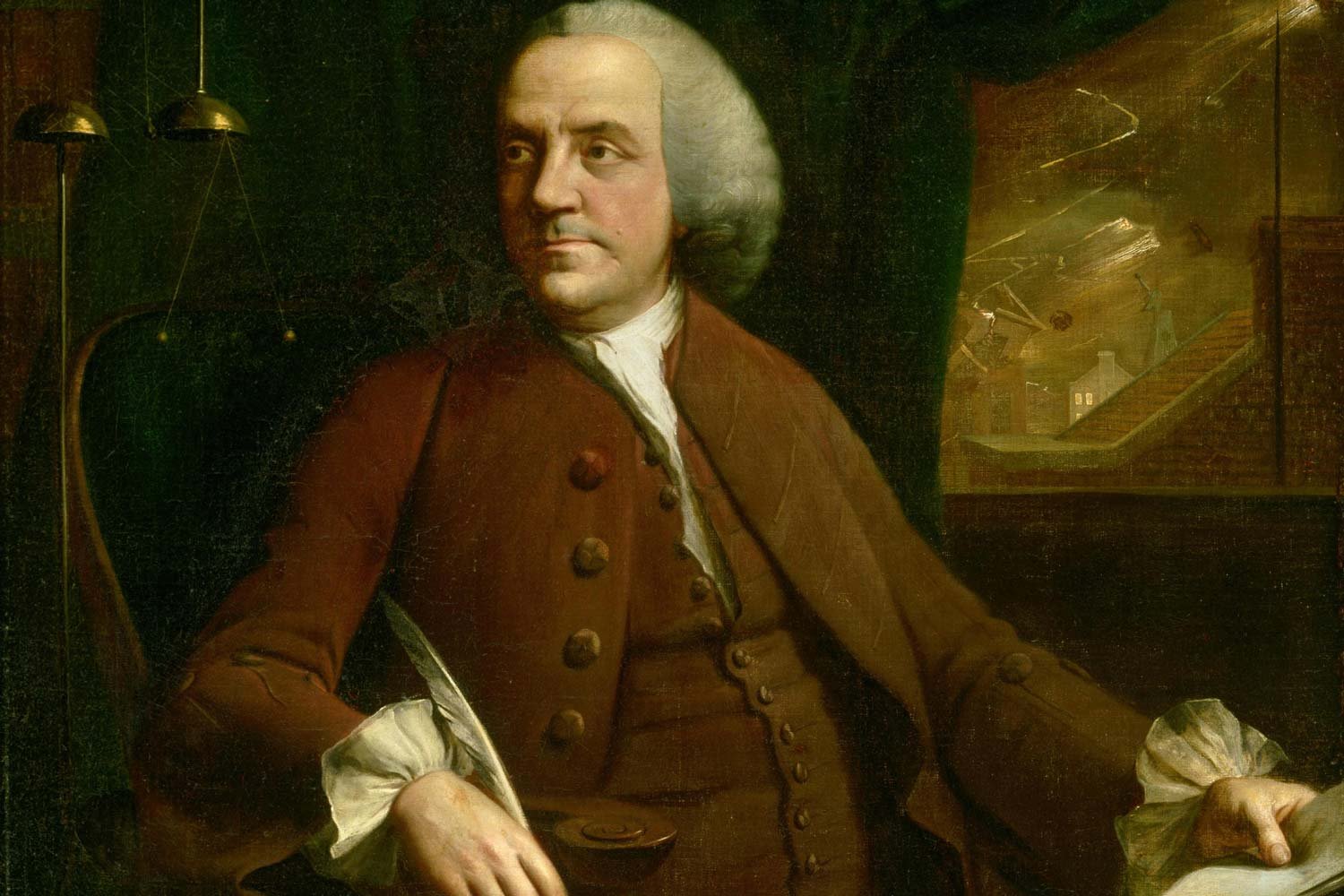](https://images.squarespace-cdn.com/content/v1/5f189980db5cb01fc34a47f5/2be3e9ee-fa62-4cdc-9cec-6ec810668976/ben-franklin-portrait.jpg)
*Benjamin Franklin writing*
Self-improvement can be described as a continuous process of personal growth, where one systematically strives to enhance various aspects of their life, such as character, knowledge, skills, and habits. This notion aligns closely with Franklin's beliefs as expressed throughout the almanacs. In this exploration, we delve into the key self-improvement lessons from Poor Richard's Almanack and how they can be applied in the contemporary context.
## Self-Improvement Lessons from Poor Richard's Almanack
### Lesson 1: The Power of Virtues and Habits
One of the primary self-improvement themes in Poor Richard's Almanack is the significance of virtues and habits. Franklin identified 13 virtues that he aimed to cultivate – temperance, silence, order, resolution, frugality, industry, sincerity, justice, moderation, cleanliness, tranquility, chastity, and humility – to live a life of integrity and effectiveness.
Translating these virtues into everyday habits offers a practical guideline for self-improvement. For instance, the habit of daily journaling, or the use of apps and visual tracking systems, can be adopted to monitor one's progress in practicing these virtues. Incorporating even a subset of Franklin's virtues into one's lifestyle can lead to significant personal growth and well-being.
[](https://m.media-amazon.com/images/I/71Sir96sWyL._AC_UF894,1000_QL80_.jpg)
*List of virtues by Benjamin Franklin*
### Lesson 2: Lifelong Learning and Knowledge
Poor Richard's Almanack underlines the importance of continually expanding one's knowledge in various disciplines. Franklin himself was a voracious reader with an inquisitive nature, believing that education and intellectual curiosity were essential for both personal growth and societal advancement. In the spirit of continuous learning, college students are encouraged to actively explore and engage with diverse subjects beyond their field of study.
Today, many opportunities for lifelong learning are available, such as attending workshops, online courses, reading, and joining interest-based clubs. By embracing a multidisciplinary approach, one can broaden their perspectives and develop a more comprehensive understanding of the world.
[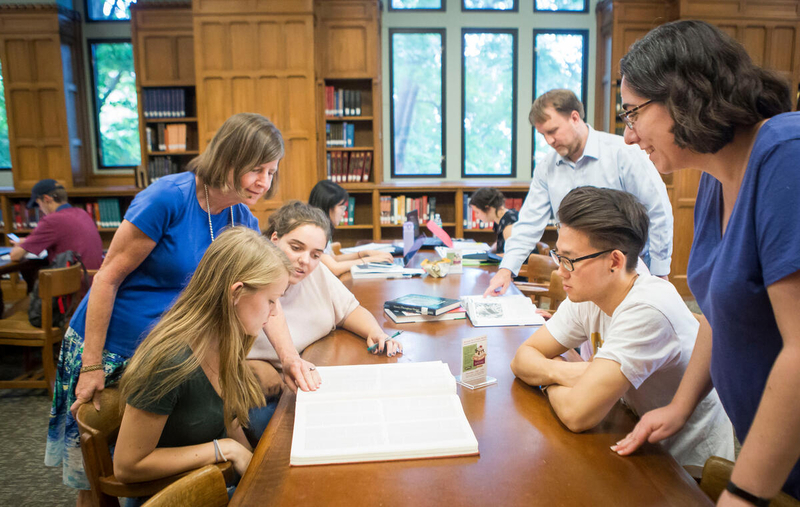](https://cdn.vanderbilt.edu/vu-wordpress-0/wp-content/uploads/sites/282/2020/02/19130042/20180829SU021_Medium_res_comp.jpg)
*College students learning*
### Lesson 3: The Value of Time Management and Diligence
Efficient time management and diligent work ethic are prominent themes in Poor Richard's Almanack, reinforcing the idea that time, when effectively managed, can significantly enhance productivity. For instance, Franklin's morning routine is a paradigmatic example of effective time management, where the day's essential tasks are prioritized.
Contemporary college students can apply this concept in their daily lives by managing their time wisely through the use of digital tools, such as calendars, planners, and productivity apps. By consciously setting aside time for studying, self-reflection, and leisure, students can cultivate diligence and maintain a healthy work-life balance.
[](https://desktime.com/blog/wp-content/uploads/2019/07/20-apps.png)
*Time management and productivity tools*
## Real-World Applications
### Apprenticeship as a Foundation for Self-Improvement
Apprenticeship models are a practical approach to self-improvement, as they enable individuals to learn specific skills and professional practices in the field, guided by experienced mentors. This framework directly aligns with Franklin's values, as he himself completed an apprenticeship in printing.
College students can explore apprenticeships and internships to foster self-improvement opportunities and enhance their learning experiences, ultimately benefiting their career development.
[](http://opentextbc.ca/teachinginadigitalage/wp-content/uploads/sites/29/2014/08/apprentices-2.jpg)
*Apprenticeship learning*
### Community Involvement and Service
Poor Richard's Almanack encourages citizens to strive for individual and collective improvement by engaging in community activities and volunteering. By seeking ways to serve and assist others, individuals not only contribute positively to society, but they also foster personal growth and self-discovery. Students are thus prompted to identify opportunities for community involvement in their neighborhood or campus, promoting the culture of generosity and mutual support.
[](https://www.beaumont.org/images/default-source/news/volunteering.jpg?sfvrsn=bcd242ef_0)
*Community volunteering and engagement*
## Conclusion
Self-improvement, as represented in Poor Richard's Almanack, is a proactive, lifelong process of continuously bettering oneself in various aspects. By embracing virtues such as frugality, industry, and sincerity, and reflecting on the lessons from Benjamin Franklin's proverbs and almanacs, college students can establish a solid foundation for personal and professional growth.
The acquisition of knowledge, cultivation of habits, and efficient time management form essential pillars of Franklin's philosophy. Exploring additional self-improvement methods, such as actively participating in apprenticeship models, community involvement, and continuous learning, students can harness the potential of their college experience to embark on a rewarding and meaningful journey of self-improvement.
**Additional Resources for Further Exploration**
To further delve into the topic of self-improvement and the related themes derived from Poor Richard's Almanack, consider the following resources:
- *The Autobiography of Benjamin Franklin*
- *Benjamin Franklin: A Biography* by Walter Isaacson
- *How to Read a Book* by Mortimer Adler and Charles Van Doren
- *Digital Minimalism* by Cal Newport
- *Essentialism* by Greg McKeown
- *Atomic Habits* by James Clear
- _[The Daily Stoic](https://dailystoic.com/)_ by Ryan Holiday and Stephen Hanselman
- _[The School of Life](https://schooloflife.com/)_ (organization dedicated to developing emotional intelligence)
- _[Coursera](https://www.coursera.org/)_ (e-learning platform offering courses in various disciplines)
- _[TED Talks](https://www.ted.com/)_ (conferences and talks disseminating ideas and knowledge)
Last updated: 2024-05-30
Related Books

Related Knowledges