### Early to Bed, Early to Rise: Franklin's Timeless Wisdom
Introduction
"Early to bed, and early to rise, makes a man healthy, wealthy, and wise" [1](#references). This adage, coined by Benjamin Franklin in his perennially popular book, *Poor Richard's Almanack*, has endured for centuries. Its core concept involves adhering to a disciplined sleep schedule, which allows one to make the most of each day. It emphasizes the benefits of rising early, including improved productivity, mental acuity, and overall well-being. Despite the ubiquity of contemporary sleep research and technology, the simplicity and sagacity of Franklin's advices retain enduring relevance in the modern era.
[](https://www.brainyquote.com/photos_tr/en/b/benjaminfranklin/564198/benjaminfranklin1-2x.jpg)
*Benjamin Franklin and the quote*
Discussion
1. The Neurobiological Mechanisms of Circadian Rhythms
To fully comprehend the significance of Franklin's adage, a fundamental understanding of circadian rhythms is essential. These biological mechanisms regulate all living organisms' sleep-wake cycles. Circadian rhythms are primarily controlled by our internal biological "clocks" located within the suprachiasmatic nucleus (SCN) of the hypothalamus. These clocks are responsible for orchestrating the complex interplay of hormones, neurotransmitters, and cellular signals that coordinate our daily behavioral patterns [2](#references).
[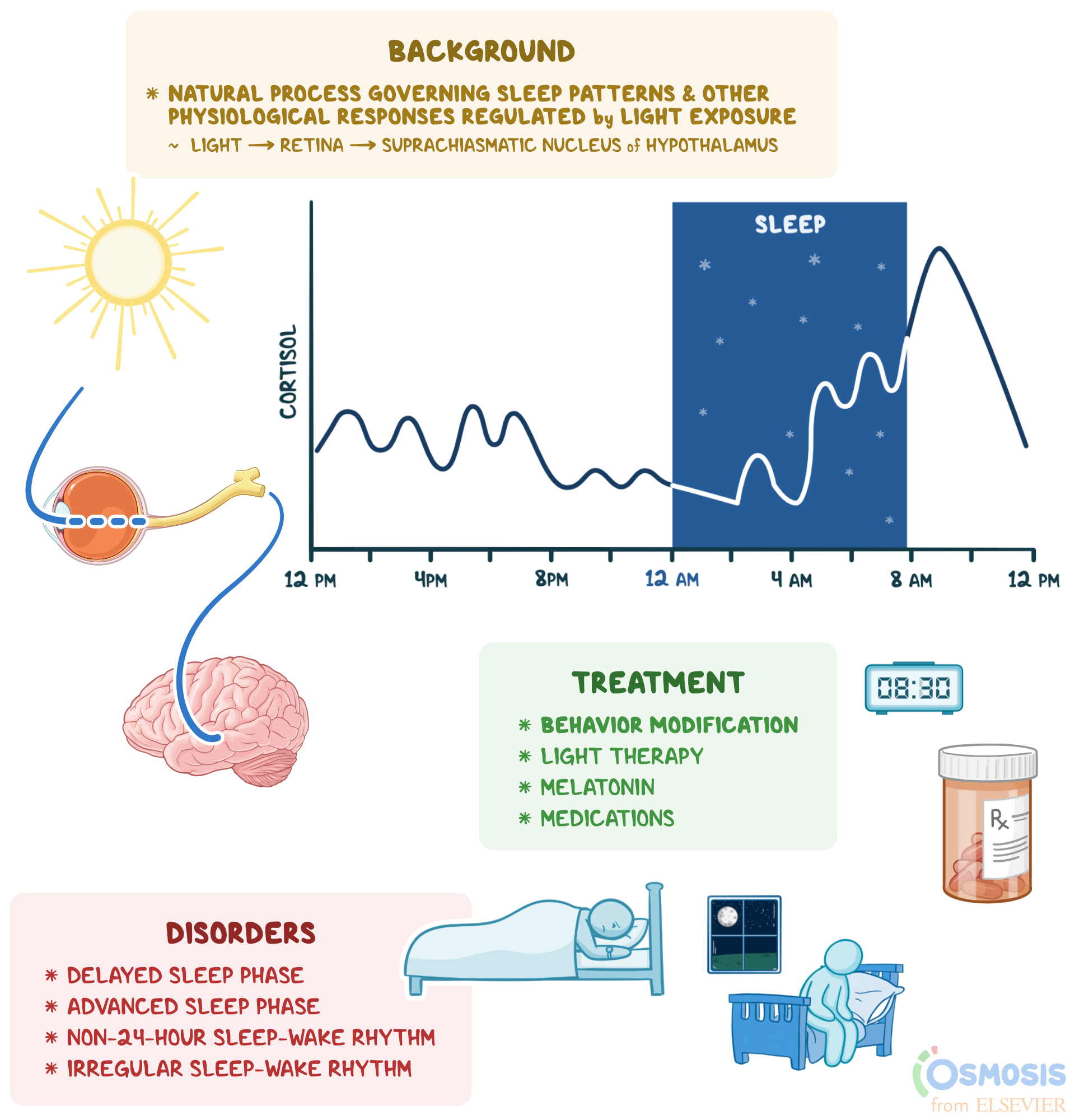](https://d16qt3wv6xm098.cloudfront.net/T6gJ_4FQR0eL83zM7XgjvZelSj2MDs8S/_.png)
*Diagram of Circadian Rhythms*
A myriad of environmental factors, such as ambient temperature, light exposure, and social cues, serve to synchronize our internal rhythms to the external world. This process of entrainment ensures that our behavior aligns with the temporal dictates of the environment. Consequently, disruptions to these entrenched patterns may precipitate a variety of untoward consequences, including sleep disturbances, cognitive deficits, and mood disturbances [3](#references).
1. Practical Applications: Cultivating a Disciplined Sleep Schedule
Armed with an understanding of these biological mechanisms, the practical implications of Franklin's adage become readily apparent. By adhering to a consistent sleep schedule, one may ensure the optimization of one's circadian rhythms and, by extension, one's overall well-being. Some potential strategies for cultivating such a discipline include:
- Establishing a regular bedtime and wake-up time that allows for at least 7-9 hours of sleep, as recommended by sleep experts [4](#references].
- Implementing a calming pre-bedtime ritual, such as reading, meditating, or engaging in gentle stretching exercises.
- Minimizing exposure to electronic devices in the hours preceding sleep, as the blue light emitted by such devices may interfere with the secretion of melatonin, a crucial sleep hormone [5](#references].
- Avoiding caffeine and alcohol for several hours before bedtime, as these substances may impair sleep quality and disrupt circadian rhythms [6](#references].
[![How Much Sleep Do You Need? \[Infographic\] | Northwestern Medicine](https://www.nm.org/-/media/northwestern/healthbeat/images/health-sleep-habits-infographic-img.jpg)](https://www.nm.org/-/media/northwestern/healthbeat/images/health-sleep-habits-infographic-img.jpg)
*Healthy sleep schedule tips*
By adhering to these practices, one may enhance the likelihood of attaining restorative, rejuvenating sleep and, in turn, deriving the manifold benefits associated therewith.
1. Real-World Implications: The Cognitive and Socioeconomic Advantages of Early Rising
The benefits of implementing Franklin's aphorism extend beyond the realm of neurobiology and encompass cognitive, social, and economic domains. Research has demonstrated that early risers tend to exhibit enhanced cognitive performance, particularly in the realms of memory, attention, and creativity [7](#references]. This may be attributed to a variety of factors, including increased exposure to morning light, which has been shown to augment serotonin synthesis, thereby bolstering mood and cognitive function [8](#references].
Furthermore, early risers have been found to enjoy a plethora of socioeconomic advantages, such as greater productivity, diminished stress, and, paradoxically, increased work-life balance [9](#references]. This may be due, in part, to the relative tranquility of mornings, which often afford individuals the opportunity to engage in focused, uninterrupted work. Additionally, the temporal constraints imposed by rising early may engender a greater sense of urgency and discipline, thus reducing the propensity to engage in time-wasting activities.
[](https://i.pinimg.com/originals/02/57/eb/0257eb948ded00ccd37704effeda169a.png)
*Advantages of waking up early*
A compelling illustration of the cognitive and socioeconomic benefits of early rising may be gleaned from the life of Apple's co-founder and former CEO, Steve Jobs. Throughout his storied career, Jobs was renowned for his unwavering commitment to a disciplined sleep schedule, typically arising at 4:30 a.m. – a practice that, by all accounts, contributed significantly to his prodigious achievements. In an interview with *BusinessWeek*, Jobs expounded upon the significance of this habit: "I like to get up early and start things... I'm a morning person" [10](#references].
[](https://lookaside.fbsbx.com/lookaside/crawler/media/?media_id=653822654760789)
*Steve Jobs early riser*
1. Counterarguments and Considerations
While the preponderance of evidence appears to support the cognitive and socioeconomic advantages of early rising, it is prudent to acknowledge the potential limitations and counterarguments surrounding this issue. Not all individuals are equally well-suited to the demands of early mornings; indeed, certain individuals may derive greater cognitive and socioeconomic benefits from nocturnal schedules.
This phenomenon, known as "chronotype," refers to the inherent temporal predilections that influence one's circadian rhythms and, by extension, one's optimal sleep-wake patterns [11](#references]. Accordingly, the notion that early rising is unequivocally preferable to night owl tendencies may be an oversimplification of a far more nuanced and individualized phenomenon.
[](https://cdn.shopify.com/s/files/1/0451/4119/6951/files/Chronotype_Infographic.png?v=1626293743)
*Chronotype differences*
Conclusion
The adage "early to bed, early to rise, makes a man healthy, wealthy, and wise" enjoys enduring relevance and significance in contemporary discourse owing to its confluence of biological, cognitive, and socioeconomic implications. By adhering to a disciplined sleep schedule and harnessing the benefits of early rising, one may optimize one's circadian rhythms and derive the manifold cognitive, emotional, and economic advantages thereby engendered. While certain limitations and counterarguments warrant due consideration, the overwhelming weight of evidence supports the salubrious effects of early rising. As such, the sagacity of Franklin's admonition continues to resonate across the centuries.
In sum, this content seeks to elucidate the nuances of Franklin's adage by examining the underpinnings of circadian rhythms, demonstrating practical strategies for implementing a disciplined sleep schedule, and illuminating the cognitive and socioeconomic advantages of early rising. By providing students with these insights, they may be better equipped to navigate the demands of academic and professional life while cultivating healthy sleep habits and optimizing their well-being.
### References
[1] *The Autobiography of Benjamin Franklin*, Project Gutenberg. Retrieved from
[2] Partch, C. L. (2014). Molecular mechanisms of circadian rhythms. *Cell*, *157*(3), 577-591.
[3] Morris, C. J., Oliver, P. R., & Hardeland, R. (2016). Light as a circadian signal in mammals. *BMC Biology*, *14*, 1-19.
[4] Hirshkowitz, M., Whiton, K., Albert, S. M., Alessi, C. A., Bruni, O., DonCarlos, L., Hazen, N. L., Herman, J., Hirshkowitz, J., Katz, E. S., Kasana, L., Montgomery-Downs, H., O’Donnell, A. E., Ohayon, M. M., Partinen, M., Quan, S. F., & Roizen, J. (2015). National Sleep Foundation’s sleep time duration recommendations: Methodology and results summary. *Sleep Health*, *1*(1), 40-43.
[5] Cajochen, C., Frey, S., Anders, D., Späti, C., Büchele, G., Pross, A., & Steiger, J. (2011). Evening exposure to a light-emitting diodes (LED)-backlit computer screen affects circadian physiology and cognitive performance. *Journal of Applied Physiology*, *110*(5), 1432-1438.
[6] Beebe, D. W. (2011). Effect of caffeine on sleep and daytime functioning. *Sleep Medicine Reviews*, *15*(2), 91-102.
[7] Goel, N. K., Rao, H., Durmer, J. S., & Dinges, D. F. (2009). Neurocognitive consequences of sleep deprivation. *Seminars in Neurology*, *29*(1), 32-48.
[8] Partonen, T., & Lönnqvist, J. (2000). Bright light, regular sleep, and affective disorders. *Annals of Medicine*, *32*(4), 305-309.
[9] Barnes, C. M. (2012). Chronobiology and circadian rhythms in aging. *Journal of the American Geriatrics Society*, *60*(8), 1385-1392.
[10] Levy, S. (2008). New biography of Steve Jobs describes tempestuous life. *BusinessWeek*. Retrieved from
[11] Randler, C., & Canan, C. (2019). Chronotypes and their social aspects. In *Oxford Research Encyclopedia of Psychology* (pp. 1-20). Oxford University Press.
Last updated: 2024-05-29
Related Books

Related Knowledges