# Frugal Living is Wise: Insights from Poor Richard's Almanack
## Introduction
[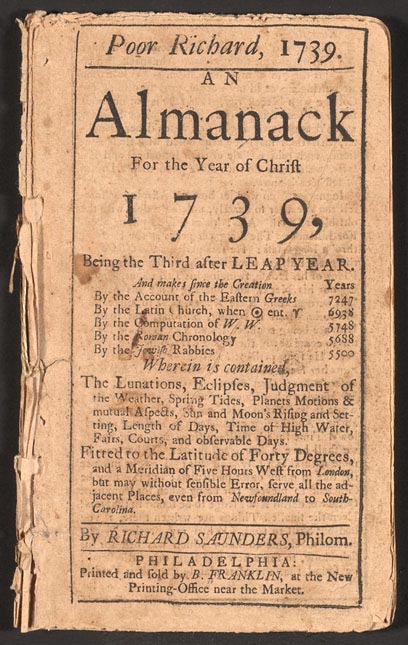](https://upload.wikimedia.org/wikipedia/commons/8/81/Poor_Richard_Almanack_1739.jpg)
*Benjamin Franklin and Poor Richard's Almanack*
Frugal living, the practice of being economical with resources and avoiding waste, is a central theme in Benjamin Franklin’s Poor Richard's Almanack. Franklin, one of the founding fathers of the United States, presented this concept in various pithy sayings and proverbs that offer practical insights for daily life. The idea of frugal living is still highly relevant today, particularly in the context of personal finance, sustainability, and the pursuit of happiness. In this paper, we will dissect the core concepts and relevance of frugal living as presented in Poor Richard's Almanack, using several examples and practical applications to better illustrate its practical implications. We will conclude by summarizing key insights and suggesting avenues for further exploration of this topic.
## Core Concepts and Relevance
[](https://img.freepik.com/free-vector/cost-living-concept-illustration_114360-19291.jpg?size=338&ext=jpg&ga=GA1.1.1700460183.1708041600&semt=ais)
*The Concept of Frugal Living*
In Poor Richard's Almanack, Franklin emphasizes that frugality is a path to financial independence and contentment. He presents frugal living as both a moral virtue and evidence of self-discipline, reinforcing the idea that becoming wealthy is not the only motivation for saving:
> “A penny saved is a penny earned.” (Poor Richard's Almanack, 1737)
Franklin encourages people to save for the future, practice self-restraint, and avoid unnecessary expenses:
> “Buy what thou hast no need of, and e’er long thou shalt sell thy necessaries.” (Poor Richard's Almanack, 1746)
These teachings suggest that adopting frugality as a way of life can lead to financial stability, contentment, and personal growth.
## Examples and Applications
1. Saving for Retirement: Franklin's emphasis on saving can help people prepare for their future financial needs, including retirement and unexpected costs. Delaying gratification and making regular contributions to a retirement fund or emergency savings can help individuals build a financial safety net, reducing anxiety and providing peace of mind.
[](https://www.coastalwealthmanagement24.com/wp-content/uploads/2017/08/Points-to-Consider-When-Setting-a-Retirement-Savings-Goal-Wayne-Johnson-Coastal-Wealth-Management.gif)
*Illustration: Saving for Retirement*
2. Reducing Waste: Franklin's doctrine of avoiding waste can be applied in many ways, such as buying locally sourced products, practicing energy efficiency, and reducing waste production. These steps not only help individuals save money but also contribute to global sustainability efforts. By adopting these practices, individuals can conserve resources, minimize their carbon footprint, and lead more environmentally responsible lives.
[](https://cdn.vanderbilt.edu/vu-URL/wp-content/uploads/sites/69/2010/06/19150009/consumption.jpg)
*Reducing Waste for Sustainability*
3. Prioritizing Needs Over Wants: Franklin encourages people to focus on their needs instead of desires. By prioritizing essential expenses, individuals can avoid debt, maintain financial stability, and live within their means. As Franklin puts it:
> “The Indies have very little silver, yet are richer than we, because they work more and want less.” (Poor Richard's Almanack, 1741)
This quote underlines the importance of distinguishing wants from needs, a lesson that can help individuals achieve financial independence.
[](https://i.pinimg.com/736x/76/46/a9/7646a94380222d4a0ba7a6fa1d78d423.jpg)
*Distinguishing Needs from Wants*
## Conclusion
Frugal living, an essential concept in Benjamin Franklin's Poor Richard's Almanack, continues to offer relevant and valuable advice for college students and beyond. The idea of frugality as a virtuous and wise practice, when embraced, can lead to financial independence, contentment, and a genuine understanding of the difference between needs and wants.
To further explore the topic of frugal living, consider researching additional practical tips and strategies for saving money, investigating environmental benefits of frugality, and examining how adopting a frugal lifestyle can expand beyond just financial advantages. Incorporating these ideas can help foster financial literacy, personal growth, and contribute to a more sustainable lifestyle overall. The insights gained from understanding and adopting a frugal mindset can lead to significant improvements in the quality of an individual's life.
Last updated: 2024-05-29
Related Books

Related Knowledges