# Spend Less Than You Make: Insights from Poor Richard's Almanack
[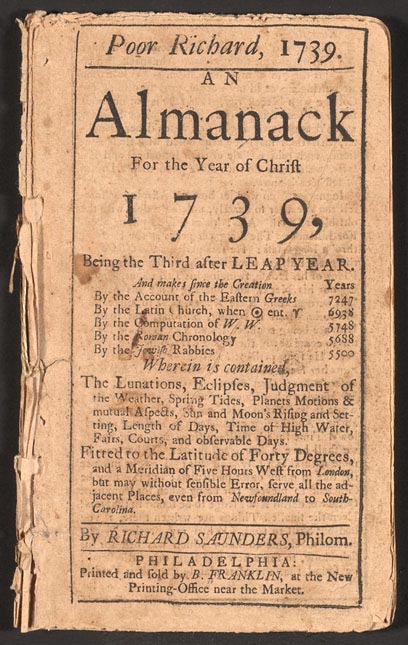](https://upload.wikimedia.org/wikipedia/commons/8/81/Poor_Richard_Almanack_1739.jpg)
*Benjamin Franklin's timeless wisdom on financial responsibility.*
_"A penny saved is a penny earned."_
- Benjamin Franklin, *Poor Richard's Almanack*
## Introduction
The concept of financial responsibility is a fundamental life skill that is often overlooked in traditional education. In his famous work, *Poor Richard's Almanack*, Benjamin Franklin emphasized the importance of frugality and financial planning through witty aphorisms and practical advice. This essay discusses one of Franklin's most enduring lessons: the need to spend less than one makes. This principle remains relevant in the modern world, providing a solid foundation for financial stability and success. This article will delve deep into this timeless wisdom and provide real-life examples and applications, making it engaging and relatable to college students.
## Core Concepts
The idea of spending less than one makes centers on maintaining a balance between income and expenses. Living below one's means ensures that there is always a surplus of funds, making it possible to save and invest for the future.
[](https://www.mymoneycoach.ca/sites/default/files/balancing-budget-rocks.jpg)
*An illustration of income vs. expenses to highlight the importance of living below one's means.*
There are several components to this core concept:
1. Awareness of income and expenses: First, it is crucial to have a clear understanding of one's financial situation. This includes tracking income and expenses meticulously.
2. Prioritizing needs over wants: Franklin's wisdom encourages individuals to focus on fulfilling basic needs before indulging in luxury items and non-essential purchases.
3. Long-term perspective: Recognizing the value of deferred gratification is embedded in this concept. The patience to save and invest for the future reaps greater benefits than instant gratification.
4. Emergency fund: Maintaining an emergency fund provides financial security in the face of unforeseen circumstances, ensuring that one does not have to rely on high-interest loans or credit card debt.
## Practical Implications & Applications
Here are some practical examples and applications of the principle of spending less than one makes:
### Example 1: The Impact of Daily Expenses
Consider a college student who spends, on average, $5 per day on coffee and snacks. Over the course of a year, this daily expense amounts to $1,825 ($5 x 365 days). By contrast, if the student opts to brew coffee at home for $0.50 per day, a significant reduction in annual expenses occurs: $190 ($0.50 x 365 days). This simple change results in a sizable annual savings of $1,635. By living below one's means, even in small ways, the student is able to accumulate wealth and make proactive financial decisions.
[](https://parivedasolutions.com/wp-content/uploads/2023/11/Pariveda-Cloud-Cost-Calculator.png)
*Visual comparison of daily spending on coffee bought outside vs. home-brewed coffee.*
### Example 2: Avoiding Unnecessary Debt
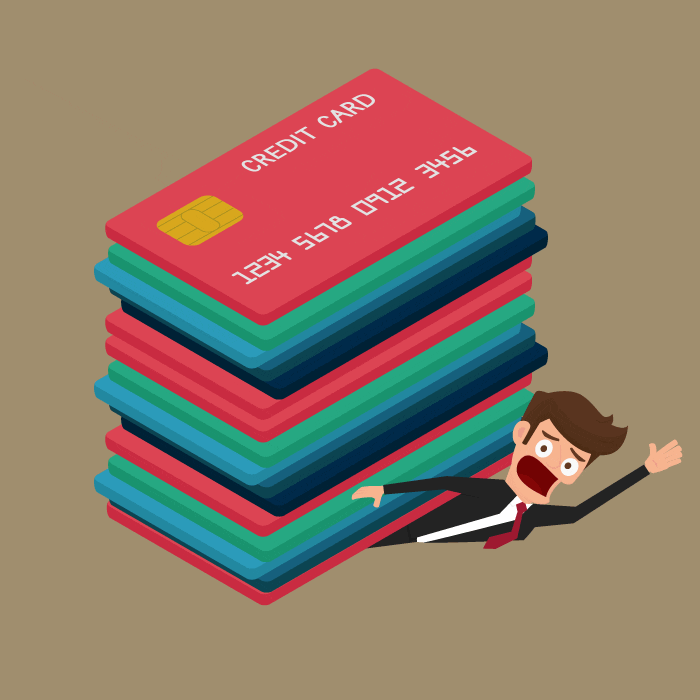
Another example involves credit card debt. Suppose a college student spends $1,000 on a high-end smartphone, paying with a credit card that carries an interest rate of 18% and minimum monthly payments of 2.5% of the balance. By paying only the minimum balance for two years, the student would have paid a total of $1,238.48, with $238.48 in interest alone. Instead, if the student saves up for the phone while interest rates are low, their overall expenses are much lower.
[](https://www.incharge.org/wp-content/uploads/2015/11/Too-Much-Credit-Card-Debt.gif)
*Impact of credit card debt on financial health.*
### Example 3: Power of Saving and Compounding
Saving even small amounts over a long period can yield substantial financial returns, particularly with the power of compounding. For instance, if a college student starts saving $200 per month at an average annual interest rate of 6%, by the time they reach the age of 65, they would have accumulated about $620,224. This example demonstrates the importance of adhering to the principle of spending less than one makes and the benefits of consistent saving and investment.
[](https://www.investopedia.com/thmb/8FOwBCmQ14qPBaDWubIR-sskHiU=/1500x0/filters:no_upscale%28%29:max_bytes%28150000%29:strip_icc%28%29/compoundinterest_final-5c67da5662ba458f8d9d229ab4ca4292.png)
*The power of saving and compounding over time illustrated.*
## Conclusion
In conclusion, the notion of spending less than one makes continues to be vital in guiding prudent financial decision-making. By adhering to this core concept, individuals maintain a stable financial footing and set the stage for long-term financial success. Through meticulous budgeting, prioritizing needs over wants, and maintaining a long-term outlook, individuals can apply Franklin's wisdom to their lives. Students can further explore this principle by researching topics such as:
* Retirement planning and investment strategies
* The impacts of inflation on savings
* Personal finance tools and applications to track income and expenses
By studying the time-tested lessons of Benjamin Franklin, students can embark on a journey towards financial literacy and competence, empowering them to make wise decisions and build a secure future.
Last updated: 2024-05-29
Related Books

Related Knowledges