# "Credit is Bad": Debunking the Myth and Uncovering Financial Wisdom from Poor Richard's Almanack
[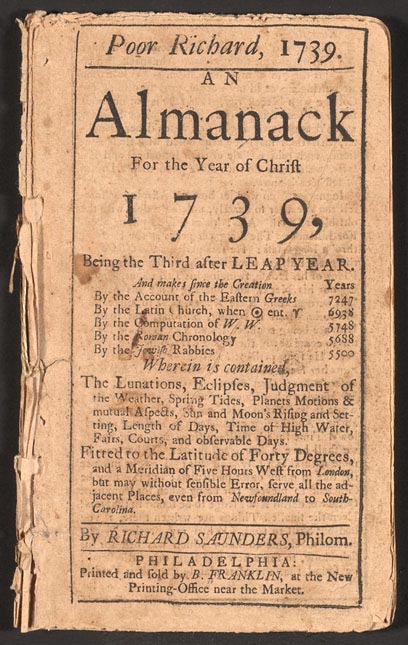](https://upload.wikimedia.org/wikipedia/commons/8/81/Poor_Richard_Almanack_1739.jpg)
*Cover of Poor Richard's Almanack by Benjamin Franklin*
## Introduction
Benjamin Franklin's Poor Richard's Almanack is a treasure trove of wit and wisdom that has stood the test of time. Among the many topics that Franklin explores, the concept of credit and its implications on personal finance is both insightful and relevant even today. In this deep-dive, we will dissect the adage "credit is bad" and uncover the financial wisdom that Franklin shares through the character of Poor Richard.
## Unraveling "Credit is Bad"
[](https://m.media-amazon.com/images/I/61XMoMyQz-L._AC_UF1000,1000_QL80_.jpg)
*Understanding the Nuances of Credit*
Franklin's view on credit is far more nuanced than the adage "credit is bad" suggests. Instead, he warns his readers about the potential dangers of misusing credit and the importance of understanding its proper role in one's financial life. In essence, Franklin emphasizes that credit itself is not inherently bad; rather, it is the mismanagement of credit that leads to financial distress.
### Example 1: The Cobbler's Wife
[](https://images.squarespace-cdn.com/content/v1/53f66868e4b046b3a209c1d4/d71a6a10-b684-4025-984f-cd88760acb61/37.JPG)
*Example of Financial Wisdom: The Cobbler's Wife*
Franklin illustrates the perils of credit mismanagement through the story of the cobbler's wife in Poor Richard's Almanack (Franklin, 1758):
> A woman went to a frugality lecture and heard a lecture on the evils of high living and the advantages of frugality. On her way home, she saw a splendid new gown in a shop window. She stopped and admired it greatly, but reflected that it would be very extravagant to buy it, and that she was resolved to be frugal and avoid debts. She continued her walk home, praying and resolving to be a good woman.
>
> When she reached home, her cobbler husband asked what kept her so long. She told him, and showed him the new gown. “But did you not go to hear about the evils of extravagance?” asked the husband. “Yes,” she replied, “but I never imagined that anybody could be so wicked as to make a gown as beautiful as this; so I determined to indulge myself a little in this instance, and then be very careful for the future.”
This anecdote demonstrates the ease with which one can be lured into unnecessary spending fueled by the availability of credit. The cobbler's wife, despite her intentions of frugality, allows herself to be swayed by the temptation of an extravagant gown. This is akin to falling into the trap of credit mismanagement, which can have lasting consequences on one's financial health.
### Example 2: The Borrower and the Lender
[](https://mortgagevintage.com/wp-content/uploads/2020/01/cc-mvi-q-4.jpg)
*The Dynamics of Borrowing and Lending*
Franklin's famous saying, “A borrower is a beggar, and a lender is a friend” (Franklin, 1757), highlights the disparity of power and potential tension between a borrower and a lender. When credit is used improperly, it can jeopardize relationships, particularly when the borrower is unable or unwilling to pay back the loan. By reframing the dynamic between a borrower and lender in such stark terms, Franklin emphasizes the potential negative consequences of misusing credit.
## The Proper Role of Credit
[](https://upload.wikimedia.org/wikipedia/commons/thumb/0/0c/Salem_Mass_CorwinHouse.jpg/220px-Salem_Mass_CorwinHouse.jpg)
*Economic Progress Through Credit: Colonial America*
Franklin acknowledges that credit can serve a purpose when wielded responsibly and with a clear understanding of its limitations. He does not advocate for an outright rejection of credit but advocates for developing prudence and resilience in managing financial affairs.
### Example: Credit as a Tool for Economic Progress
Franklin demonstrates the appropriate use of credit by examining the growth of the fledgling American colonies. In his autobiography, Franklin (1791) states:
> The city of Philadelphia would have been better built and in a shorter time if every man had been limited to what he could do by his own labor and skill, but a spirit of parsimony had prevailed, and most builders, instead of being their own carpenters, had become their own clerks, and contracted with others to erect their houses.
Franklin acknowledges that the judicious use of credit afforded the colonies the ability to advance economically, while stressing the dangers of imprudent borrowing. This passage highlights the importance of balancing the potential benefits of credit with the necessity of prudent financial management.
## Conclusion
In Poor Richard's Almanack, Benjamin Franklin provides college students with timeless lessons on the proper use and potential dangers of credit. By illustrating the consequences of credit mismanagement and the examples of its responsible application, Franklin cultivates financial wisdom essential for college students navigating the complex world of personal finance.
To further explore the topic of credit and its implications on personal finance, consider venturing into these related areas:
* The psychology of spending and its impact on financial decision-making
* The role of interest rates in shaping credit behavior
* Comparative historical analyses of credit systems and their cultural implications
By delving deeper into these interconnected themes, college students can continue to refine their financial literacy and navigate the ever-evolving world of personal finance with discernment and confidence.
### References
* Franklin, Benjamin. Poor Richard's Almanack. 1757.
* Franklin, Benjamin. Poor Richard's Almanack. 1758.
* Franklin, Benjamin. The Autobiography of Benjamin Franklin. 1791.
Last updated: 2024-05-29
Related Books

Related Knowledges