## Understanding the Dynamic Nature of Markets: A Journey Through Market Dynamics and Risk Management
### Introduction
In his book [The Dao of Capital: Austrian Investing in a Distorted World](https://amzn.to/3JmaNBH), Mark Spitznagel eloquently introduces us to the dynamic nature of markets. He argues that while many investors perceive markets to be akin to mechanical systems, they are in fact inherently complex, dynamic, and organic systems. In order to truly grasp the heart of market dynamics and to effectively manage risks, it is critical for investors and economic practitioners to recognize markets for what they are - dynamic and ever-changing entities.
### The Market as a Complex System
Financial markets are not akin to machines that operate according to fixed rules and algorithms. Instead, they are [complex systems](https://en.wikipedia.org/wiki/Complex_system) consisting of interconnected and interdependent agents that interact with one another in intricate and unpredictable ways. These systems are characterized by their adaptability in response to the actions of market participants as well as the emergence of trends and patterns that cannot be traced back to individual agents or forces.
[](https://banner2.cleanpng.com/20231128/zoc/transparent-financial-markets-economic-trends-global-economy-f-complex-financial-and-economic-dynamics-1710995189569.webp)
*Complex financial market system illustration*
The complexity inherent in financial markets implies that they cannot be fully understood, predicted, or controlled. Instead, as Spitznagel explains, we ought to embrace the inherent uncertainty and volatility of markets and focus on enhancing our resilience in the face of this dynamic environment.
### Time as a Crucial Element in Market Dynamics
Time represents another key dimension of the dynamic nature of financial markets. Spitznagel encourages investors to harness the power of time and leverage it as a tool for generating wealth and mitigating risks. He introduces the concept of "[Austrian Investing](https://www.investopedia.com/terms/a/austrian-investing.asp)," an investment approach that emphasizes the role of time in navigating and exploiting market cycles.
[](https://dwtyzx6upklss.cloudfront.net/Pictures/480x480/5/7/1/18571_da_austriablog_hero_v2_225166.jpg)
*Austrian Investing concept visualization*
In a dynamic market landscape, Spitznagel explains, patience is a virtue. By taking the long view (multi-year or multi-decade investment horizons), investors can harness the inevitable cycles of boom and bust as well as the non-linear unfolding of market trends and patterns. The patience and long-term focus espoused by Austrian Investing enable investors to create, grow, and realize wealth at optimal intervals while preserving capital when conditions are less favorable.
### Practical Implications: Dynamic Market Examples
Let's explore the dynamic nature of markets through two distinct scenarios - algorithmic trading and the "Tale of Two Bonds."
#### Algorithmic Trading: Limitations of Pre-Defined Patterns
Algorithmic trading strategies have gained considerable popularity among institutional investors in recent decades. These methods employ mathematical models and pre-defined rules to make rapid-fire trades in order to capitalize on market inefficiencies or anticipated price movements.
However, algorithmic trading strategies ultimately falter in the face of market complexities and unpredictability. While models like [Quantitative Trading (Quant) strategies](https://www.investopedia.com/terms/q/quantitativestrategies.asp) or [High-Frequency Trading (HFT)](https://www.investopedia.com/terms/h/high-frequency-trading.asp) often generate profits in the short term, they invariably fail to account for the unforeseen circumstances and emergent properties that define dynamic market systems.
[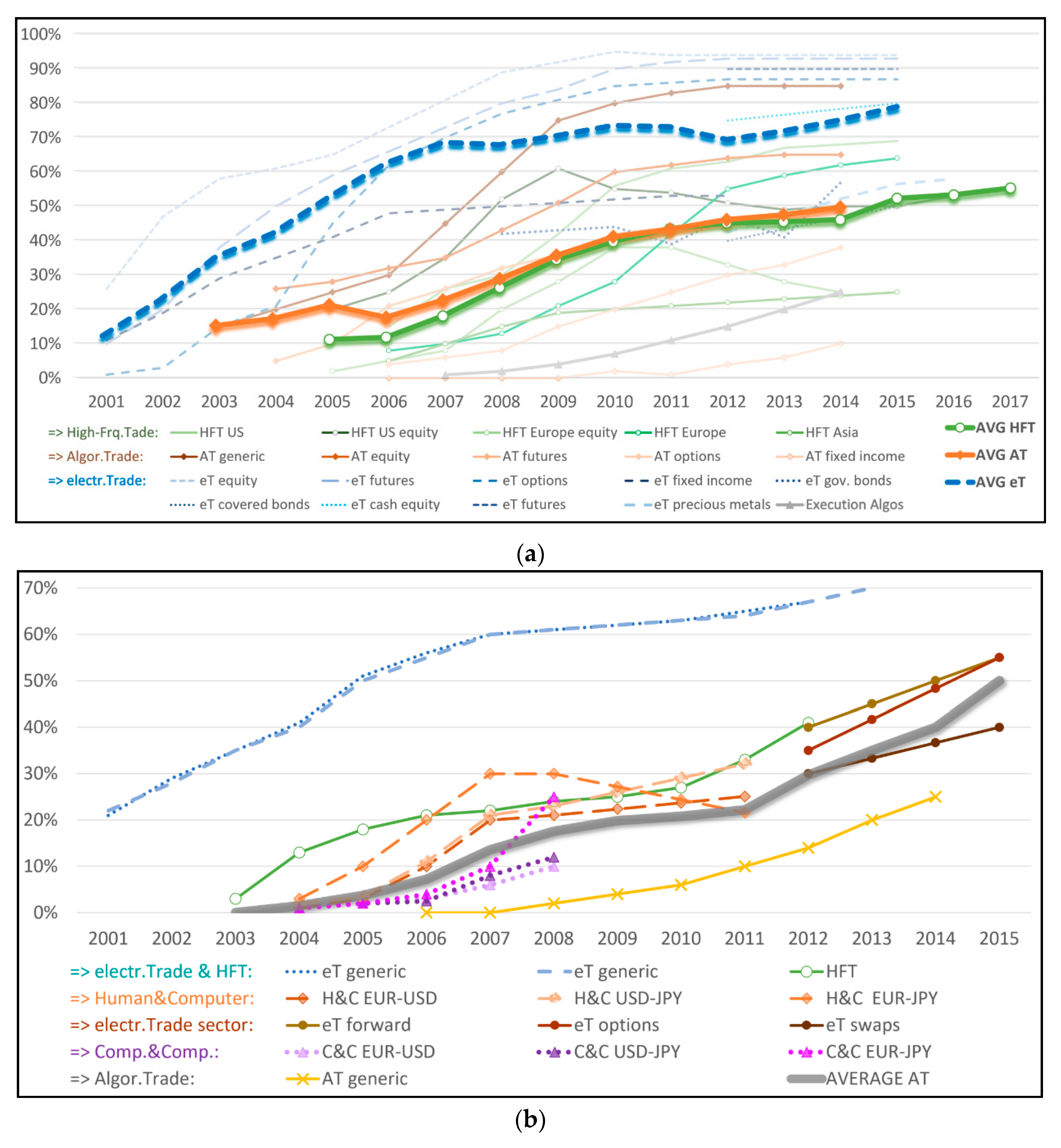](https://pub.mdpi-res.com/entropy/entropy-22-00499/article_deploy/html/images/entropy-22-00499-g001.png?1591361226)
*Algorithmic trading vs. Market complexity*
[High-profile flash crashes](https://www.investopedia.com/terms/f/flash-crash.asp) and [unintended consequences](https://www.ft.com/content/4c9f59b8-60c5-11e7-91da-14297b131305) (e.g., the "Flash Crash" of May 2010) highlight the vulnerabilities of relying on algorithmic trading strategies. These instances reveal the risk of concentrating on myopic patterns and trends while disregarding the broader, intricate landscape of financial markets.
#### The Tale of Two Bonds: Illustrating Time's Power
To effectively manage risks in a dynamic market environment, we must recognize the importance of time and harness it effectively. Consider the tale of two hypothetical bonds, A and B, with the following features:
| | Bond A | Bond B |
|---|---|---|
| Coupon Rate | 7% | 1% |
| Coupon Payment |Annually|Annually|
| Maturity |2-Year |20-Year |
| Yield-to-Maturity (YTM) | 6.9% Matches the risk-free rate |4.1% |
Based on these static characteristics, an investor might find both bonds appealing, as the YTM of each matches the risk-free rate of 6.9%. However, let's introduce a dynamic element to unravel the stark contrast between the two bonds.
Suppose that over the next two years, interest rates undergo a sharp increase of 150 basis points (bps) due to a sudden and unexpected change in market conditions. This rise affects Bond A's and Bond B's underlying value as well as investors' willingness to pay for these securities in the secondary market.
In the case of Bond A, the price would decrease by approximately 4.5% (coupon rate minus YTM plus 150 bps) when accounting for a [modified duration](https://www.investopedia.com/terms/d/duration.asp) of 1.73. Bond A's lower duration and shorter maturity imply that its value would deteriorate by 4.5%. Meanwhile, Bond B's value would concurrently diminish, given the rising discount rate and the 7.6 duration (based on the 20-year maturity and a YTM of 4.1%). Bond B's price would plummet by approximately 15.2% due to these risk factors.
[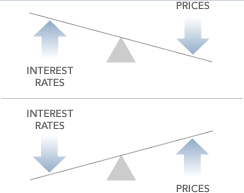](https://www.fidelity.com/bin-public/600_Fidelity_Com_English/images/migration/E_1_10_image2.png)
*Interest rate effect on bond prices illustration*
This illustrative example underlines how time and changing market conditions contribute to the dynamic nature of financial markets. By combining the principles of complexity, cycles, and time, investors can capitalize on opportunities and minimize risks.
### Conclusion: Navigating the Market Dynamic with Insights and Curiosity
Throughout this content, we have investigated the dynamic nature of markets, as introduced in Mark Spitznagel's The Dao of Capital, and have explored practical implications and the limitations of employing quantitative methods when faced with the intricacies of dynamic markets.
Key insights from this content include:
* Financial markets are complex systems, inherently unpredictable and non-linear.
* Algorithmic trading strategies that employ quantitative models can falter when applied to real-world scenarios due to the complexity and unpredictability of market dynamics.
* Time-tested strategies such as Austrian Investing can help investors capitalize on cycles, manage risks, and harness the power of time for wealth generation.
* Duration analysis can be applied to manage risks associated with changes in interest rate regimes.
Moving forward, students and practitioners of finance can develop a deeper understanding of the dynamic nature of financial markets by exploring topics like [behavioral finance](https://www.investopedia.com/terms/b/behavioralfinance.asp), [Adaptive Markets Hypothesis](https://www.investopedia.com/terms/a/adaptivemarkethypothesis.asp) by Andrew Lo, and [monetary policy](https://fred.stlouisfed.org/series/WSHOMMSA153N) effects. These topics delve further into the emergent, dynamic nature of markets, providing opportunities for curiosity and intellectual pursuit among scholars, investors, and market participants.
Last updated: 2024-05-30
Related Books

Related Knowledges