# Volatility and Opportunity: Unveiling the Hidden Aspects of Risk and Reward
## Introduction
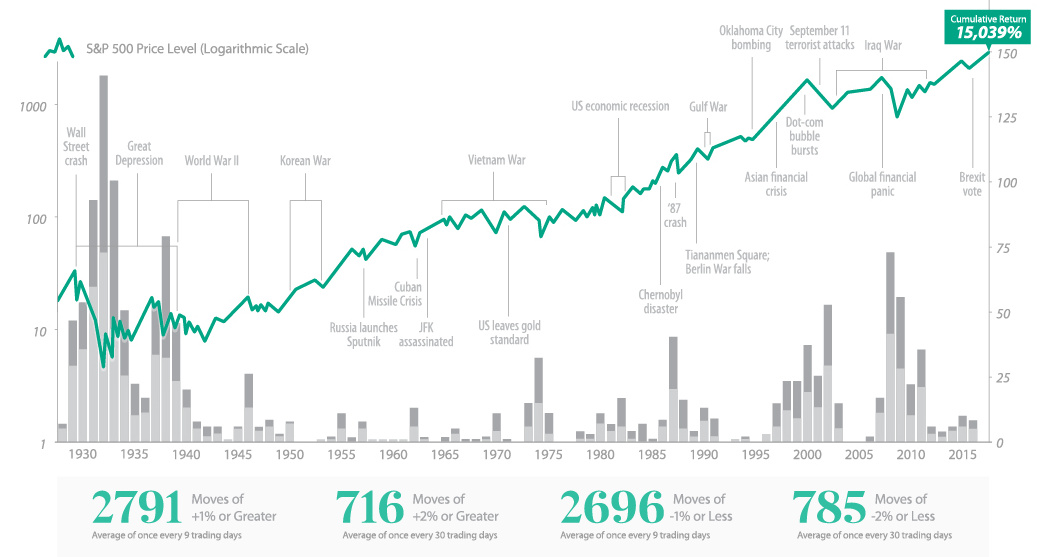
Volatility, often viewed as a proxy for risk, is a fundamental concept in finance and investment management. However, volatility transcends the traditional definition of mere risk; it encapsulates the dynamic nature of financial markets and the corresponding opportunities that they present. This idea is one of the central tenets of *The Dao of Capital* by Mark Spitznagel. In this book, Spitznagel introduces the reader to the concept of 'volatility value investors' - those who actively seek to generate returns by understanding, embracing, and benefiting from market volatility.
[](https://www.visualcapitalist.com/wp-content/uploads/2018/08/volatility-share2.jpg)
*Concept of Volatility in Financial Markets*
This educational content delves into the core concepts of 'volatility and opportunity' by exploring its various dimensions. By understanding the interplay between market volatility and investment opportunities, college students can enhance their ability to navigate and harness the dynamic nature of financial markets.
---
## The Dual Nature of Volatility
Financial markets are inherently volatile, exhibiting recurring patterns of price swings and fluctuations. In the past, investors and financial professionals regarded these market gyrations primarily as a source of risk and uncertainty. However, Spitznagel's approach focuses on the dual nature of volatility, which encompasses both risk and opportunity.
At its core, volatility reflects market participants' disagreements regarding an asset's intrinsic value. Consequently, the degree of volatility for any given asset can often serve as a leading indicator of potential mispricings. As such, volatility should not only be seen as a measure of risk but also an opportunity for investors.
---
## Practical Implications: Real-World Applications of Volatility and Opportunity
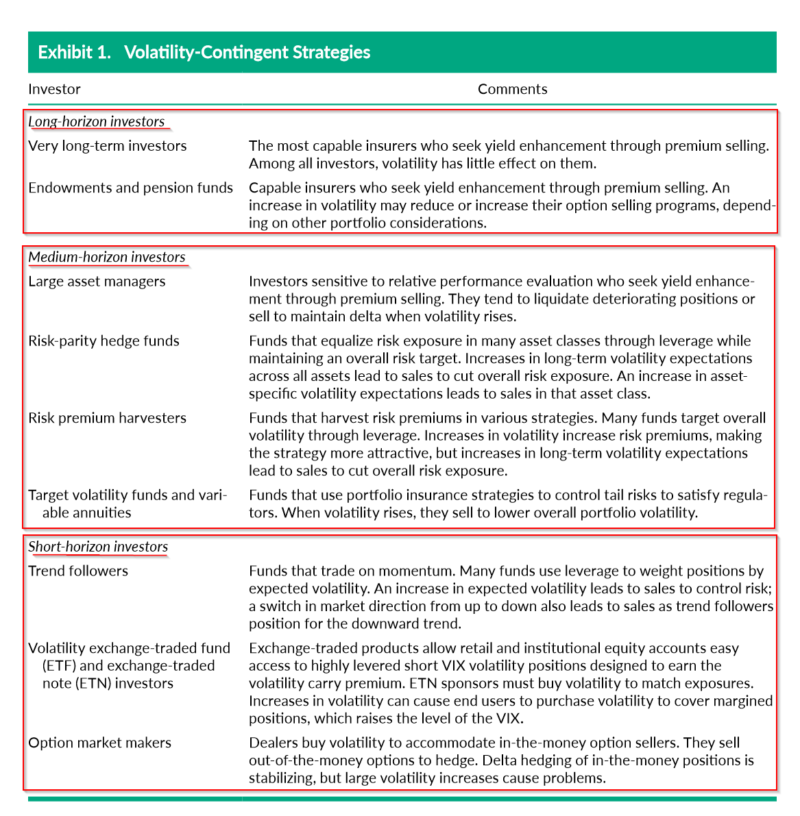
*Long Volatility Strategies*: To capture the upside of volatility, investors may employ long volatility strategies. These approaches typically involve the use of options or other derivatives that allow investors to benefit when market volatility rises. By constructing long volatility positions, investors can potentially capture significant returns even in a declining market.
Take, for example, the case of a major geopolitical event that causes significant market unrest and increased price swings across multiple asset classes. An investor who employs a long volatility strategy would welcome this heightened uncertainty, as it presents the opportunity for substantial returns.
*Short Volatility Strategies*: Conversely, investors with a deep understanding of volatility can also benefit from market environments characterized by lower volatility. These periods often result in a compression of option premiums and, thus, reduced returns for long volatility strategies. Shorter volatility strategies allow investors to capitalize on these extended periods of market calm, by selling options and collecting premiums.
[](https://alphaarchitect.com/wp-content/uploads/2018/11/2018-11-04-12_11_37-Microsoft-Edge-800x816.png)
*Long vs Short Volatility Strategies*
For instance, consider the prolonged bull market that followed the 2008 financial crisis, during which time markets exhibited persistently low volatility. Investors with a well-executed short volatility strategy would have benefited from the low levels of market anxiety and correspondingly compressed option premiums.
---
## Further Exploration: Key Insights and Avenues for Delving Deeper
By embracing the concept of 'volatility and opportunity', college students can significantly alter their perception and engagement with financial markets. Following are a few recommendations for further exploration, designed to enrich one's understanding of the subject matter:
* Delve into the world of derivatives: As volatility-based trading strategies often involve the use of options and similar derivatives, it is imperative to understand these instruments' underlying mechanics and risk management techniques. Consider enrolling in courses focused on derivatives, or explore academic literature that delves into the practical aspects of these financial tools.
[](https://www.investopedia.com/thmb/LAUIBWrnhggDZR706cTXEY4To2o=/1500x0/filters:no_upscale%28%29:max_bytes%28150000%29:strip_icc%28%29/Option-fe0c0ee9204c4a50a281e728fb4c7cab-c571c7af929e4b8587c5a28ad9905f53.jpg)
*Understanding Derivatives and Options*
* Dive into the realms of option pricing: Central to any volatility-based trading strategy is the notion of option pricing and the models designed to capture their underlying dynamics. Familiarizing oneself with the Black-Scholes or Binomial option pricing models, for example, can prove invaluable in pursuing advanced volatility strategies.
* Learn from market practitioners: As with any investment strategy, it is crucial to gain real-world insights from those who have successfully implemented volatility-based trading strategies. Consider following market professionals who actively employ these tactics, and take note of their experiences and lessons learned along the way.
---
In conclusion, the concept of 'volatility and opportunity' offers a refreshing and alternative view of financial markets. By appreciating the dual facets of market volatility and actively seeking to benefit from its oscillations, investors can unlock the hidden potential within the complex adaptive systems that govern financial markets. Through further exploration and application of the key insights presented herein, college students can harness market volatility and transform it into a powerful source of investment opportunity and growth.
Last updated: 2024-06-16
Related Books

Related Knowledges