# Fear is Advantageous: Embracing Uncertainty for Prosperity
[](https://m.media-amazon.com/images/I/8148N6AtROL._AC_UF1000,1000_QL80_.jpg)
*Cover of 'The Dao of Capital' by Mark Spitznagel*
In *The Dao of Capital: Austrian Investing in a Distorted World*, Mark Spitznagel challenges conventional financial wisdom by advocating for a counterintuitive approach: harnessing fear and embracing uncertainty. This strategy, grounded in the principles of Austrian economics, entails welcoming market volatility and acknowledging that long-term prosperity often stems from capitalizing on short-term chaos. This idea, which may seem counterintuitive, can be advantageous in various aspects of life and decision-making.
In the world of finance, fear is often perceived as a negative emotion that hinders rational decision-making. However, Spitznagel argues that fear, when channeled appropriately, can serve as a powerful tool in the investor's arsenal. Below, we will explore practical implications of the idea that fear can be advantageous by analyzing two examples that demonstrate its significance.
## Example 1: Antifragility in Finance
[](https://m.media-amazon.com/images/I/61cmwTmON3L._AC_UF1000,1000_QL80_.jpg)
*Antifragility concept*
The concept of antifragility, introduced by Nassim Nicholas Taleb, is central to the idea that fear can be advantageous. An antifragile system or strategy not only withstands stressors and shocks but thrives in their presence. Financial markets and investment strategies often experience turbulence and unpredictability, which can be intimidating. However, it is during these periods that the wise investor, prepared with a keen understanding of antifragility, can reap significant rewards.
In traditional finance, the predominant strategy is to minimize risk and seek stability. This approach, referred to as fragility, focuses on avoiding losses rather than maximizing gains. In contrast, antifragile strategies, which embrace fear and uncertainty, actively seek opportunities in volatile markets. By understanding and accepting that markets are inherently unpredictable, investors can develop strategies that not only mitigate potential losses but also position themselves to capitalize on chaotic conditions.
In practice, antifragility in finance can manifest in various forms, such as options-based trading strategies, long volatility positions, or allocations to alternative assets like commodities and real estate. Investors who embrace fear and acknowledge market uncertainty can develop a keen sense of when to deploy these tools effectively, thereby enhancing their overall investment performance.
## Example 2: Natural Disasters and Entrepreneurship
[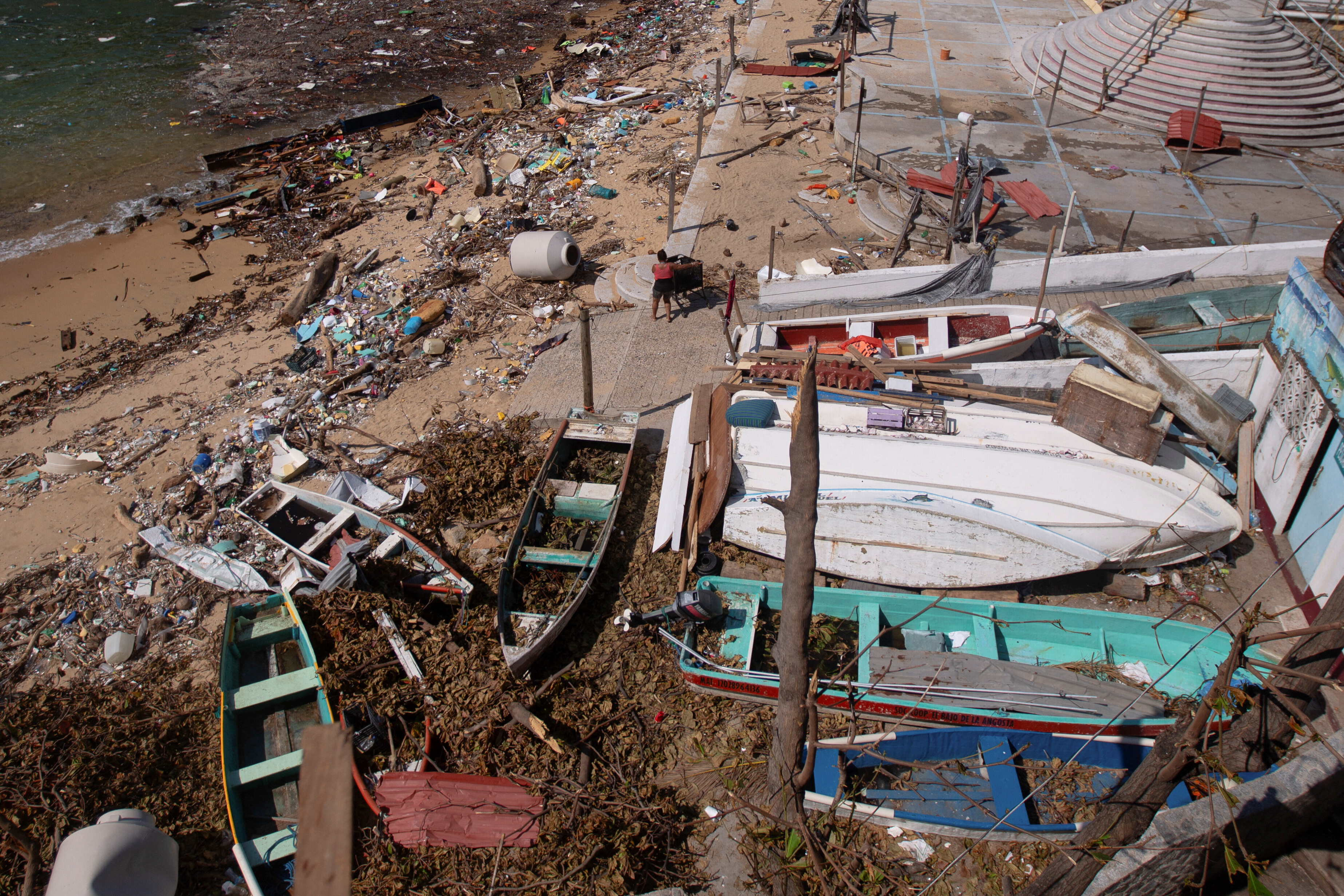](https://cloudfront-us-east-2.images.arcpublishing.com/reuters/TWB53TWBNNI5LDVE26OOOLXVNM.jpg)
*Hurricane aftermath and reconstruction*
The idea that fear can be advantageous extends beyond the realm of finance and investing. It is also applicable to entrepreneurship and innovation, particularly in industries or regions susceptible to natural disasters. By examining the responses to hurricane-prone regions, we can gain insights into the power of embracing fear in the face of uncertainty.
Consider, for instance, the aftermath of a major hurricane in a coastal city. In the immediate aftermath, fear and uncertainty permeate the community as residents grapple with the devastation. However, amid the chaos, entrepreneurs who embrace fear and uncertainty can identify and capitalize on emerging opportunities.
In the wake of a natural disaster, various needs arise within the affected community. These needs can range from the provision of essential goods and services to the implementation of innovative infrastructure solutions designed to mitigate future disaster risks. For instance, entrepreneurs may develop advanced hurricane-resistant building materials, improved weather forecasting technologies, or novel emergency response systems.
[](https://miro.medium.com/v2/resize:fit:11520/1*526ScPOS6yDhCN2kWKJMXg.jpeg)
*Entrepreneurs addressing unmet needs*
Embracing fear and uncertainty in the face of natural disasters allows entrepreneurs to identify and address unmet needs. By recognizing that uncertainty is an inherent aspect of disaster-prone regions, these entrepreneurs are better positioned to create value and drive innovation, ultimately contributing to the long-term resilience and prosperity of their communities.
## Key Insights and Further Exploration
In summary, the idea that fear can be advantageous has significant implications across various domains. By embracing fear and uncertainty, investors can harness the power of antifragility and develop strategies that not only minimize potential losses but also enable them to capitalize on volatile markets. Similarly, entrepreneurs and innovators can leverage fear and uncertainty to develop novel solutions that address unmet needs in the wake of natural disasters or other crises.
To further explore the concept of fear as an advantage, consider the following avenues for additional study:
1. Delve deeper into the principles of Austrian economics and how they relate to the idea that fear can be advantageous. Key concepts include subjective value, time preference, and the business cycle.
2. Examine the role of fear and uncertainty in the context of decision-making and leadership. Investigate the impact of embracing fear on crisis management and strategic planning in various organizational settings.
3. Analyze the ethical implications of harnessing fear and uncertainty for personal gain. Consider the potential consequences of prioritizing self-interest over collective well-being in the pursuit of prosperity.
4. Investigate the role of psychological factors, such as heuristics and biases, in shaping individual and collective responses to fear and uncertainty. Assess how these factors influence decision-making and the development of antifragile strategies.
Ultimately, the idea that fear can be advantageous challenges conventional wisdom and invites us to reconsider the role of fear and uncertainty in various aspects of life. By embracing fear and uncertainty, we can unlock novel opportunities and drive innovation, thereby enhancing our personal and collective prosperity.
Last updated: 2024-05-06
Related Books

Related Knowledges