# The Uncertainty Principle Applied: Navigating the Austrian School of Economics through the Lens of Mark Spitznagel's "The Dao of Capital"
_"Fundamental uncertainty dominates our world. It defines and confines us. We are bound by its physical and economic manifestations and must live with and within its means. It is omnipresent and eternal. And it is only within the context of this reality that we can work toward successful action within our financial and economic lives."_ – Mark Spitznagel, _The Dao of Capital_
[](https://austrian-institute.org/wp-content/uploads/2020/02/uniwien-600x1000-von-Website-Mediathek.jpg)
*The Austrian School of Economics*
In Mark Spitznagel's magnum opus, "The Dao of Capital," the reader is introduced to an alternative perspective on finance and economics that draws on the wisdom and teachings of the Austrian school of economics. Central to Spitznagel's exposition is the Uncertainty Principle, a concept that has its roots in physics but finds profound expression in the realm of financial markets.
At first glance, it might appear unusual for a text on economics and finance to refer to a principle from the world of physics; however, Spitznagel argues that the Uncertainty Principle provides a useful metaphor for understanding the inherent unpredictability and complexity of financial systems. He contends that the Uncertainty Principle, in essence, reminds us of the limitations of our understanding of the world around us and the ultimate impossibility of making precise predictions about the future.
[](https://dwg31ai31okv0.cloudfront.net/images/Article_Images/ImageForArticle_261_16686903178778156.jpg)
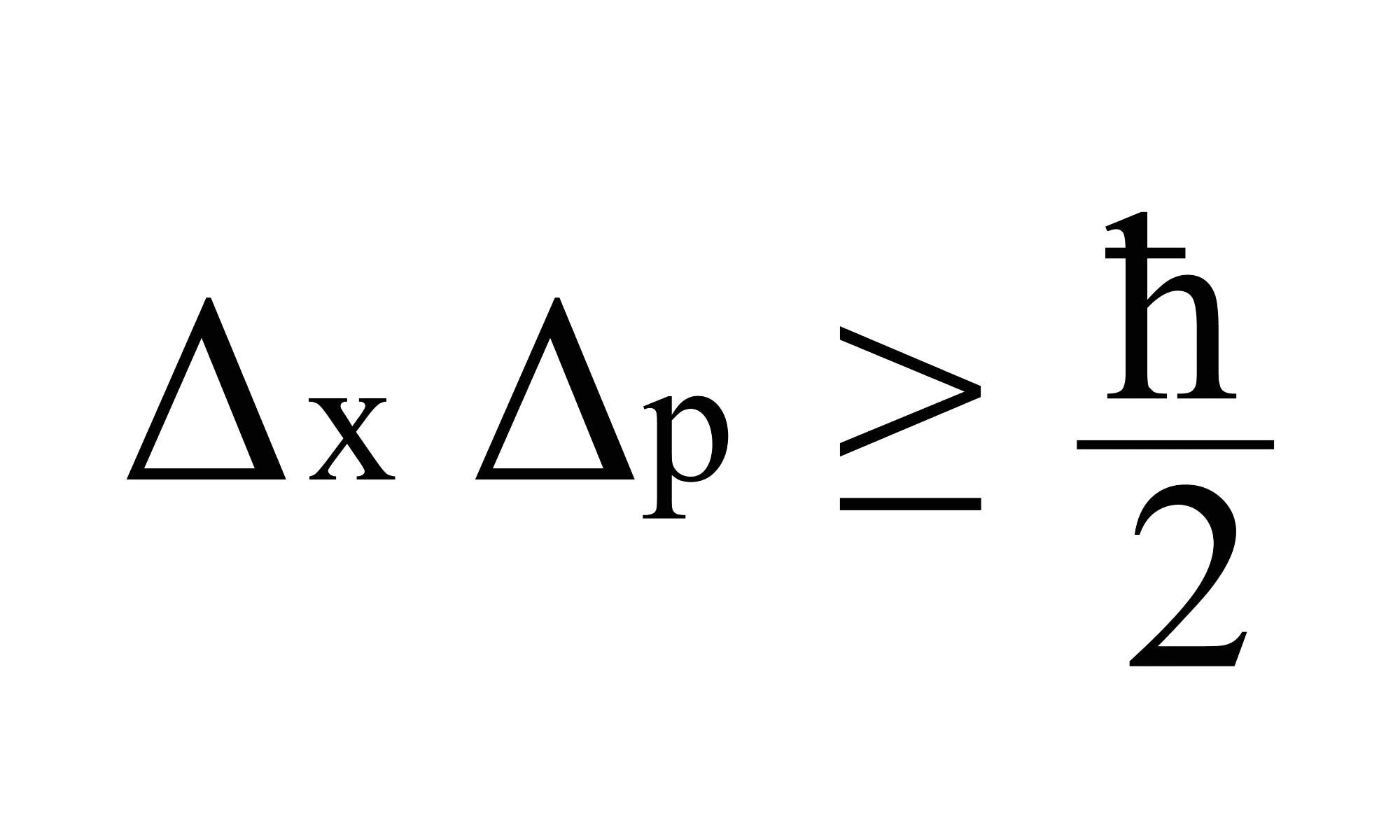
*Heisenberg's Uncertainty Principle*
In the context of financial markets, the Uncertainty Principle carries important implications for investors and financial professionals alike. When applied to the world of finance, the Principle suggests that our understanding of financial phenomena is always constrained and limited, both by our cognitive biases and the inherent complexity of the systems we seek to understand.
## The Uncertainty Principle in Practice
Consider, for instance, the case of predicting the movements of the stock market. Despite the proliferation of sophisticated quantitative models and algorithms that purport to divine the market's future trajectory, financial professionals remain stymied in their attempts to predict the market's next move with precision. Indeed, the very act of observing and measuring the market, in an effort to discern trends and patterns, invariably disrupts the system and introduces a degree of instability that makes accurate predictions all but impossible.
This phenomenon finds resonance in the so-called "observer effect" in quantum mechanics. As physicist Werner Heisenberg first argued, the act of observation inherently alters the phenomenon being observed. Thus, the more we attempt to determine the position of a particle, the less we can know about its momentum, and vice versa. Similarly, the more closely we examine financial markets, the less predictable they become.
As Spitznagel asserts, "The Austrian school, and specifically the teachings of Ludwig von Mises, Friedrich Hayek, and Frank Fetter, recognizes that entrepreneurial activity takes place in a context of radical uncertainty." In this view, uncertainty is not merely something that can be quantified and accounted for, but an essential feature of the economic and financial landscape itself. Consequently, the challenge for the investor or financial professional becomes not one of accurately predicting the future, but rather of navigating the inherently uncertain terrain of financial markets in a robust and resilient fashion.
## Black Swans and the Critical Role of Dispersed Knowledge
One of the most powerful implications of the Uncertainty Principle in the realm of finance is the phenomenon of so-called Black Swans: rare, high-impact events that are largely unpredictable and often defy conventional wisdom. In the wake of the 2008 financial crisis, this concept has gained increasingly widespread currency as a way of understanding the perils of financial market volatility and the dangers inherent in the pursuit of precision and predictability.
[](https://www.investopedia.com/thmb/FTs7Cs_80lJHY8kNyU3fe3VGYBI=/1500x0/filters:no_upscale%28%29:max_bytes%28150000%29:strip_icc%28%29/Blackswan-f5daa1c10708423bbb218f9db5452eb0.jpg)
*Black Swan Events in Finance*
Indeed, Spitznagel argues that it is precisely this obsession with certainty and predictability that lies at the heart of many of the most catastrophic financial disasters of recent times. In this view, the financial crisis of 2008 represented a classic case of a Black Swan event, born of the interplay of unforeseen circumstances and the mass delusion that such a crisis could never occur.
In this context, Spitznagel extols the virtues of the Austrian school's emphasis on the critical role of dispersed and decentralized knowledge in navigating an uncertain world. In contrast to the top-down, centralized approaches that characterize much of modern finance, the Austrian perspective places a premium on the wisdom of crowds and the cultivation of diverse opinions and perspectives. By harnessing the insights and knowledge of a wide array of individuals and organizations, the Austrian approach seeks to build resilience and robustness in the face of unpredictability and change.
## The Power of Optionality
Drawing on this insight, Spitznagel champions the concept of "optionality" as a powerful tool for navigating the uncertain terrain of financial markets. In essence, optionality refers to the practice of maintaining flexibility and adaptability in the face of uncertainty, by positioning oneself to take advantage of a range of potential future outcomes. In this view, the successful investor or financial professional is one who cultivates a mindset of flexibility and adaptability, and who is prepared to seize opportunities as they arise.
[](https://c8.alamy.com/comp/T5C97E/complex-stock-market-candlestick-chart-business-economy-and-financial-background-3d-illustration-T5C97E.jpg)
*Financial Market Complexity*
Central to this approach is the cultivation of a deep understanding of the underlying dynamics of the financial systems in which one is operating, as well as an appreciation of the potential for unforeseen events and contingencies. By maintaining a diversified and adaptable portfolio, and by positioning oneself to take advantage of the emergent properties of complex systems, the investor or financial professional can navigate the treacherous waters of financial markets with greater ease and confidence.
A powerful example of the power of optionality can be found in the case of Long-Term Capital Management (LTCM), the now-infamous hedge fund that collapsed in spectacular fashion in the late 1990s. In the years leading up to its demise, LTCM had amassed a reputation as one of the most successful and sophisticated financial firms in history, thanks in large part to its ability to exploit seemingly minor arbitrage opportunities in the financial markets. However, in its pursuit of ever-greater precision and predictability, LTCM became increasingly susceptible to the risks inherent in highly leveraged and complex financial instruments, ultimately leading to its downfall.
In contrast, consider the case of George Soros, the legendary investor and hedge fund manager who has built his fortune on the principle of optionality. By cultivating a deep understanding of the dynamics of financial markets and by maintaining a mindset of flexibility and adaptability, Soros has been able to capitalize on a range of Black Swan events throughout his career, from the Asian financial crisis of 1997 to the dot-com bubble of 2000.
## Conclusion
In conclusion, the Uncertainty Principle, as articulated by Mark Spitznagel in "The Dao of Capital," offers a powerful and insightful framework for understanding the complex and dynamic world of financial markets. By recognizing the inherent limitations of our understanding of financial systems, and by embracing the critical role of dispersed knowledge and optionality, investors and financial professionals can navigate the uncertain terrain of financial markets with greater ease and confidence.
For those seeking to further explore the implications and ramifications of the Uncertainty Principle in the realm of finance, there are several avenues for further study and reflection. Among the most promising are the works of the Austrian economists, including Ludwig von Mises, Friedrich Hayek, and Frank Fetter, as well as contemporary thinkers such as Nassim Nicholas Taleb, author of "The Black Swan," and Peter Bernstein, author of "Against the Gods: The Remarkable Story of Risk."
By deepening our understanding of the Uncertainty Principle and its implications for the world of finance, we can not only improve our ability to navigate the complex and unpredictable terrain of financial markets, but also cultivate a deeper appreciation for the wisdom and teachings of the Austrian school of economics. In a world defined by uncertainty, it is perhaps this wisdom and insight that offer the greatest hope for a more resilient and robust financial future.
Last updated: 2024-12-05
Related Books

Related Knowledges