# The Barbell Strategy: Navigating Uncertainty with Asymmetry
Understanding and applying the Barbell Strategy can improve decision-making, risk management, and long-term success—principles especially valuable for college students preparing for an uncertain future.
In the book *The Dao of Capital: Austrian Investing in a Distorted World*, Mark Spitznagel introduces the Barbell Strategy, an investment approach rooted in Austrian economics. The strategy counters the shortcomings of traditional finance and economic models, which have struggled to adapt to non-Gaussian (or "fat-tailed") distributions. These distributions, characterized by extreme events, commonly found in both financial markets and broader socioeconomic dynamics, deviate significantly from the average.
Incorporating asymmetric bets, the Barbell Strategy involves balancing two extremes of risk/reward profiles, typically characterized as:
[](https://www.shutterstock.com/image-illustration/illustration-strongman-holding-barbell-made-600nw-2371426585.jpg)
*The Barbell Strategy concept illustration*
- High-risk, high-reward (e.g., venture capital investments, speculative assets, and entrepreneurial endeavors)
- Low-risk, low-reward (e.g., cash, treasuries, or conservative bonds)
These contrasting positions in the "barbell" reduce exposure to overpriced, volatile intermediaries and provide adaptability in a wide range of scenarios.
In the context of investing, the Barbell Strategy can be illustrated with stock portfolios. Rather than focusing on an evenly distributed, moderately diversified portfolio, the strategy recommends allocating a minority portfolio in higher-risk, higher-reward stocks/asset classes, while entrusting the vast majority of the portfolio in low-risk, low-reward investments. The principle works by combining an aggressive, possibly futile position and a conservative, reliable one.
## Practical Implications
This strategy, when applied prudently, contributes significantly to financial risk management. By being in cash or other low-risk assets, investors maintain resilience and avoid exposure when markets deviate from average distributions. This leads to preserving and even accumulating wealth when devastating downturns take place:
**Example 1: The 2008 Financial Crisis**
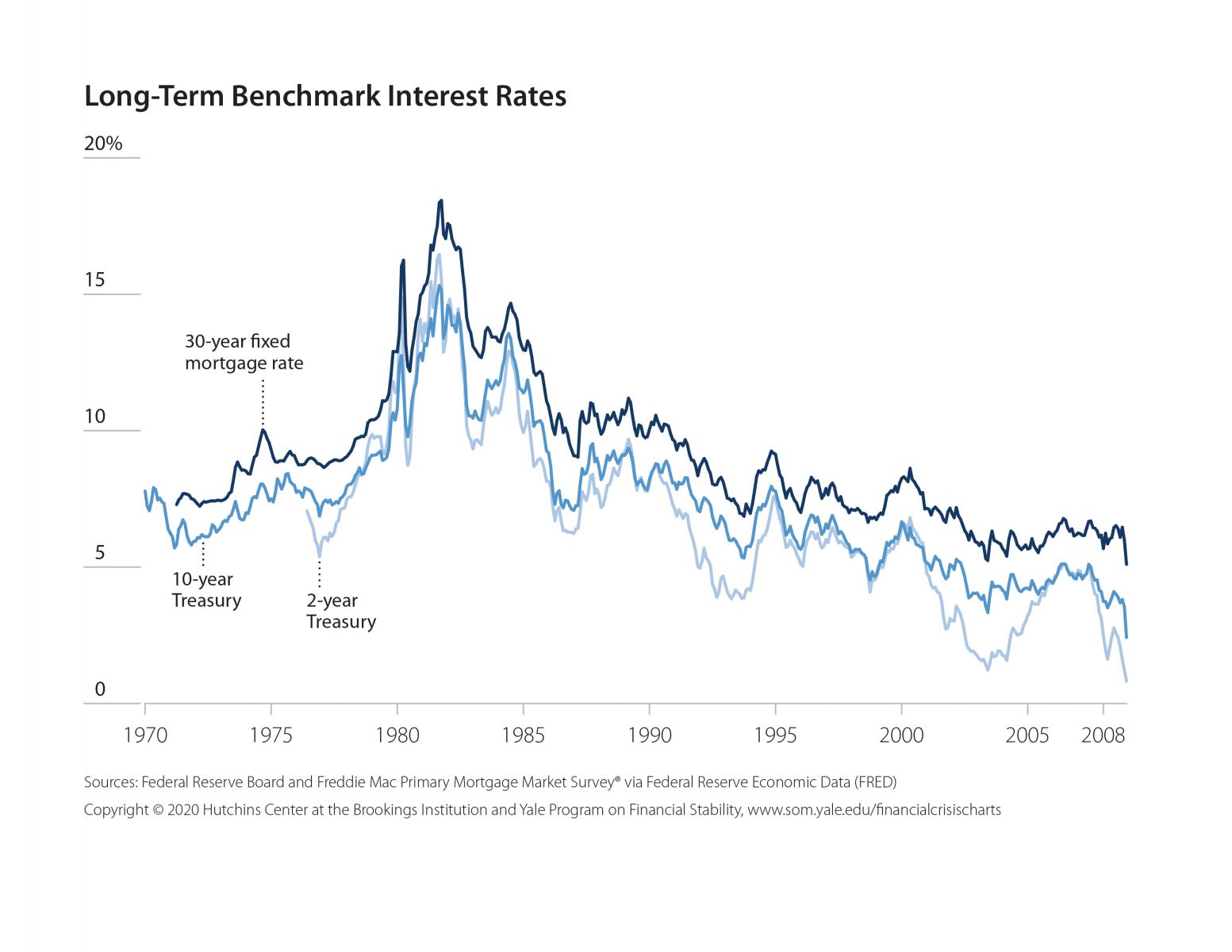
Suppose you allocated 95% of your portfolio in treasury bonds and the remaining 5% in aggressively long positions with call options in undervalued stocks. While the financial industry was decimated by the 2008 crisis, low-risk positions securely maintained your wealth and the call options in companies that survived or partially recovered post-crisis yielded substantial returns.
[](https://som.yale.edu/sites/default/files/2022-01/CB2%2009_Benchmark%20Interest%20Rates%2C%201970%E2%80%932008.jpg)
*2008 Financial Crisis impact on investments*
## Broadening the scope: The Barbell Strategy in personal and professional life
The core tenets of the Barbell Strategy extend beyond investing. Applying this risk management framework in personal and professional life entails balancing seemingly opposing elements.
The Austrian school of economics encourages pursuing seemingly incongruous vocations simultaneously (e.g., being an accomplished violinist while specializing in surgery)—a concept that parallels the Barbell Strategy. This approach cultivates resilience by preparing for unpredictability in the future workforce and expanding personal interests.
**Example 2: Career development**
Consider a college student majoring in computer science with an inclination towards theater arts. An application of the Barbell Strategy may lead the student to become proficient in both fields. After graduating, they may work at a tech company while freelancing as a sound designer and stage manager.
[](https://cdnsm5-ss18.sharpschool.com/UserFiles/Servers/Server_27864767/Image/ALMA/Media.png)
*Balancing career in tech and the arts*
By exposing the individual to diverse experiences and industries, this approach enhances adaptability and the potential to capitalize on idiosyncratic opportunities in a rapidly changing world.
## Concluding remarks
The Barbell Strategy provides a powerful mental model for navigating ambiguity and optimizing expectations. College students harnessing this strategy can cultivate resilience, capitalize on serendipity, and prepare themselves for unforeseeable circumstances in their financial, personal, and professional journeys. As the world accrues volatility, the Barbell Strategy's wisdom grows ever more pertinent to the prudent and farsighted.
Delving deeper into the Barbell Strategy requires engaging with literature devoted to the subject—ranging from books and research papers to investment newsletters and podcasts. Specifically, *The Dao of Capital* provides a solid foundation delving into risk management and the application of the Barbell Strategy. Furthermore, staying updated with the latest financial news, trends, and analyses would complement any efforts in mastering this powerful framework.
Ultimately, the Barbell Strategy stands as an influential tool for college students in the quest for prosperity and the pursuit of versatile personal growth and development.
Last updated: 2024-04-27
Related Books

Related Knowledges