# The Latticework of Mental Models: A Robust Framework for Rational Thinking
[](https://static01.nyt.com/images/2023/11/30/multimedia/29munger-zqch-print5-SUB/29munger-zqch-articleLarge.jpg?quality=75&auto=webp&disable=upscale)
*Charlie Munger and Warren Buffett*
The concept of the **latticework of mental models** is a philosophical approach to learning and decision-making, popularized by Charlie Munger, vice chairman of Berkshire Hathaway and long-time business partner of Warren Buffett. The latticework is a cohesive framework of interconnected models drawn from various disciplines, including psychology, economics, mathematics, physics, and biology. By integrating and applying these models to our understanding of the world, we can significantly enhance our ability to make rational, effective, and insightful decisions.
In *Poor Charlie's Almanack*, Munger emphasizes the importance of building a robust latticework of mental models to avoid the traps of narrow thinking and cognitive biases. Cultivating a deep understanding of multiple models enables individuals to:
1. Recognize the limitations and assumptions of a single model.
2. Understand the interplay and synergies between different models.
3. Develop a nuanced and context-dependent understanding of complex problems.
Let's explore some practical examples and applications of the latticework of mental models:
## Example 1: Circle of Competence
[](https://ibkrcampus.com/wp-content/uploads/2023/07/Screenshot-2023-07-24-at-12.46.43-PM-1100x630.png)
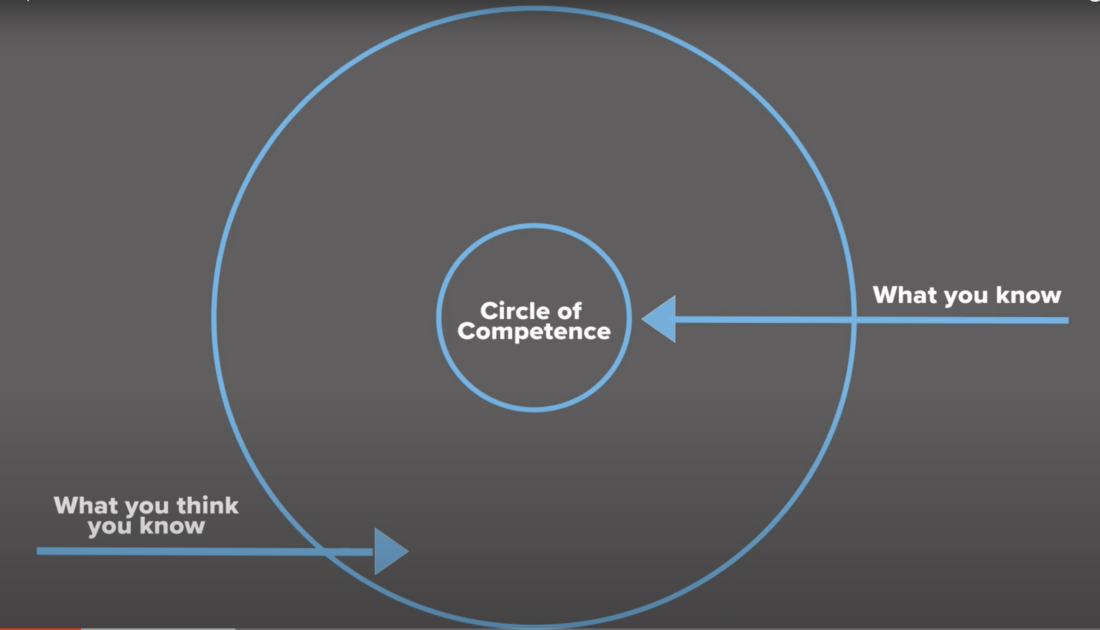
*Circle of Competence*
**Circle of Competence** is a mental model borrowed from investing that encourages individuals to focus on areas where their knowledge, skills, and expertise are well-developed. By understanding the boundaries of one's circle of competence, one can make informed decisions and avoid overconfidence in unfamiliar domains.
Suppose you are a college student with a strong foundation in computer science and a keen interest in artificial intelligence. When considering a potential career path or investment opportunity, you can apply the Circle of Competence model to evaluate your capabilities and limitations.
Leveraging your computer science background, you might explore AI-related topics such as:
- Neural networks
- Deep learning
- Natural language processing
However, avoiding the trap of overconfidence, you would be cautious about venturing into domains where your understanding is limited, like:
- Quantum computing
- High-frequency trading algorithms
- Advanced cryptography
By combining the Circle of Competence model with other mental models—such as **First Principles Thinking** and **Inversion**—you can foster a nuanced approach to decision-making in your areas of expertise.
## Example 2: Inversion and Multi-disciplinary Approach
[](http://www.outerbridge.blog/uploads/1/3/2/5/132524668/mental-models-copy_orig.jpg)
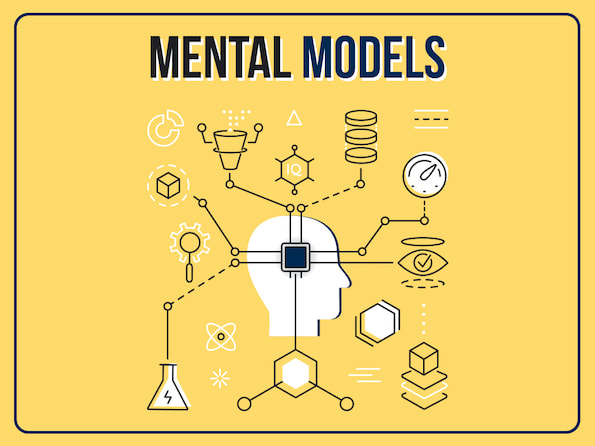
*Inversion Mental Model*
Inversion is a mental model that encourages problem-solving by considering the opposite or the inverse of a situation. When combined with a multi-disciplinary approach, Inversion can lead to remarkable insights and creative solutions.
Consider a college student majoring in mechanical engineering who is tasked with designing a more efficient and eco-friendly cooling system for residential buildings. By applying a multi-disciplinary approach, the student can draw on mental models from various fields:
- Thermodynamics (physics)
- Fluid dynamics (engineering)
- Ecological footprint (biology)
- Consumer behavior (psychology)
- Regulatory frameworks (law and policy)
By using Inversion, the student can reframe the problem and ask:
- What are the current inefficiencies in existing cooling systems?
- How can I minimize the energy required for cooling?
- What are the environmental impacts of the current system?
- How can I design a system that is user-friendly and cost-effective?
- What regulatory barriers and incentives might I encounter?
By incorporating the latticework of mental models into the problem-solving process, the student is more likely to develop a comprehensive and innovative solution.
## Conclusion
The latticework of mental models represents a powerful and versatile framework for enhancing rational thinking and decision-making. By studying, integrating, and applying mental models from various disciplines, we can develop a more nuanced understanding of complex problems and make informed, context-dependent decisions.
Some suggestions for further exploration of the latticework of mental models include:
- Reading Poor Charlie's Almanack and other works by Charlie Munger and Warren Buffett.
- Engaging with resources such as Farnam Street's Mental Model library (
Last updated: 2024-06-12
Related Books

Related Knowledges