# The Lollapalooza Effect: A Multifaceted Approach to Problem Solving and Decision Making
## Introduction
The Lollapalooza Effect is a concept popularized by Charlie Munger, the influential business partner of Warren Buffet at Berkshire Hathaway. The term is derived from the Lollapalooza music festival, which brings together a multitude of factors - musicians, audience, sound, and organization - to create a unique and powerful experience. Similarly, the Lollapalooza Effect in psychology and decision-making refers to the convergence of multiple forces or factors that interact to produce a much stronger impact than any single force alone.
[](https://static01.nyt.com/images/2023/11/30/multimedia/29munger-zqch-print5-SUB/29munger-zqch-articleLarge.jpg?quality=75&auto=webp&disable=upscale)
*Charlie Munger, the co-founder of Berkshire Hathaway*
Understanding the Lollapalooza Effect can enhance problem-solving and decision-making skills for college students by encouraging a comprehensive and interdisciplinary perspective. In the subsequent sections, we will explore its core concepts, real-life examples, and potential applications.
## Core Concepts and Relevance
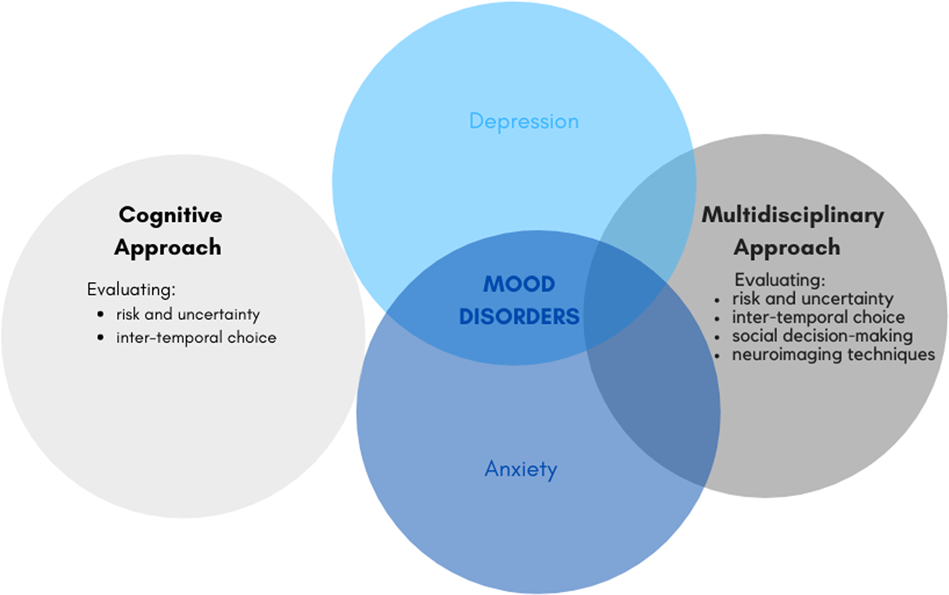
The Lollapalooza Effect lies at the core of Charlie Munger's multidisciplinary approach to learning and decision-making. It combines elements from various fields - psychology, economics, social sciences, and business - to create a more profound and nuanced understanding of complex issues. It encourages individuals to analyze situations from multiple angles while considering the interplay of different factors and feedback loops.
[](https://media.springernature.com/full/springer-static/image/art%3A10.1057%2Fs41599-021-01013-3/MediaObjects/41599_2021_1013_Fig1_HTML.png)
*Illustration of a multidisciplinary approach to decision making*
By acknowledging and understanding the Lollapalooza Effect's principles, college students can develop resilient critical thinking, hone their problem-solving skills, and anticipate potential consequences when making real-life decisions.
## Real-Life Examples
Let's delve into two significant examples illustrating how the Lollapalooza Effect impacts real-life scenarios.
### 1. Stock Market Bubbles
Financial market bubbles, such as the 2000 Dot-Com Bubble or the 2008 Housing Bubble, can be viewed as a manifestation of the Lollapalooza Effect. Various factors - in this case, cheap credit, aggressive investment strategies, speculative behavior, and deregulation - converged to create an unsustainable market environment. Inevitably, the combination of these factors resulted in exuberant optimism, irrational exuberance, and a steep correction when the market finally realized the unsustainable nature of the bubble.
[](https://www.investopedia.com/thmb/SzDheidju9m8xmcSAwtnWf4qfzk=/1500x0/filters:no_upscale%28%29:max_bytes%28150000%29:strip_icc%28%29/dotcom-bubble.asp-FINAL-97b80a4f3ae44b38bef25defa02127a5.png)
*Graph showing the 2000 Dot-Com Bubble*
In this scenario, various elements resembled the forces at work in the Lollapalooza Effect. For instance, excessive investor confidence fueled by historical market performance produced a feedback loop that encouraged even riskier behavior, eventually leading to the market's downfall.
Here, college students can learn from this example by understanding the potential risks of speculative investments and market bubbles while encouraging the development of foresight and cautious financial strategies.
### 2. The Obesity Epidemic
Another real-world example of the Lollapalooza Effect can be seen in the obesity epidemic plaguing developed nations. As a result of a multitude of factors - the widespread availability of cheap, unhealthy food; sedentary lifestyles; social stigmas; and aggressive food marketing - the obesity crisis has intensified at an alarming rate.
[](https://ars.els-cdn.com/content/image/3-s2.0-B9780128188392000107-f10-01-9780128188392.jpg)
*Factors contributing to the obesity epidemic*
In this case, the interplay of these different factors reinforced each other and created a self-perpetuating cycle of unhealthy behaviors leading to the rapid increase in obesity rates.
College students can extrapolate insights from this example in their own lives by being aware of advertising strategies, promoting healthier lifestyle choices, and combating the negative impact of peer pressure regarding body image and food choices.
## Practical Implications for College Students
Applying the Lollapalooza Effect in real life can enable college students to develop a robust and flexible thought process while crafting solutions to complex issues. Here, we outline some practical steps for harnessing the Lollapalooza Effect in various college-related situations.
- *Critical Thinking*: Develop a multidisciplinary approach to problem solving, drawing from various fields of knowledge and appreciating the nuances that emerge from the intersection of different ideas.
- *Real-World Awareness*: Stay informed about real-world issues, enabling the incorporation of current events and experiences into problem-solving and decision-making scenarios.
- *Mental Models*: Embrace mental models - simplified models of how the world works - as a tool for pattern recognition, faster information processing, and superior judgment.
- *Feedback Loops*: Recognize feedback loops in the decision-making process, understanding how small changes can compound over time and lead to desired or undesired outcomes.
- *Systems Thinking*: Develop a systems thinking perspective to identify and understand how problems and solutions interact with their environment to create unexpected difficulties or improvements.
## Conclusion
[](https://www.managementconcepts.com/Portals/0/Images/Course%20Graphics/4060.png)
*Critical thinking and problem solving in education*
By integrating the insights from the Lollapalooza Effect into their analysis and decision-making, college students are more likely to appreciate the importance of combining various disciplines and conceptual frameworks. As a result, students will be better equipped to preempt unintended consequences and enhance their problem-solving skills for real-life scenarios.
Additionally, this in-depth understanding of the Lollapalooza Effect can lay the groundwork for exploring other concepts and methodologies within decision-making and problem-solving domains. College students can expand their knowledge by researching topics such as heuristics and biases, mental models, and game theory for a more comprehensive understanding.
Ultimately, by incorporating the Lollapalooza Effect into their problem-solving and decision-making processes, students are better prepared for the challenges they will face in their personal and professional lives.
Sources:
- Poor Charlie's Almanack by Charles T. Munger (pages 55-58)
- [The Psychology of Human Misjudgment](http://www.gurufocus.com/news/153022/the-psychology-of-human-misjudgment-by-charles-t-munger)
- [The Lollapalooza Effect: Why We Should Study It](https://fs.blog/2015/07/the-lollapalooza-effect/)
- [The Lollapalooza Effect](https://www.investopedia.com/terms/l/lollapalooza_effect.asp)
- [Lollapalooza Effect and Its Impact on Businesses](https://thedecisionlab.com/biases/lollapalooza-effect)
- [Charlie Munger and the Lollapalooza Effect](https://www.fool.com.au/2015/09/11/charlie-munger-and-the-lollapalooza-effect/)
Last updated: 2024-05-31
Related Books

Related Knowledges