# Extensive Reading: A Key to Wisdom - Learning from Poor Charlie's Almanack
## Introduction
In *Poor Charlie's Almanack*, Charles T. Munger, the business partner of Warren Buffett and the Vice-Chairman of Berkshire Hathaway, shares his insights on a wide range of subjects. Munger is well-known for his wisdom and intelligence, which he often attributes to his habit of extensive reading.
[](https://miro.medium.com/v2/resize:fit:1400/1*OkB84Rylh74YWxE_rxdgaQ.png)
*Charles T. Munger reading*
The concept of 'read extensively' is about reading widely and deeply across various disciplines, acquiring knowledge from multiple sources. Munger's belief in the power of extensive reading is evident throughout the Almanack, where he frequently refers to and quotes from various authors, philosophers, and thinkers.
This habit of voracious reading is not only crucial to Munger's success as a businessman but also a vital element of his approach to wisdom and decision-making. In this educational content, we will explore the concept of 'read extensively' from Poor Charlie's Almanack and its practical implications in college students' lives.
## Practical Implications of 'Read Extensively'
### Developing a Multidisciplinary Approach
One of the key benefits of extensive reading is the development of a multidisciplinary approach. By reading widely and deeply across various disciplines, such as history, psychology, mathematics, literature, and science, one can gain a more profound understanding of the world.
[](https://today.lafayette.edu/wp-content/uploads/sites/433/2021/12/Textbooks-stack.gif)
*Multidisciplinary reading*
For example, reading about psychology can help college students understand human behavior and decision-making. At the same time, reading about mathematics can improve one's analytical and problem-solving skills. By synthesizing knowledge from various fields, students can develop a more comprehensive worldview and a better ability to tackle complex problems.
### Improving Communication Skills
Extensive reading can also help college students improve their communication skills in several ways. First, reading widely and deeply can help students develop a more extensive vocabulary and a better grasp of language. Second, reading can expose students to various writing styles and techniques, giving them inspiration and ideas for their writing. Finally, reading can help students become more effective speakers by improving their ability to articulate and express themselves clearly.
[](https://m.media-amazon.com/images/I/51vVIVazmlS.jpg)
*Communication skills development through reading*
### Fostering Curiosity and Lifelong Learning
Another practical implication of 'read extensively' is the fostering of curiosity and a lifelong learning mindset. Reading can be a source of entertainment, but it can also be a powerful tool for learning and growth. By reading widely and deeply, college students can develop a passion for learning and a desire to continue acquiring knowledge and skills throughout their lives.
[](https://m.media-amazon.com/images/I/81v0BMwEtQL._AC_UF1000,1000_QL80_.jpg)
*Curiosity and lifelong learning*
## Examples and Applications
### Example 1: Synthesizing Knowledge from Multiple Disciplines
Consider a college student studying environmental science who is interested in understanding the reasons behind the loss of biodiversity. By reading widely across various disciplines, the student can gain a more comprehensive understanding of the issue. Here's how:
* Reading about biology can help the student understand the importance of biodiversity and the mechanisms behind species extinction.
* Reading about economics can help the student understand the economic and financial drivers of habitat destruction and resource exploitation.
* Reading about sociology and anthropology can help the student understand the cultural and social factors that contribute to biodiversity loss.
* Reading about philosophy can help the student reflect on the ethical implications of biodiversity loss and consider potential solutions.
By synthesizing knowledge from multiple disciplines, the student can develop a more nuanced and comprehensive understanding of the issue and propose more effective and sustainable solutions.
[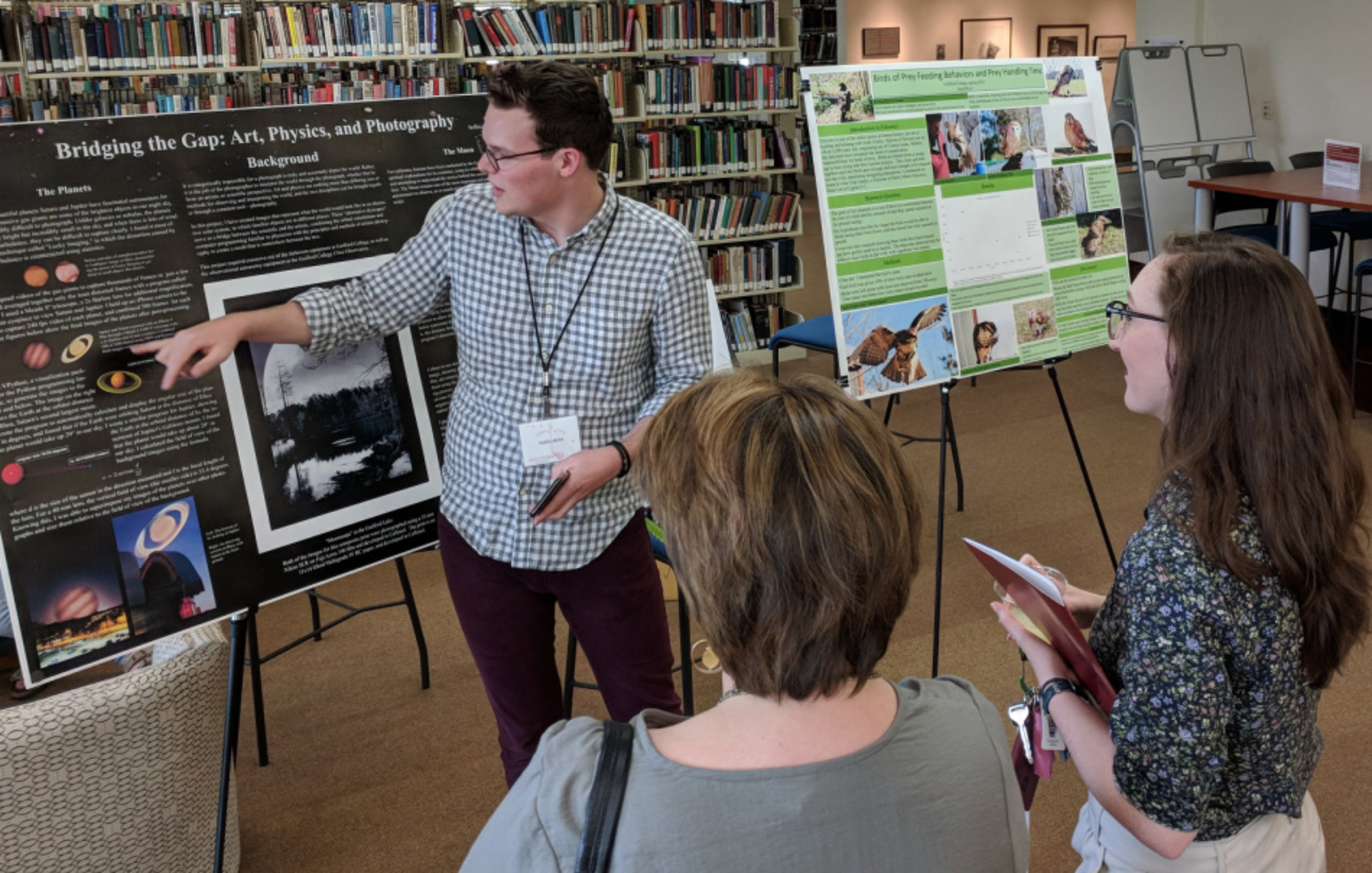](https://www.guilford.edu/sites/default/files/styles/full_image_large_scale/public/2023-03/img_20180418_152128_1.jpg?itok=QCJQ4AZO)
*Synthesizing knowledge from multiple disciplines*
### Example 2: Improving Communication Skills
Consider a college student studying political science who is interested in improving their public speaking skills. By reading widely and deeply, the student can gain insights into effective communication techniques and develop a more persuasive and engaging speaking style. Here's how:
* Reading about rhetoric can help the student learn the principles of persuasion, argumentation, and style.
* Reading about literature can help the student learn the art of storytelling and the power of narrative.
* Reading about psychology can help the student understand the dynamics of human communication and the factors that influence people's perceptions and attitudes.
* Reading about history can help the student learn about the great orators and speechwriters of the past and gain inspiration and ideas for their speeches.
By reading widely and deeply, the student can develop a more effective and engaging speaking style and communicate their ideas more persuasively and compellingly.
[](https://previews.123rf.com/images/imagehitevo/imagehitevo1004/imagehitevo100400307/6990839-businessman-reading-speech-from-document.jpg)
*Improving public speaking through reading*
## Conclusion
In conclusion, reading extensively is a vital habit for wisdom, learning, and growth. By reading widely and deeply across various disciplines, college students can develop a multidisciplinary approach, improve their communication skills, and foster a lifelong learning mindset.
Moreover, by synthesizing knowledge from multiple sources and applying it to real-world problems, students can gain a more comprehensive understanding of the world and propose more effective and sustainable solutions.
To explore the topic of 'read extensively' further, college students can take the following actions:
* Develop a reading plan: Create a list of books and articles to read and set a goal to read for a certain amount of time each day or week.
* Join a book club or discussion group: Joining a group of like-minded individuals who share a passion for reading and learning can be a valuable source of inspiration and motivation.
* Reflect on what you read: Reflecting on what you read and applying it to your life and work can help deepen your understanding and retain the knowledge.
By adopting the habit of extensive reading, college students can become more wise, knowledgeable, and effective communicators and leaders, capable of tackling complex problems and creating a better world for themselves and others.
Last updated: 2024-05-31
Related Books

Related Knowledges