# Learn from the Best: Core Concepts, Examples, and Applications from Poor Charlie's Almanack
## Introduction
In the world of investing and business, Charles T. Munger is a name that resonates with wisdom, prudence, and extraordinary success. Together with his investing partner, Warren Buffett, Munger has built a financial empire through Berkshire Hathaway, which has consistently outperformed the market for decades. Poor Charlie's Almanack, a compilation of Munger's speeches, articles, and musings, offers us a rare opportunity to gain insights from one of the world's greatest minds. In this article, we will delve deep into one of Munger's most powerful messages: learn from the best. We will explore its core concepts, real-world examples, applications, and why it matters for college students and lifelong learners alike.
[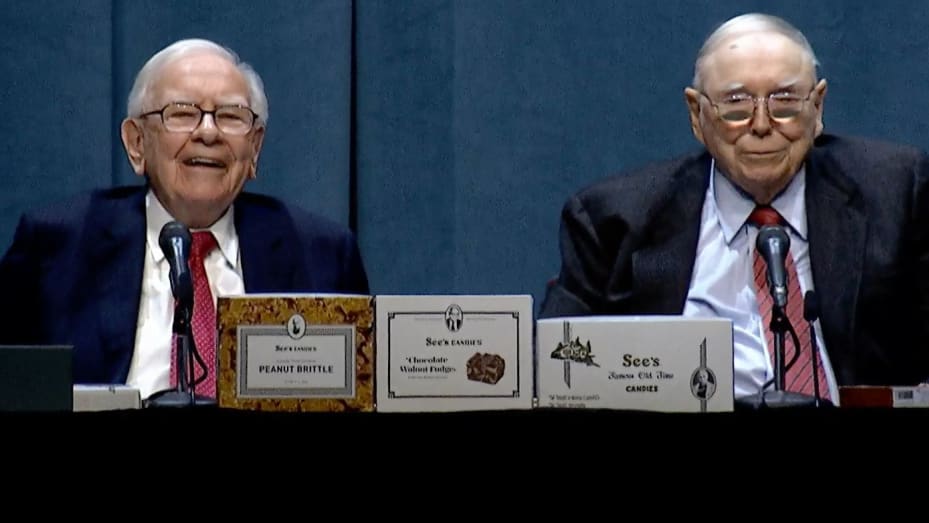](https://image.cnbcfm.com/api/v1/image/107054238-1651344035638-warren2.jpg?v=1683401525&w=929&h=523&vtcrop=y)
*Charles T. Munger and Warren Buffett, the legendary investors behind Berkshire Hathaway.*
## Core Concepts
At its heart, learning from the best recognizes that no one individual can possess all the knowledge and wisdom required to excel in any given field. By standing on the shoulders of giants, we can augment our understanding and enhance our ability to make sound decisions. Munger strongly advocates that one should learn from the best through three primary channels: studying the lives of exceptional individuals, mastering the works of great thinkers, and identifying timeless principles across various disciplines.
### 1. Studying the lives of exceptional individuals
By examining the lives of extraordinary individuals, we can glean invaluable insights into their thoughts, habits, and values that contributed to their success. Their stories often contain universally applicable lessons that can help shape our own character and decision-making processes.
### 2. Mastering the works of great thinkers
Delving into the works and ideas of great thinkers, philosophers, and scholars allows us to benefit from their wisdom and insights. These individuals have often devoted their lives to understanding complex phenomena and have left behind a wealth of knowledge that we can leverage.
### 3. Identifying timeless principles across various disciplines
Munger emphasizes the significance of recognizing and applying timeless principles that transcend various disciplines. By identifying the commonalities and interconnectedness among different fields of study, we can develop a more robust, multidisciplinary perspective that will serve us better in solving real-world problems.
[](https://d3i71xaburhd42.cloudfront.net/39ff8395549ffc85ba6ad886b0f0bbb83469e1a2/2-Figure1-1.png)
*The value of a multidisciplinary approach in education and problem-solving.*
## Real-World Examples
Let's explore a few real-world examples that demonstrate the power and relevance of learning from the best.
### Example 1: Benjamin Franklin and the Art of Persuasion
Benjamin Franklin, one of the Founding Fathers of the United States, was a principled, astute, and ambitious individual. Throughout his life, he documented his experiences, thoughts, and learnings in his autobiography, offering future generations a window into his extraordinary mind. By studying his life and works, we can distill essential lessons on developing good character, building meaningful relationships, and honing the art of persuasion.
Franklin's keen insights on persuasion can be encapsulated in his famous anecdote about convincing the City of Philadelphia to adopt safety measures for fire prevention. In this instance, Franklin seized the opportunity to demonstrate the effectiveness of the proposed measures by organizing a public demonstration. After successfully extinguishing a simulated fire in a narrow alley, Franklin asked the crowd if they believed the measures could save lives and property. Upon receiving an unequivocal "yes" from the onlookers, he astutely posed the following question: "And, gentlemen, if you had the power to prevent such fires, were not the saving of the houses and the lives of our fellow citizens an object worthy of the trouble?"
Through this ingenious approach, Franklin effectively illustrated the benefits of the safety measures while tapping into the crowd's sense of community and shared responsibility. This episode not only exemplifies the power of persuasion but also illuminates Franklin's remarkable ability to empathize with others and appeal to their values.
[](https://m.media-amazon.com/images/I/61sSjkTTCPL._AC_UF1000,1000_QL80_.jpg)
*Benjamin Franklin's persuasion through public demonstration for fire safety.*
### Example 2: Robert Cialdini and the Psychology of Influence
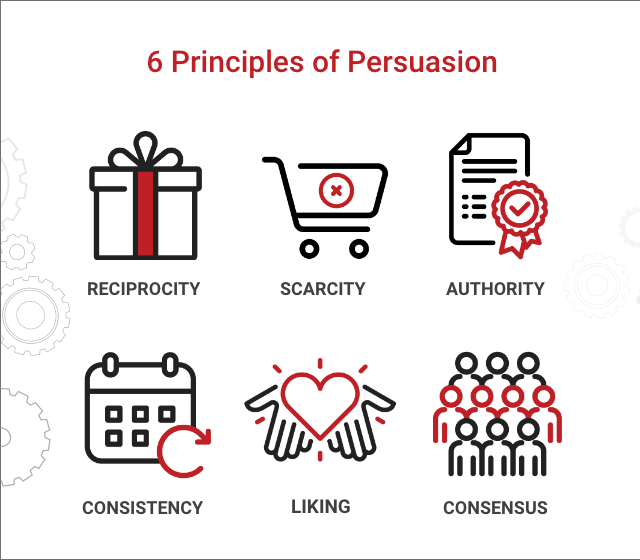
Robert Cialdini, a renowned psychologist and marketing expert, has dedicated his career to studying the intricacies of human behavior and decision-making. His groundbreaking work, Influence: The Psychology of Persuasion, offers an insightful exploration of the forces that shape our judgments and actions. By examining six universal principles of influence—Reciprocity, Commitment and Consistency, Social Proof, Authority, Liking, and Scarcity—Cialdini presents a compelling framework that can help us better understand and navigate our social environment.
For instance, the Scarcity principle posits that people are more likely to place a higher value on goods and services when they are perceived as rare or limited in supply. Cialdini cites numerous examples demonstrating the powerful allure of scarcity, from the marketing strategies of major corporations to the tactics employed by street vendors hawking their wares.
In one experiment, Cialdini and his collaborators placed a sign next to a display of cookies, either stating "Limited Quantity" or offering no mention of scarcity. Remarkably, the cookies adorned with the "Limited Quantity" sign were consistently rated as tastier than those without the notice. This compelling demonstration illustrates the profound impact of perceived scarcity on our judgments and preferences.
[](https://www.influenceatwork.com/wp-content/uploads/2021/01/6-Principles-of-Persuasion.png)
*Illustration of Robert Cialdini's scarcity principle in action.*
## Practical Applications
Now that we've explored the core concepts of learning from the best and delved into a few real-world examples, let's examine several practical applications of this knowledge.
### 1. Cultivating a Learning Mindset
Adopting a learning mindset involves embracing the growth and development of one's knowledge and skills throughout their lifetime. By actively seeking out opportunities for continuous learning and self-improvement, individuals can enhance their problem-solving abilities and resilience amidst challenges.
### 2. Building a Personal Library of Mentors
In the absence of direct access to renowned individuals or experts, college students can curate a personal library of mentors by amassing a collection of books penned by great thinkers and exceptional individuals. This collection can serve as a valuable resource, providing access to a wealth of wisdom and insights that can help guide decisions and shape perspectives.
### 3. Adopting a Multidisciplinary Approach
Approaching complex problems from a multidisciplinary perspective enables individuals to draw upon the collective wisdom and insights from various fields of study. By identifying the commonalities and interconnectedness among different disciplines, we can cultivate a more nuanced and holistic understanding of the world, which translates into better decision-making and problem-solving abilities.
## Conclusion
Learning from the best, as espoused by Charles T. Munger, offers a powerful framework that can help college students and lifelong learners augment their understanding and enhance their decision-making capabilities. By studying the lives of exceptional individuals, mastering the works of great thinkers, and identifying timeless principles across various disciplines, we can develop a more robust, multidisciplinary perspective that will serve us well in navigating the complexities of our world.
In the spirit of Munger's wisdom, we encourage our readers to delve deeper into the concepts and examples presented here, explore additional resources and case studies, and engage in continuous learning and self-improvement. Through dedicated effort and a commitment to lifelong learning, we can aspire to achieve our full potential and become the best version of ourselves.
### Suggestions for Further Exploration
* Delve into Poor Charlie's Almanack to explore additional insights and wisdom from Charles T. Munger.
* Study the lives of other extraordinary individuals, such as Albert Einstein, Marie Curie, and Thomas Edison, to gain further inspiration and understanding.
* Read classic works of great thinkers and philosophers, such as Aristotle, Immanuel Kant, and John Stuart Mill, to expand your knowledge and horizons.
* Engage in continuous learning and self-improvement, both within and beyond your academic pursuits.
* Participate in group discussions, seminars, and workshops to share your insights and learn from the experiences of others.
### Note
This article was inspired by the teachings of Charles T. Munger and the book Poor Charlie's Almanack. The insights and ideas presented here are based on our interpretation and understanding of Munger's philosophy. We encourage readers to explore and study Munger's work directly for a more comprehensive and accurate understanding of his views.
Last updated: 2024-05-31
Related Books

Related Knowledges