Regulation and Supervision: A Pillar of Financial Stability
==========================================================
[](https://www.jfichtner.net/wp-content/uploads/big_picture_global_finance_final.png)
*Global financial networks facilitating economic growth*
Financial systems worldwide are intricate networks that facilitate the flow of funds, thus enabling economic growth and development. However, these systems are susceptible to instability, as manifested by the 2008 global financial crisis. Among the critical mechanisms that can foster financial stability are rigorous regulation and effective supervision.
This article delves into the regulation and supervision of financial systems, drawing on principles and examples from the books *Firefighting* by Ben S. Bernanke, Timothy F. Geithner, and Henry M. Paulson, Jr. We will explore the role of regulation and supervision, the importance of robust regulatory frameworks, and the challenges faced in ensuring financial stability.
Regulation and Supervision: The Backbone of Financial Stability
------------------------------------------------------------------
Financial regulation refers to the establishment of rules, laws, and guidelines that govern financial institutions' operations and activities. These institutions encompass commercial banks, investment banks, insurance companies, and other entities involved in the financial sector.
[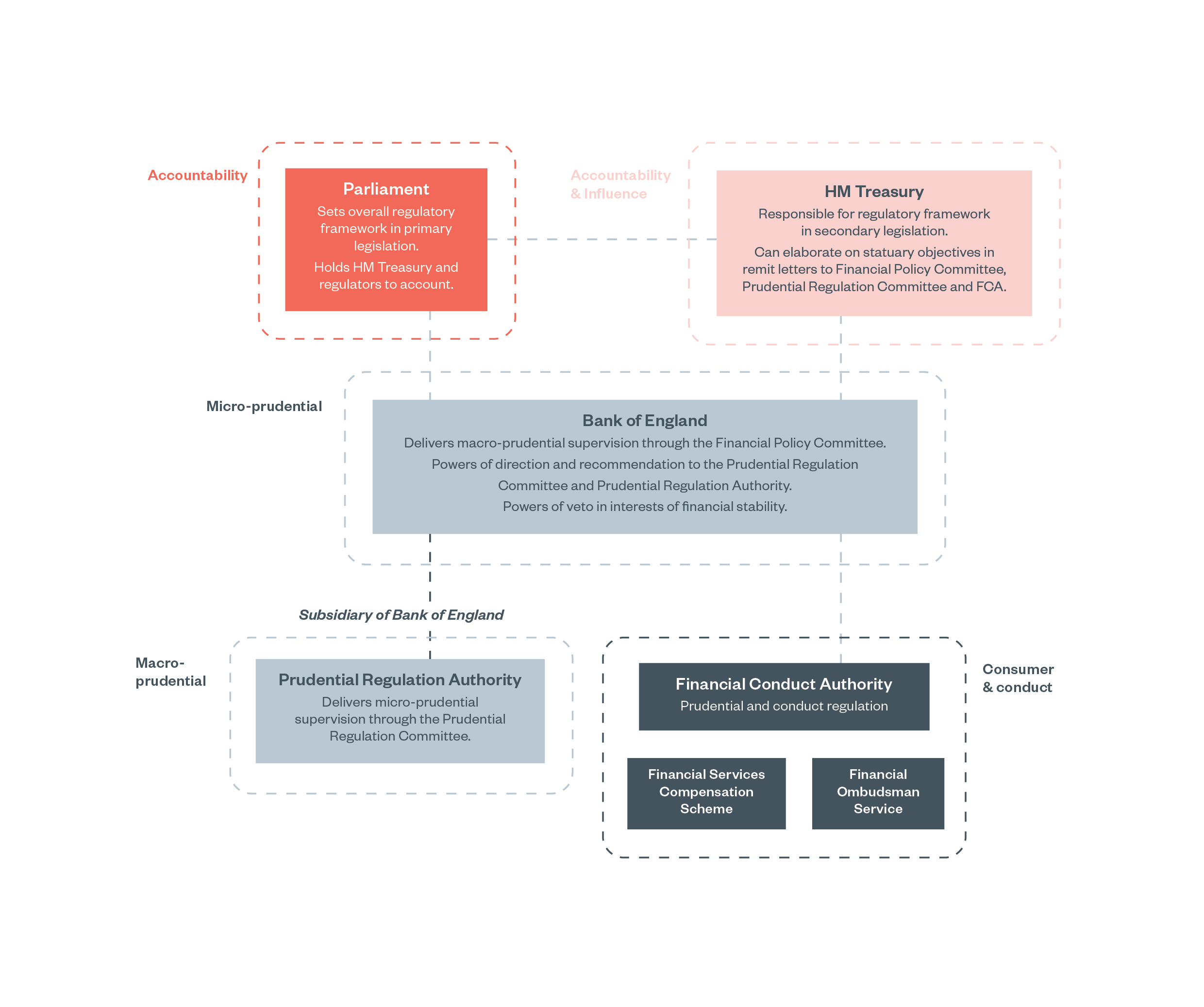](https://www.adalovelaceinstitute.org/wp-content/uploads/2024/10/Finance-Figure-3-Report-2.png)
*The regulatory framework in the financial sector*
Supervision, on the other hand, is the ongoing process of monitoring and evaluating financial institutions' adherence to regulatory requirements. Supervisors, typically government agencies, scrutinize institutions' risk management practices, financial health, and compliance with statutory obligations.
[](https://www.fiumauritius.org/fiu/wp-content/uploads/2022/07/Supervisory-Proce.png)
*Supervision process in financial institutions*
Regulation and supervision serve various purposes:
1. **Consumer Protection:** Regulations ensure that financial institutions treat customers fairly, provide accurate and timely information, and offer suitable products. Supervision ensures that these standards are met and upheld.
2. **Market Integrity:** Regulations aim to maintain market integrity and prevent fraudulent activities. Supervision helps detect and address instances of market manipulation, insider trading, and other unethical practices.
3. **Financial Stability:** Regulations seek to minimize the likelihood of financial crises by promoting sound risk management practices. Supervision ensures adherence to prudential requirements and identifies potential vulnerabilities in the financial system.
Real-World Implications: Case Studies
------------------------------------
### **Case Study 1: The 2008 Financial Crisis**
The 2008 global financial crisis is a stark reminder of the importance of robust regulation and supervision. In the years leading up to the crisis, financial institutions were allowed to engage in risky lending practices and build excessive leverage. These actions weakened the financial system's resilience and contributed to the eventual collapse of several prominent institutions, such as Lehman Brothers.
[](https://cdn.britannica.com/70/254770-050-707D3E1F/Two-employees-of-Christies-auction-house-maneuver-the-collapsed-investment-bank-Lehman-Brothers.jpg)
*2008 Financial Crisis impact*
Inadequate supervision and regulation enabled this environment, leading to insufficient capital and liquidity buffers, inadequate risk management, and poor corporate governance. As a result, the crisis triggered widespread financial turmoil, economic downturns, and significant job losses globally.
Effective regulation and supervision could have mitigated the severity of the crisis by fostering a more robust and resilient financial system. For instance, tighter regulations on mortgage lending and higher capital and liquidity requirements for financial institutions might have helped maintain financial stability.
### **Case Study 2: The Eurozone Sovereign Debt Crisis**
The Eurozone sovereign debt crisis provides another example of the need for stringent regulation and supervision. In this case, lax fiscal policies and weak supervision of financial institutions in some European countries resulted in excessive borrowing, mounting debt, and eventual defaults.
[](https://www.investopedia.com/thmb/3l-7pN-jSKxS7XHwUalNSTeC8ww=/1500x0/filters:no_upscale%28%29:max_bytes%28150000%29:strip_icc%28%29/european-sovereign-debt-crisis.asp-final-123d9b8ce1cb43c3bb35f8a2cc8ee321.png)
*Eurozone Sovereign Debt Crisis overview*
Supervisory authorities failed to identify and address the risks associated with rising debt levels, leading to severe financial stress and economic contraction across the Eurozone. Robust regulation and supervision might have averted this outcome by promoting responsible lending and borrowing practices, stress-testing financial institutions, and ensuring greater transparency in financial markets.
Key Insights and Further Exploration
------------------------------------
Regulation and supervision are vital components of financial stability, ensuring consumer protection, market integrity, and resilience against financial crises. The 2008 global financial crisis and the Eurozone sovereign debt crisis underscore the consequences of inadequate regulation and supervision.
For students interested in further exploration of this topic, the following areas are recommended:
1. **Comparative Analysis of Regulatory Frameworks:** Investigate the regulatory frameworks of different countries and examine their strengths and weaknesses. Compare and contrast the varying approaches to financial regulation and supervision, focusing on the institutions responsible for oversight and their mandates.
2. **Technological Disruption in Financial Services:** Investigate how technological innovation, such as blockchain, artificial intelligence, and fintech, impacts financial regulation and supervision. Discuss the opportunities and challenges associated with these advancements and their implications for regulatory frameworks.
3. **Macroprudential Policy:** Explore macroprudential policy as a tool for financial stability. Delve into the mechanics of macroprudential policy, its objectives, and its effectiveness in promoting financial resilience.
In conclusion, regulation and supervision are essential elements of financial stability and economic well-being. By fostering responsible practices, maintaining market integrity, and promoting resilience, robust regulatory frameworks can help ensure the stability and sustainability of financial systems. Through deeper understanding and engagement with these concepts, students can contribute to the development of sound financial policies and practices.
Last updated: 2025-04-26
Related Books

Related Knowledges