Too Big To Fail: An In-depth Look at a Financial System Dilemma
=================================================================
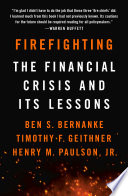
Financial institutions are integral to a functioning economy. However, some financial institutions are so large and interconnected that their failure could trigger a cascade of failures throughout the financial system. This concept, known as 'Too Big To Fail' (TBTF), is a double-edged sword: while these institutions can serve as pillars of financial stability, they can also pose substantial risks if they falter. This article delves into this complex issue, drawing on insights from the books "Firefighting" by Ben S. Bernanke, Timothy F. Geithner, and Henry M. Paulson, Jr.
[](https://lookaside.instagram.com/seo/google_widget/crawler/?media_id=3633857635733528557)
*Illustration of a cascading financial system failure*
Understanding 'Too Big To Fail'
--------------------------------
At its core, TBTF refers to the idea that certain financial institutions are so vital to the financial system that their collapse could cause systemic risks, potentially leading to a full-blown financial crisis. This notion emerged during the Great Depression but gained prominence in the 1984 Continental Illinois failure and resurfaced dramatically during the 2008 financial crisis.
[](https://www.investopedia.com/thmb/JthOm5S57POQRUsXBr1cttVgZDM=/1500x0/filters:no_upscale%28%29:max_bytes%28150000%29:strip_icc%28%29/too-big-to-fail.asp-Final-3058aadb7f4643a1a3b0fdcc27ef8d58.jpg)
*Historical timeline of Too Big To Fail*
Relevance of TBTF
-----------------
TBTF is a crucial concept for understanding the dynamics of financial systems and their potential impact on the broader economy. The 2008 financial crisis laid bare the dangers of TBTF, with governments and central banks stepping in to bail out failing institutions to prevent collapse and maintain financial stability. This raises questions on the moral hazard, the potential increase in risk-taking behavior due to expectations of government intervention, and the unintended consequences of these actions.
### Example 1: Bear Stearns and JP Morgan
Bear Stearns, a prominent investment bank, found itself on the brink of collapse in March 2008 due to bad mortgage-related assets. The Federal Reserve and the U.S. Treasury intervened, facilitating Bear Stearns' acquisition by JPMorgan Chase. Although Bear Stearns was not formally deemed TBTF at the time, its failure could have set off a chain reaction in the financial system.
[](https://www.ft.com/__origami/service/image/v2/images/raw/http%3A%2F%2Fcom.ft.imagepublish.upp-prod-eu.s3.amazonaws.com%2F3839b6dc-27b2-11e8-b27e-cc62a39d57a0?source=next-article&fit=scale-down&quality=highest&width=700&dpr=1)
*Bear Stearns and JPMorgan Chase merger illustration*
### Example 2: Lehman Brothers
[](https://cdn.britannica.com/70/254770-050-707D3E1F/Two-employees-of-Christies-auction-house-maneuver-the-collapsed-investment-bank-Lehman-Brothers.jpg)
*Lehman Brothers collapse visualization*
Lehman Brothers, another major investment bank, was not as fortunate as Bear Stearns. Despite its TBTF status, Lehman was allowed to fail in September 2008 due to political and legal hurdles. Its collapse reverberated throughout the financial system, intensifying the crisis and necessitating far more substantial government intervention.
Key Insights and Further Exploration
------------------------------------
The TBTF issue reveals the inherent challenges and dilemmas that governments and central banks face in managing financial crises. Addressing TBTF entails striking a delicate balance between maintaining financial stability and discouraging moral hazard.
Some potential avenues for further exploration include:
1. **Regulatory responses:** Investigating the role of post-crisis regulation in addressing TBTF, such as stress tests, living wills, and capital requirements.
2. **Alternatives to bailouts:** Researching potential alternatives to taxpayer-funded bailouts, such as bail-ins and resolution mechanisms.
3. **Monetary policy implications:** Assessing the relationship between TBTF and monetary policy, including the impact of low interest rates and quantitative easing on moral hazard.
By critically examining TBTF, students can gain a deeper understanding of the complexities and trade-offs inherent in financial system management and policymaking.
Last updated: 2025-06-01
Related Books
Related Knowledges