# Two Minutes Hate: Understanding the Psychology of Mass Manipulation in George Orwell's 1984
## Introduction
In George Orwell's dystopian novel 1984, the "Two Minutes Hate" is a daily ritual orchestrated by the ruling party to manipulate public opinion and foster hatred towards their enemies. Through this mass mobilization of emotion, the Party reinforces its ideological control over Oceanian society. The "Two Minutes Hate" offers valuable insights into the power dynamics between rulers and the ruled, the psychology of mass manipulation, and the role of propaganda in shaping collective identity.

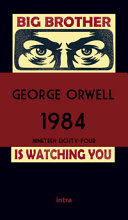
*Illustration of the Two Minutes Hate in George Orwell's 1984*
## Core Concepts and Relevance
The "Two Minutes Hate" revolves around the daily broadcast of a film featuring the Party's arch-nemesis, Emmanuel Goldstein, and the enemy nation of Eastasia. The film is designed to provoke an intense emotional response from the audience, who are encouraged to vent their anger and frustration through verbal and physical expressions. This mass-coordinated outburst serves several purposes:
1. **Scapegoating:** By focusing public ire on a single individual or group, the Party diverts attention from its own failures and shortcomings.
2. **Emotional manipulation:** The "Two Minutes Hate" taps into deep-seated fears and prejudices, reinforcing existing biases and creating a collective identity based on shared animosity.
3. **Ideological reinforcement:** The spectacle reinforces the Party's narrative of perpetual conflict between good (Oceania) and evil (Goldstein and Eastasia), ensuring that citizens remain loyal to the Party and its ideology.
These core concepts are highly relevant today, as political leaders and media outlets often employ similar tactics to shape public opinion and consolidate power. By understanding the "Two Minutes Hate," we can better recognize and resist such manipulations in our contemporary society.

*Relevance of Two Minutes Hate in contemporary society*
## Practical Implications and Examples
### Example 1: Political Rallies and Social Media
Political rallies and social media platforms are modern-day equivalents of the "Two Minutes Hate." Politicians often exploit public grievances and prejudices to mobilize support, stoking fear and anger towards opponents or marginalized groups. Social media platforms, in particular, have been criticized for facilitating the spread of misinformation, hate speech, and online harassment, which can have real-world consequences.
For instance, the 2016 U.S. Presidential Election saw the proliferation of "fake news" and targeted online campaigns designed to polarize voters and undermine democratic institutions. Similarly, the rise of social media-fueled nationalist movements around the world has been linked to increased incidents of hate crimes and violence against minorities.

*Examples of political rallies and social media influence*
### Example 2: State-Sponsored Propaganda and Mass Surveillance
Totalitarian regimes like North Korea and China continue to employ propaganda and mass surveillance techniques reminiscent of the "Two Minutes Hate." In North Korea, for example, the state-controlled media relentlessly promotes the cult of personality surrounding the Kim dynasty, while demonizing external enemies like the United States.
Meanwhile, China's "social credit" system employs advanced algorithms and mass surveillance to monitor and control citizens' behavior, punishing those who deviate from the Communist Party's expectations. These examples illustrate how the "Two Minutes Hate" transcends the pages of 1984 and continues to shape real-world political landscapes.

*Examples of state-sponsored propaganda*
## Conclusion
The "Two Minutes Hate" offers a powerful lens through which to analyze the dynamics of mass manipulation, emotional control, and ideological reinforcement. By understanding the mechanisms that underpin this phenomenon, we can better recognize and resist similar tactics in our contemporary society.
To further explore the topic, consider the following avenues:
- Investigate historical instances of mass manipulation, such as the Nazi propaganda machine or the Cultural Revolution in China.
- Examine the role of technology in shaping public opinion and political discourse, including the impact of social media algorithms, filter bubbles, and echo chambers.
- Delve into the psychological underpinnings of groupthink, conformity, and obedience, and their implications for individual autonomy and democratic values.
By critically engaging with these questions, we can cultivate a more nuanced understanding of the "Two Minutes Hate" and its enduring relevance in our increasingly interconnected world.
Last updated: 2024-03-20
Related Books
Related Knowledges