## Ration Coupons in 1984: Understanding a Tool of Control and Surveillance
In George Orwell's dystopian novel 1984, ration coupons serve as a powerful tool to control and monitor the citizens of Airstrip One (formerly known as Great Britain). Rationing is a system in which the government regulates the distribution of goods and services to the population. By introducing ration coupons, the totalitarian regime of the Party can manage not only the consumption of goods but also the behavior and thoughts of its citizens. In this piece, we will explore the concept of ration coupons in 1984, illustrating its practical implications and engaging college students through diverse examples and applications. We will then conclude by summarizing the key insights and suggesting avenues for further exploration of the topic.
### Introduction to Ration Coupons
Ration coupons, in the context of 1984, are documents that individuals must present to acquire goods and services in a highly controlled economy. The Party uses rationing to manage the distribution of essential goods, while exerting influence over the populace. By limiting the availability of rationed items, the Party forces the citizens of Airstrip One into dependence and, in many cases, poverty.
The ration couponsystem reflects the Party's efforts to control every aspect of its subjects' lives. Each ration book serves not only as a means of acquiring goods but can also be seen as a symbol of constant surveillance. Analyzing this system allows us to understand how the totalitarian regime maintains control over the daily lives of its citizens.
#### Implementation of Ration Coupons in 1984
The implementation of ration coupons in 1984 functions on three levels:
1. **Goods Control:** The Party tightly manages the allocation of goods through rationing. By limiting the supply of goods, it ensures that citizens cannot stockpile resources or procure items that are deemed unnecessary. This approach also helps maintain an appearance of equality and fairness, as every citizen receives the same allotment.
2. **Behavior Control:** The ration system forces people to modify their behavior, ultimately aligning with the Party's desire to maintain uniformity. By placing limitations on the items citizens can acquire, the Party effectively discourages personal interests and hobbies outside of Party-sanctioned activities.
3. **Thought Control:** The ration system also extends to the control of information and beliefs. Citizens receiving limited resources will often direct their attention to meeting basic needs, rather than critically analyzing the government or engaging in independent thought. This outcome, in turn, further solidifies the Party's grip on power and control.
#### Real-World Examples of Rationing Systems
Rationing systems, while not always associated with totalitarian regimes, have existed in various historical contexts. Examining these real-world examples helps provide a more comprehensive understanding of the role that ration coupons play in novels like 1984.
*World War II-Era Rationing:* In the United States, United Kingdom, Canada, and many other countries, rationing systems were established during World War II as a response to the scarcity of goods caused by the war effort. These systems typically limited access to food items, clothing, transportation, and other essentials to ensure an equitable distribution of supplies among the population. While not inherently authoritarian, rationing can be used as a tool for control when wielded by a totalitarian regime.
[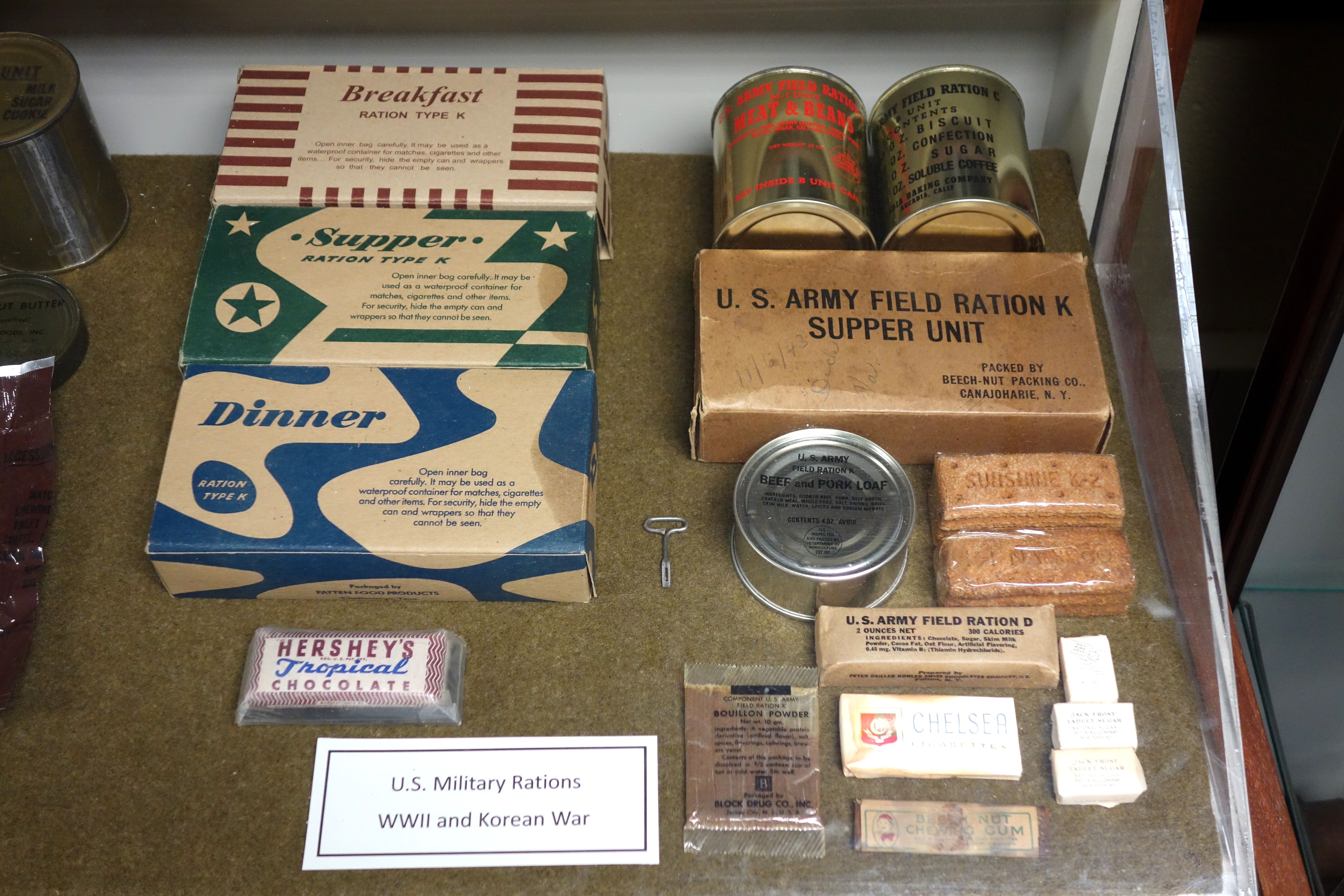](https://upload.wikimedia.org/wikipedia/commons/a/a7/Military_Rations%2C_World_War_II_and_Korean_War_-_Fort_Devens_Museum_-_DSC07076.JPG)
*A typical World War II-era ration book*
*Cuba's Ration System:* Cuba's rationing system, known as the Libreta de Abastecimiento (Supplies Booklet), has been in place since the early 1960s. This system was introduced as a tool to manage resource distribution in an economy marked by scarcity, trade restrictions, and inefficiencies. The libreta dictates the amount of food, hygiene products, and other goods each citizen can acquire each month. While it has evolved over time, the system remains a crucial element of Cuba's economic infrastructure and a tool used by the government to manage its population's basic needs.
#### Applications and Implications
Applying the concept of ration coupons to real-world scenarios and historical precedents helps illuminate its implications and significance in 1984. Here, we examine an application of ration coupons in a fictional totalitarian society and explore the potential implications of such a system.
**Application I: The Case of Consumerium**
In this imagined totalitarian state, the government regulates all consumer goods through the Consumerium, a single, Party-controlled marketplace. Through the implementation of ration coupons, the regime maintains absolute control over the distribution of goods and services.
The Consumerium features a vast hall, lined with stalls displaying a uniform assortment of utility items. Clothing, electronics, and food are sorted into standardized categories, ensuring that every commodity is essential and indistinguishable from another. Customers receive a monthly allotment of ration coupons based on their allocated points, with point values derived from their societal role, health, and adherence to Party-sanctioned activities.
[](https://lookaside.fbsbx.com/lookaside/crawler/media/?media_id=1331217059008847)
*Modern depiction of a fictional totalitarian marketplace*
The repercussions of such a rationing system are far-reaching and serve to solidify the Party's control:
* **Fear of Scarcity:** The looming fear of scarcity pushes citizens towards compliance, particularly when faced with the potential loss of ration coupons as a consequence of dissent.
* **Standardization of Goods:** The monotony of standardized goods not only discourages consumerism but also erases individuality, leading to a homogenized society.
* **Maintenance of Power:** The rationing system effectively maintains the Party's power and control by redirecting citizens' concerns towards fulfilling basic needs.
**Application II: Resource Allocation in a Catastrophic Scenario**
Imagine a scenario where a global catastrophe, such as a pandemic or a climate disaster, disrupts the world's supply chains, causing scarcity and economic instability. Under these conditions, a rationing system could be temporarily implemented to fairly distribute essential commodities and maintain order.
* **Ensuring Access:** Ration coupons would help maintain equitable access to vital resources, without overburdening particular regions or communities.
* **Potential for Abuse:** In the wrong hands, a ration system could be used as a tool for control, disproportionately disadvantaging certain groups and further exacerbating existing social disparities.
[](https://upload.wikimedia.org/wikipedia/commons/thumb/e/e0/Change_in_Average_Temperature_With_Fahrenheit.svg/330px-Change_in_Average_Temperature_With_Fahrenheit.svg.png)
*Concept of rationing during a global catastrophe*
Comparing the application of ration coupons in a hypothetical totalitarian society with a real-world scenario, such as a global catastrophe, allows us to evaluate the potential consequences of such a system.
### Conclusion
Ration coupons serve as a powerful tool of control and surveillance in George Orwell's 1984. By examining the allocation, distribution, and implications of this system, we have seen how rationing impacts the lives of citizens on both a practical and psychological level. The applications of ration coupons in diverse contexts have shed light on their potential consequences, enriching our understanding of the complex web of control and manipulation spun by the Party in its quest for power.
As college students delve deeper into the study of 1984 and its significance, we suggest further exploration of the following questions and topics:
* How does the Party use propaganda in conjunction with ration coupons to maintain power and control over the citizens of Airstrip One?
* Investigate the psychological effects of rationing on individuals and their decision-making processes under a ration-based system.
* How does the commodification of information through the telescreen and the Thought Police influence the role of ration coupons, and what are the implications of this intersection for citizens in the novel?
By considering these questions and topics, students will develop a more comprehensive understanding of the intricate relationship between ration coupons, surveillance, and control, ultimately allowing for a richer exploration of George Orwell's cautionary tale and its lessons for contemporary society.
Last updated: 2025-10-22
Related Books
Related Knowledges